
Imagine you walk into a Vietnamese street market with a 200,000 VND bill to buy a 50,000 VND bowl of phở. You hand over the 200k note, the vendor keeps 50k, and gives you 150k back as change. In that moment, your single "input" (the 200k bill) was consumed entirely, and two new "outputs" were created: the vendor's 50k and your 150k change. This is the essence of how the UTXO model works.
In the blockchain world, the UTXO (Unspent Transaction Output) model is the accounting system used by Bitcoin and, in an extended form, by Cardano. Unlike the familiar bank account model used by Ethereum, UTXO treats value not as a balance in an account, but as discrete chunks of money that must be fully spent and re-created with every transaction. In this article, we will explore how UTXO works, why Cardano chose an Extended UTXO (EUTXO) model, and what makes it fundamentally different from the account-based approach.
What Is a UTXO?
A UTXO is simply an output from a previous transaction that has not yet been spent. Think of it as an unclaimed digital coin sitting on the blockchain, locked to a specific address. Your wallet balance is not stored as a single number anywhere on the blockchain. Instead, it is the sum of all UTXOs currently locked to your addresses.
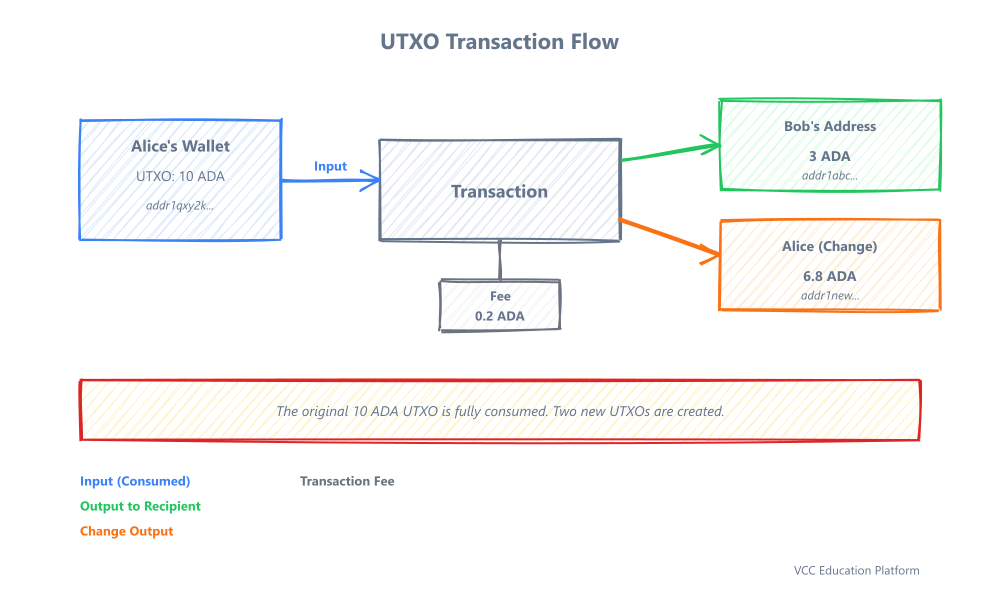
Figure 1: How a 10 ADA input is consumed and split into outputs
When you spend Bitcoin or ADA, you are not deducting from a balance. You are consuming one or more existing UTXOs (inputs) and creating new UTXOs (outputs). Every input must be completely consumed. If the total input value exceeds what you want to send, the excess comes back to you as a "change output." This is why the street market analogy works so well: you cannot tear a 200k bill in half; you must hand over the whole thing and receive change.
A Concrete Example
Suppose Alice has a single UTXO worth 10 ADA. She wants to send 3 ADA to Bob. Her transaction would look like this:
- Inputs: One UTXO (10 ADA) from Alice's address
- Outputs:
- 3 ADA to Bob's address
- 6.8 ADA back to Alice's address (change)
- 0.2 ADA to the network (transaction fee)
Notice that Alice's original 10 ADA UTXO no longer exists. It has been "spent." In its place, two new UTXOs were born: Bob's 3 ADA and Alice's 6.8 ADA change. The fee is also collected by the network as a new output consumed by validators.
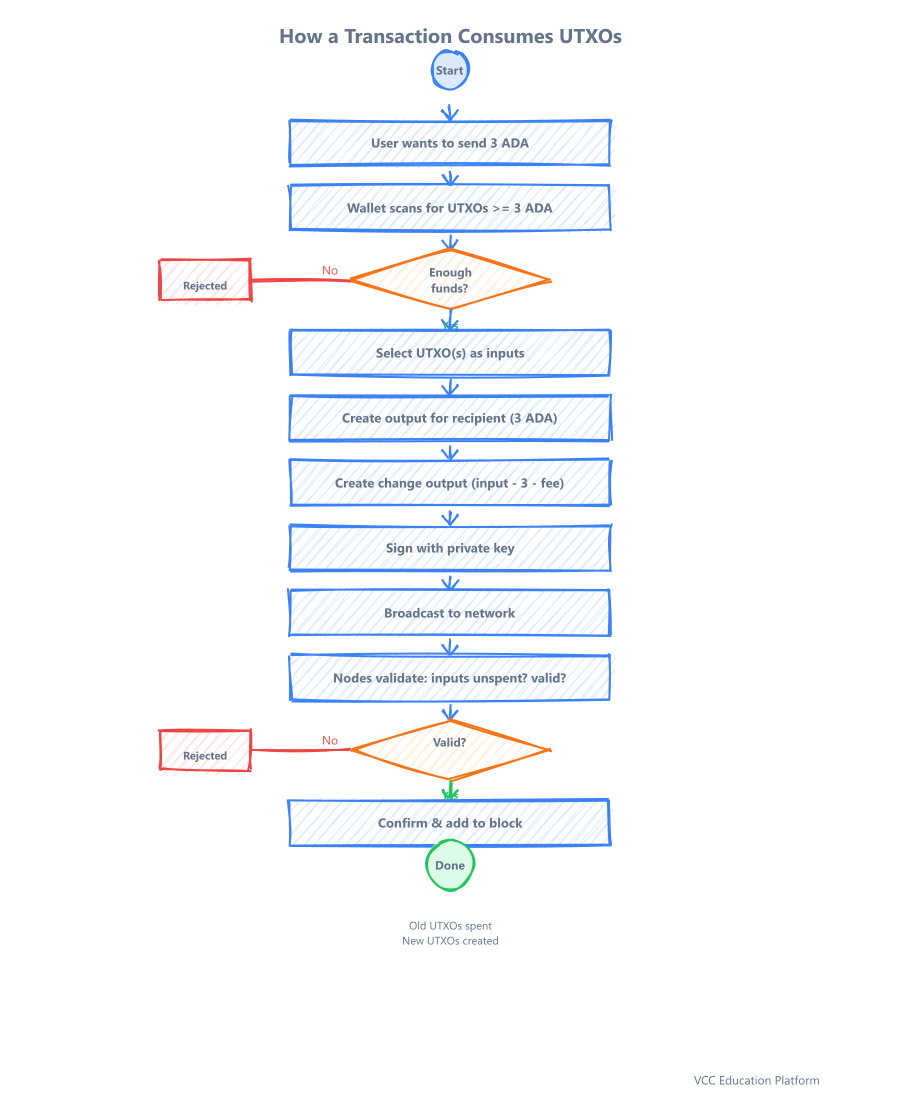
Figure 2: Step-by-step flow of how a UTXO transaction is validated
UTXO vs Account Model
Most people are familiar with bank accounts. Your account has a balance of 5,000,000 VND. When you send 1,000,000 VND to a friend, the bank simply subtracts 1,000,000 from your balance and adds it to your friend's balance. This is the account model, and it is how Ethereum works.
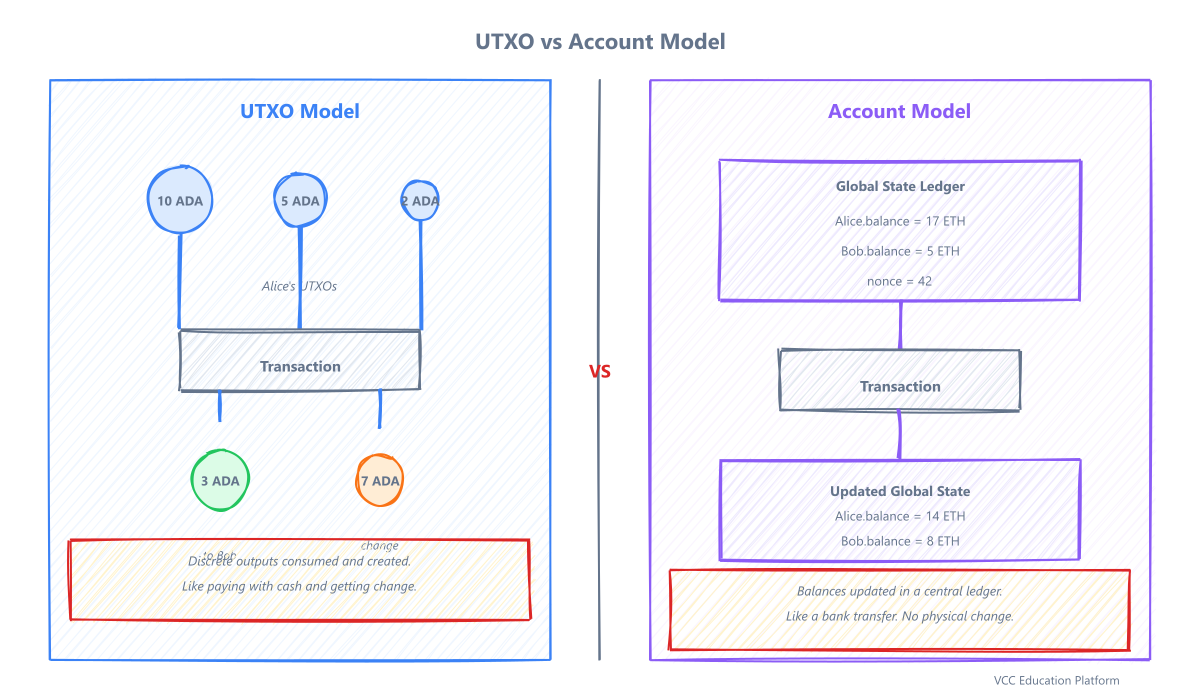
Figure 3: Side-by-side comparison of UTXO and Account accounting models
In Ethereum, each account has a state: a balance and a nonce (a counter to prevent replay attacks). When Alice sends 3 ETH to Bob, the global state updates: Alice.balance -= 3, Bob.balance += 3. The concept of "change" does not exist because balances are just numbers in a ledger.
| Feature | UTXO Model | Account Model |
|---|---|---|
| State Storage | Distributed across outputs | Centralized in account balances |
| Transaction Logic | Consume entire inputs, create new outputs | Debit one account, credit another |
| Parallelism | Natural: independent UTXOs can be spent in parallel | Limited: shared global state creates contention |
| Determinism | High: transaction validity is self-contained | Lower: validity depends on current global state |
| Privacy | Better: use new address per transaction | Weaker: all activity linked to one account |
| User Complexity | Higher: must manage inputs and change | Simpler: behaves like a bank account |
The account model feels more intuitive because it mirrors traditional banking. However, the UTXO model offers powerful advantages in security, scalability, and parallelism that make it the preferred choice for systems prioritizing those properties.
Extended UTXO: Cardano's Innovation
Bitcoin's UTXO model is elegant but limited. It can only validate transactions based on simple conditions: does the spender provide a valid digital signature? Cardano needed something more powerful to support smart contracts. This led to the Extended UTXO (EUTXO) model, introduced with the Alonzo hard fork.
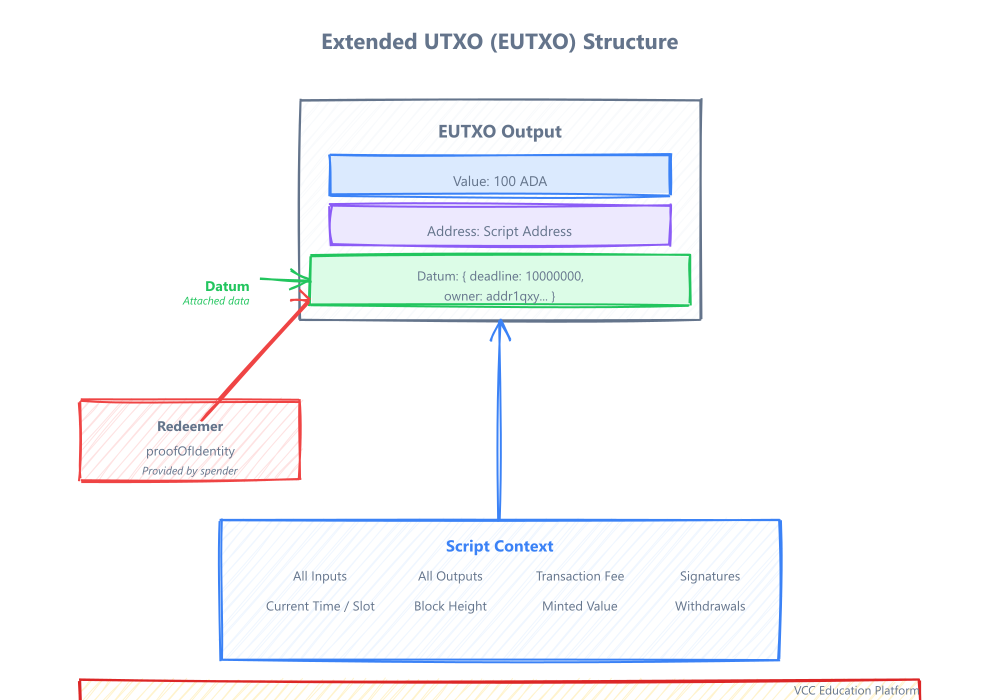
Figure 4: The three key components of Cardano's EUTXO model
EUTXO keeps all the benefits of UTXO while adding three critical components that enable programmable contracts:
1. Datum
A datum is a piece of arbitrary data attached to a UTXO when it is created. Think of it as a note taped to a bill. For example, a decentralized exchange might attach a datum specifying the exchange rate or the deadline for a swap. The datum remains part of the UTXO until it is spent.
2. Redeemer
When someone wants to spend a UTXO locked by a smart contract, they provide a redeemer. This is like presenting a password or a ticket to unlock the funds. The redeemer contains the logic or proof needed to satisfy the spending conditions. For instance, in a voting contract, the redeemer might contain the user's vote.
3. Script Context
The script context is a rich data structure that gives the smart contract full visibility into the transaction being validated. It includes information about all inputs, all outputs, the transaction fee, signatures, and the current time. This allows contracts to enforce sophisticated rules, such as "this UTXO can only be spent if the total output value equals the total input value" or "this contract expires after block 10,000,000."
Together, datum, redeemer, and script context form a complete framework for stateful smart contracts while preserving the deterministic, parallelizable nature of the UTXO model. This is a key reason why Cardano can formally verify its smart contracts: because the spending conditions depend only on the transaction itself, not on some mutable global state.
Why UTXO Matters: Key Advantages
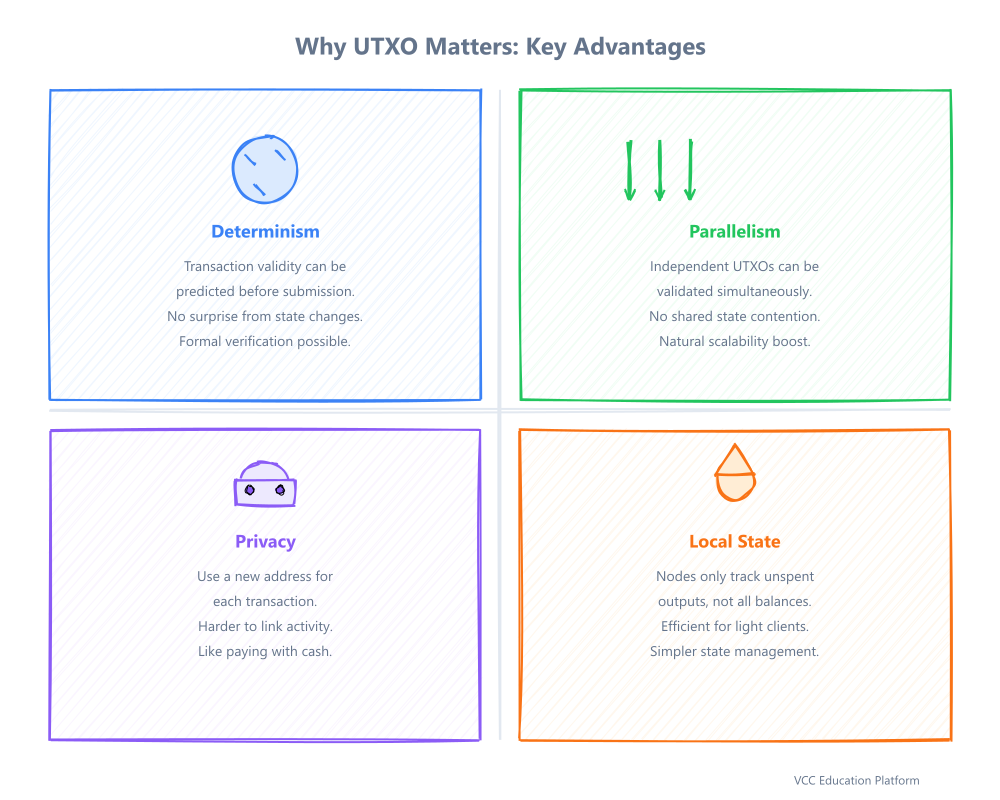
Figure 5: The four key advantages of the UTXO accounting model
Determinism
In the UTXO model, the validity of a transaction can be determined before it is submitted to the network. You know exactly which inputs you are spending and exactly which outputs you are creating. There are no surprises from another user's transaction front-running you and changing the global state. This makes UTXO transactions predictable and formally verifiable.
Parallelism
Because UTXOs are independent from one another, transactions that spend different UTXOs can be validated in parallel. There is no single shared account balance that all transactions must update sequentially. This is a massive scalability advantage. In a world of Layer-2 solutions and sidechains, the natural parallelism of UTXO becomes even more valuable.
Privacy
Every time you receive funds in a UTXO system, you can use a brand new address. Your wallet balance is spread across many unrelated UTXOs on the blockchain, making it much harder to link all your financial activity together. In contrast, an Ethereum account is a single, permanent identifier that exposes your entire transaction history.
Local State Validation
Nodes in a UTXO network only need to track which outputs are unspent. They do not need to store the complete balance of every account in the system. This "local state" approach is more efficient and makes it easier for lightweight clients to verify transactions.
The Vietnamese Street Market Analogy
To make this concrete for our Vietnamese audience, consider the difference between paying with cash (UTXO) and paying with a bank transfer (Account Model).
When you pay for groceries with cash, you might hand over a 500k bill. The cashier does not "deduct" 300k from your bill. Instead, they take your 500k bill entirely, keep 300k, and hand you back 200k in smaller bills. Your original 500k bill is gone. You now hold new bills: the 200k change. This is exactly how UTXO works. The original output is consumed; new outputs are born.
When you pay with a bank transfer, your bank simply updates two numbers in a database: your balance decreases by 300k, and the store's balance increases by 300k. Nothing physical changes hands. This is the account model.
This analogy helps explain why UTXO can feel strange at first. We are used to thinking in balances, not in discrete bills. But once you understand the logic, you see that UTXO mirrors the physical reality of cash far more closely than a bank ledger does.
Common Misconceptions
Misconception 1: "My wallet stores my ADA."
Reality: Your wallet stores the private keys that let you spend UTXOs locked to your addresses. The actual UTXOs live on the blockchain.
Misconception 2: "UTXO is just for Bitcoin. Cardano is different."
Reality: Cardano absolutely uses UTXO, but extends it with EUTXO. The core accounting mechanism is the same.
Misconception 3: "Account model is always simpler and better."
Reality: The account model is simpler for users but introduces shared-state problems, front-running vulnerabilities, and harder formal verification. UTXO trades some user convenience for stronger guarantees.
Misconception 4: "Change outputs waste blockchain space."
Reality: While UTXO does create change outputs, the local state validation and parallelizability often lead to better long-term scalability than the ever-growing global state of account-based systems.
Conclusion
The UTXO model is more than a technical curiosity. It is a fundamental design choice that shapes how a blockchain handles value, state, and concurrency. Cardano's Extended UTXO takes this proven foundation and enriches it with the data structures needed for modern smart contracts, without sacrificing the determinism and parallelism that make UTXO powerful.
Understanding UTXO helps you understand why Cardano transactions work the way they do, why your wallet sometimes shows multiple addresses, and why the ecosystem can scale differently from account-based competitors. The next time you send ADA, remember the street market: you are not updating a bank balance. You are spending old bills and receiving new ones.
Quick Reference
| Term | Definition |
|---|---|
| UTXO | Unspent Transaction Output: a chunk of value locked to an address |
| Input | A reference to a previous UTXO being consumed |
| Output | A new chunk of value created by a transaction |
| Change | The excess value returned to the sender as a new output |
| Datum | Data attached to a Cardano UTXO for smart contract state |
| Redeemer | Data provided to unlock a script-locked UTXO |
| Script Context | Transaction metadata visible to a Cardano smart contract |
| EUTXO | Extended UTXO: Cardano's enhanced UTXO model |
Published by VCC Education Platform. For more Cardano educational content, visit our knowledge base.