
When you send ADA, the first thing most people ask is: "What does the cardano transaction fee cost?" Unlike Ethereum, where fees spike wildly under load, Cardano fees are like a phone company's price list — fixed, published, and computable down to the decimal before you press send. This guide to cardano fees explained walks through the cardano fee formula, how much an ada transfer fee really costs, where that money goes, and why sending ADA on Cardano is cheaper than an interbank bank transfer in Vietnam.
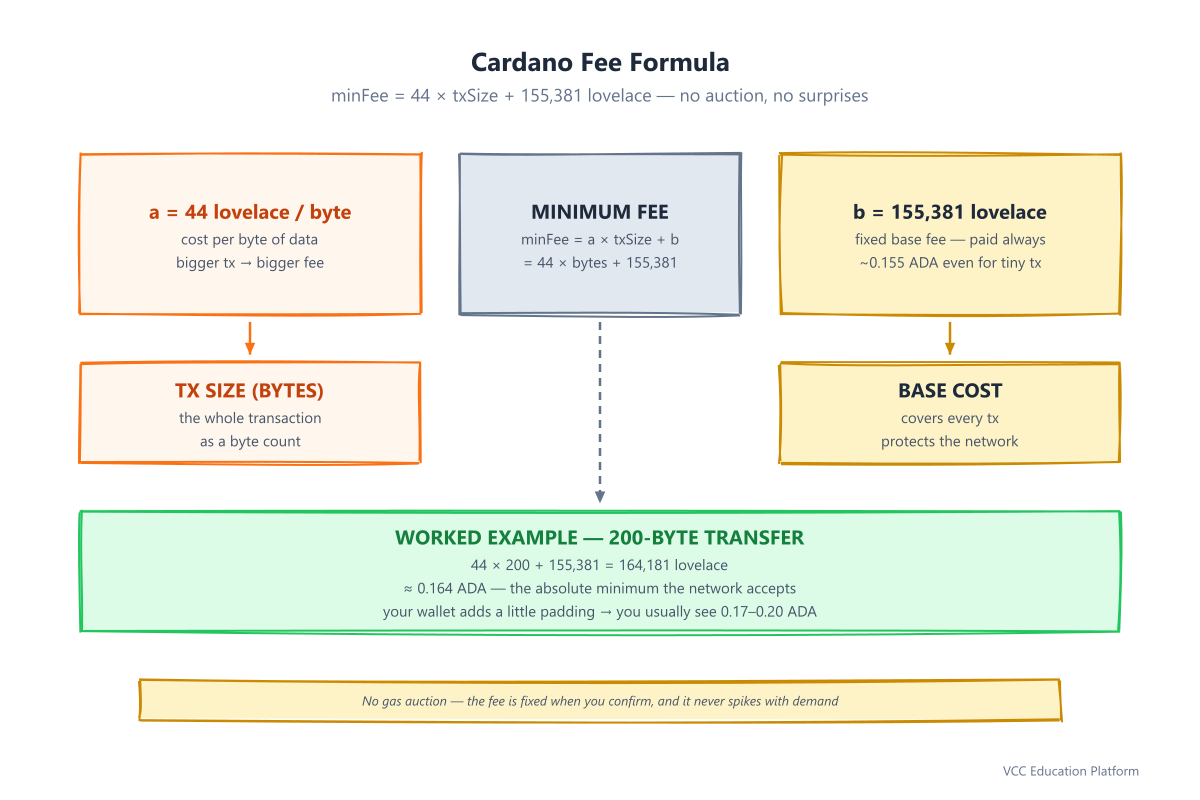
Figure 1: The Cardano fee formula — deterministic per-byte pricing, no gas auction
The Cardano Fee Formula: a × size + b
Every Cardano transaction pays a fee calculated by one simple, deterministic formula:
minFee = a × txSize + b
Where:
- a = 44 lovelace/byte (the cost per byte of data in the transaction)
- b = 155,381 lovelace (a fixed base fee, ~0.155 ADA, paid no matter what)
- txSize = the size of the transaction in bytes
- 1 ADA = 1,000,000 lovelace
Let's make it concrete. A normal simple transfer (one input, two outputs) is around 200 bytes:
44 × 200 + 155,381 = 164,181 lovelace ≈ 0.164 ADA
That is the minimum the network will ever accept. Wallets usually add a little padding ("just in case the fee parameters change while your transaction sits in the queue"), which is why you will typically see a Cardano transfer cost 0.17–0.20 ADA — roughly 4,000–5,000đ at current prices.
> "Fee ≠ gas auction" — a mental model that saves you stress. On Ethereum-style chains, the fee depends on a live bidding war for block space; when the network is congested, fees can jump 10x in an hour. On Cardano there is no auction — the fee is a deterministic function of bytes. Your wallet computes the exact amount before you confirm, like the fixed price list at a Viettel shop, not a taxi meter during rain.
Why Does the Formula Exist?
Three reasons, straight from the Cardano developer portal:
- Anti-spam (DDoS prevention). If tiny transactions were free, an attacker could flood the network with millions of worthless transfers and freeze it. The base fee b forces even the smallest spam to cost something real.
- Compensating stake pool operators. Running a Cardano node and producing blocks costs real money — hardware, electricity, maintenance. Fees (plus a small share of new ADA minted each epoch) are how pools get paid.
- Covering processing and storage. Every transaction is processed by nodes and stored on the chain forever; bigger transactions consume more memory, CPU, and disk.
How Much Does a Cardano Transfer Actually Cost?
The exact ada transaction fee depends on how large your transaction is. Here are realistic numbers:
| Transaction type | Typical size | Fee (lovelace) | Fee (ADA) |
|---|---|---|---|
| Simple transfer (1 input, 2 outputs) | ~200 bytes | ~164,000 | ~0.164 ADA |
| Transfer with a short note (metadata) | ~300 bytes | ~168,600 | ~0.169 ADA |
| Transfer with a longer note (~1 KB) | ~1,000 bytes | ~199,000 | ~0.199 ADA |
| Native token transaction | varies | ~0.17–0.25 ADA | depends on size |
| Smart contract call (adds script fee) | varies | 0.17 + script cost | depends on ExUnits |
Note that Cardano caps a transaction at 16,384 bytes, so the absolute maximum base fee is 44 × 16,384 + 155,381 = 876,277 lovelace ≈ 0.876 ADA — even the most bloated legitimate transaction can never exceed this.
On the whole network, the average fee across all transaction types (including smart contracts) is around 0.29 ADA (cardano.org). In fiat terms, a median Cardano transfer costs about $0.027.
Where Do Cardano Fees Go? (Not Where You Think)
This is the part almost every beginner gets wrong. If you come from Bitcoin, you assume "the miner who put my transaction in a block gets a tip." Cardano works differently.
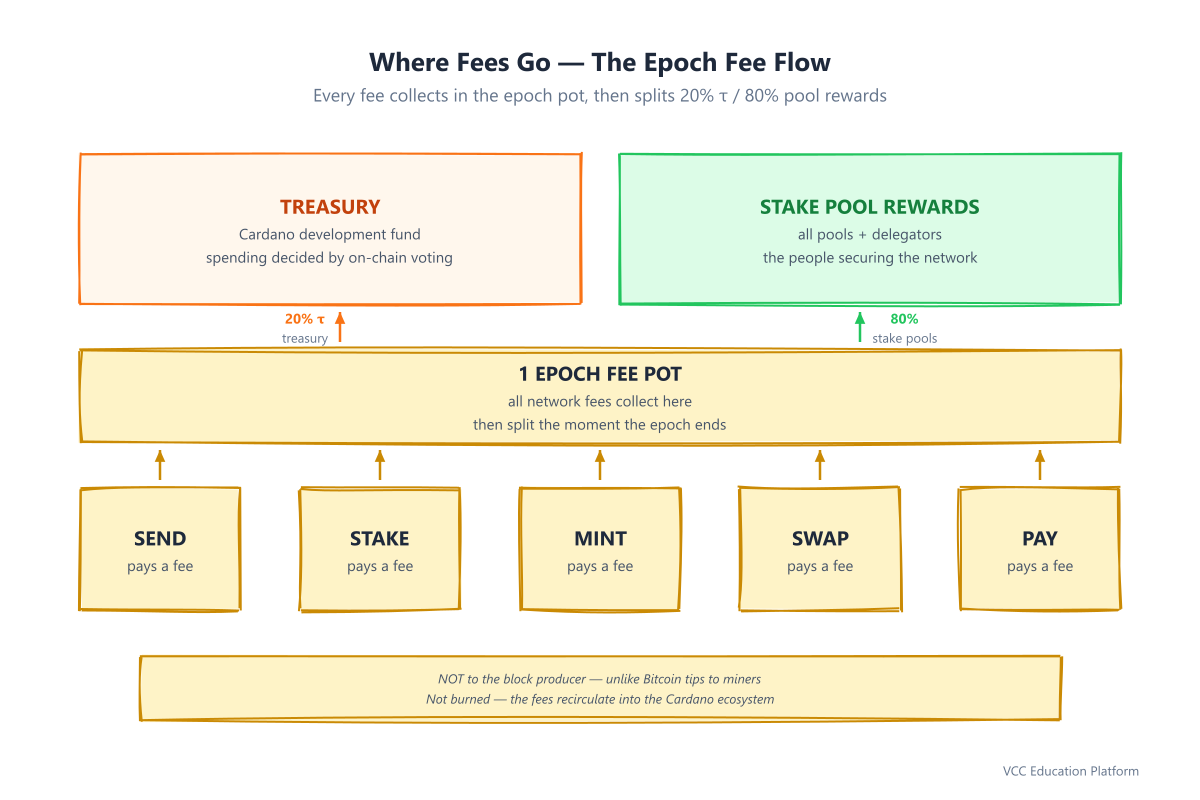
Figure 2: Where your fee goes — pooled per epoch, split 20% treasury / 80% pool rewards
- All fees from a whole epoch (5 days) are pooled into one big fee pot — NOT kept by whichever pool included your transaction
- At epoch end, the fee pot joins the overall network reward pot, split:
So your 0.17 ADA does not pay "the miner." It helps pay every honest pool operator and helps fund Cardano's future development. That is a genuinely different social contract from Bitcoin or Ethereum — your tiny fee makes Cardano more secure and pays for its roadmap.
> Why not burn fees? Some chains burn fees to create scarcity. Cardano does not — the fee pool is re-circulated into the ecosystem via treasury and staking rewards.
What Makes Your Fee Bigger? The Real Cost Drivers
The single largest factor is how big your transaction is in bytes, and that is mostly controlled by one thing beginners never expect: how many inputs you spend.
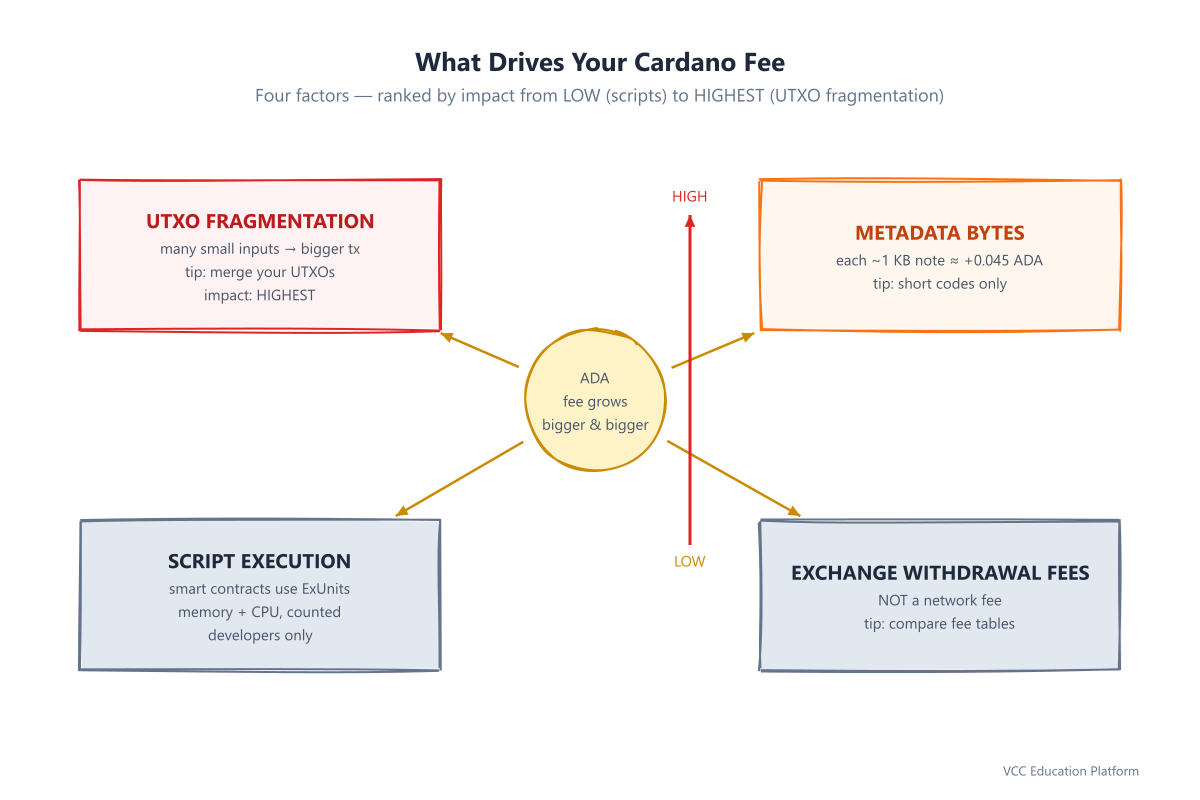
Figure 3: The four fee drivers — fragmentation and metadata are the ones you control
1. UTXO Fragmentation: Your Hidden Fee Tax
Remember the cash analogy from our transaction basics article? Your Cardano wallet is a pile of "banknotes" (UTXOs), and spending means picking notes that cover the amount.
- If you have ONE 100 ADA UTXO and send 50 ADA → 1 input → small fee
- If you have 20 tiny UTXOs (from many small payments or many exchange deposits) and send 50 ADA → the wallet spends all 20 → 20 inputs → a much bigger — and slower — transaction
Practical tip for Vietnamese users: if you receive many small amounts (small shop payments, many tiny exchange withdrawals), periodically merge them into one UTXO while fees are low — this keeps future ada transfer fees tiny.
2. Metadata Raises the Bill
Businesses in Vietnam love putting a note on every payment — an order code, an invoice number, a customer ID. That is exactly what Cardano metadata is for. But metadata costs bytes:
Each ~800-character note adds roughly 1 KB → +0.045 ADA. A business filing 5,000 notes a month pays about +225 ADA/year for description text. Put the long description off-chain and keep the on-chain note to a short code — same audit trail, lower bill.
3. Smart Contracts Add an Execution Fee
For developers: a Plutus script pays execution units (ExUnits) on top of the base fee — measured as memory units and CPU steps, billed at protocol-set prices (mem_price, step_price). More complex scripts = more ExUnits = higher fee. Reference scripts (Conway era) also carry a per-byte cost (~15 lovelace/byte) that grows with size. For normal transfers none of this matters — you only pay a × bytes + b.
4. Exchange Withdrawal Fees Are NOT Network Fees
A very common confusion: "Phí rút 10 ADA từ sàn là 2 ADA!" That 2 ADA is the exchange's own fee, charged on top of the network fee (~0.17 ADA that actually goes to Cardano). Compare withdrawal fee tables before you pick an exchange — the network itself is cheap.
Cardano Fees vs Gas vs Vietnamese Bank Transfers
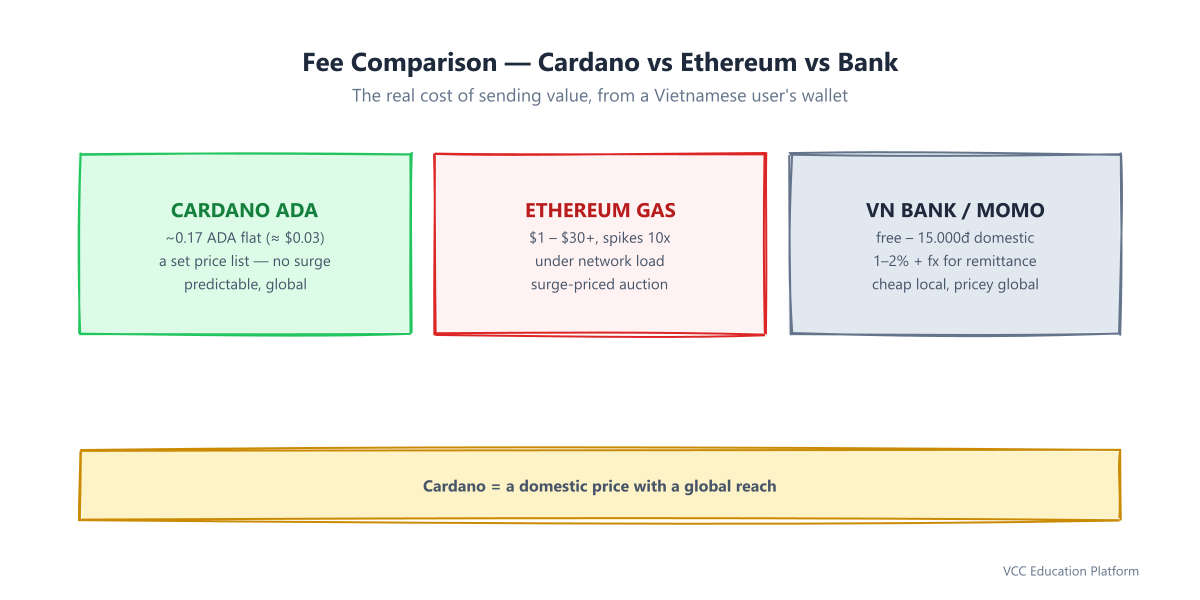
Figure 4: Cardano vs Ethereum gas vs Vietnamese bank transfers — domestic price with global reach
| Comparison | Cardano | Ethereum (account) | Vietnamese bank / MoMo |
|---|---|---|---|
| Pricing model | Fixed per-byte formula | Live gas auction | Tiers by transfer type |
| Fee range (typical) | ~0.17 ADA ($0.03) | $1–$30+ (spikes) | Free–15,000đ domestic |
| Predictable before confirm? | ✓ Exact | ✗ Changes while pending | ✓ Fixed schedule |
| Congestion effect | Zero (no bidding) | Fees spike 10x+ | Slow, but price stable |
| Receives the fee | Pool + treasury | Block builder | The bank |
| International use | ~0.17 ADA flat, global | Expensive | 1–2% + fx for remittance |
For Vietnamese readers this is the key takeaway: a cardano transaction fee of ~0.17 ADA is comparable in absolute dong to a domestic bank transfer — but it is global. Sending ADA abroad costs the same 0.17 ADA with no percentage fee and no foreign-exchange spread, versus a bank remittance that typically takes 1–2% of the amount plus an exchange-rate margin. For large amounts, Cardano fees are effectively free by comparison.
Frequently Asked Questions
Q: Why did I pay more than 0.17 ADA? A: Your wallet pads the minimum fee for safety, and your transaction may have spent many inputs — both normal. The core formula is 44 × bytes + 155,381 lovelace; the difference is cushioning, not a hidden charge.
Q: Can the fee change? A: The parameters (a = 44, b = 155,381) change only through on-chain governance (the CIP process) — not by market demand. When they change, wallets update automatically and show the new fee before you confirm.
Q: Is the fee burned? A: No. Epoch fees are pooled, then 20% goes to the treasury and 80% to stake pool rewards (shared with delegators like you).
Q: If my transaction fails, do I lose the fee? A: Usually yes — nodes already did the validation work and must be compensated. Double-check the recipient address and amount before signing.
Q: How do I minimize Cardano fees? A: (1) Keep your small UTXOs merged (fragmentation raises fees); (2) keep metadata short; (3) compare exchange withdrawal fees — that is where costs actually hide.
Key Takeaways
- The formula is fixed:
minFee = 44 × bytes + 155,381 lovelace— no auction, no surprises - A normal transfer costs ~0.17 ADA ($0.03) — cheaper than a domestic bank transfer and vastly cheaper than international remittance
- Fees are pooled per epoch, then split 20% treasury / 80% stake pool rewards — they fund Cardano's development
- UTXO fragmentation is the hidden fee driver — many small notes = many inputs = higher fee
- Metadata costs bytes, bytes cost ADA — keep on-chain notes to short codes
- Exchange withdrawal fees are separate — compare them; the network fee is rarely the problem
References & Sources
- Cardano Developer Portal — [Transaction Fees](https://developers.cardano.org/docs/developers/curriculum/fundamentals/core-concepts/fees/)
- CIP-0009 — [Protocol Parameters](https://github.com/cardano-foundation/CIPs/blob/master/CIP-0009/README.md) (minFeeA/minFeeB, tau, rho)
- cardano.org — [Supply Distribution](https://cardano.org/insights/supply/) (epoch fee/average fee data)
- Essential Cardano — [How Cardano's transaction fees work](https://www.essentialcardano.io/article/how-cardanos-transaction-fees-work)
- Cardano Foundation — [Rewards calculation](https://cardanofoundation.org/blog/releasing-an-open-source-rewards-calculation) (treasury split)
- OpenChainBench — [Cardano network fee benchmark](https://openchainbench.com/benchmarks/network-fees/cardano) (fiat fee median)
This article is for educational purposes and is not financial advice. Always do your own research (DYOR) before transacting.