
Imagine you deposit money into a Vietnamese savings account ("gửi tiết kiệm") to earn interest each month. With most bank terms, if you want to withdraw early, you face a penalty, or you must wait for the locked period (kỳ hạn) to end. Cardano staking feels similar at first glance — "I put my ADA somewhere and earn rewards" — but there is one crucial difference: your ADA is never locked, never sent away, and never blocked. You can spend it at any time, even while it is still earning. This is the single most important fact for any beginner, and it is the reason staking on Cardano is far less intimidating than it sounds.
In this article, we will explain exactly what staking rewards are, how the 5-day epoch "snapshot" cycle works, when and why your first reward takes time to appear, where the rewards actually come from, and how pool fees and pool saturation affect how much you earn. By the end, you will understand that staking is closer to a risk-on savings account than to locking your money in a vault.
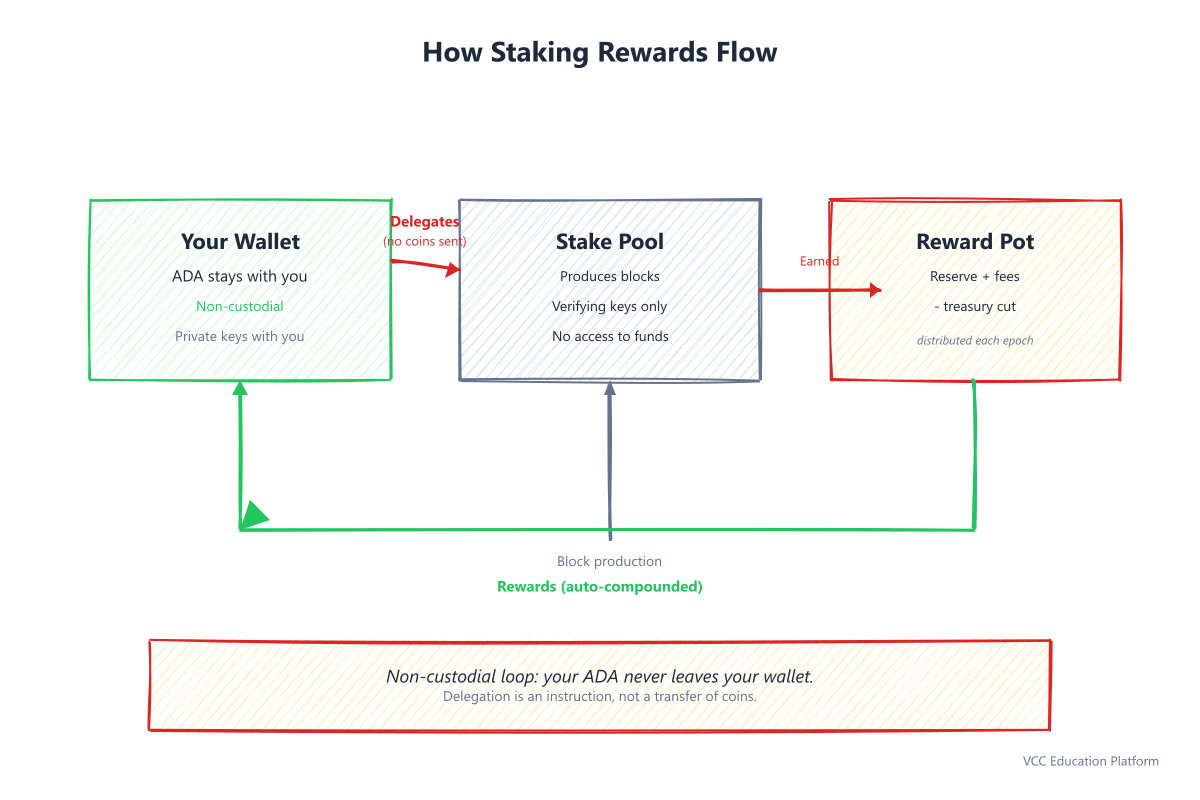
Figure 1: Overview of how staking rewards flow
What Is Staking in Cardano?
Let's clear up the single biggest source of confusion first. On Cardano, "staking" does not mean sending your ADA to anyone, or putting it into a smart-contract vault. Staking is delegation: you point your personal wallet at a "stake pool" (a group of computers run by an operator) so that the ADA still sitting in your own wallet counts toward that pool's chance of being chosen to produce blocks. The pool does all the heavy computational lifting; your role is simply to say "count my coins with this pool."
Non-custodial, no lock-up
Because your ADA never leaves your wallet:
- Your private keys stay with you — no one can move or touch your funds (non-custodial).
- There is no lock-up period and no unbonding/cooldown. As soon as you are fully staked, your coins are spendable at any moment, and you never wait to withdraw.
- You can re-delegate to a different pool at any time without penalty.
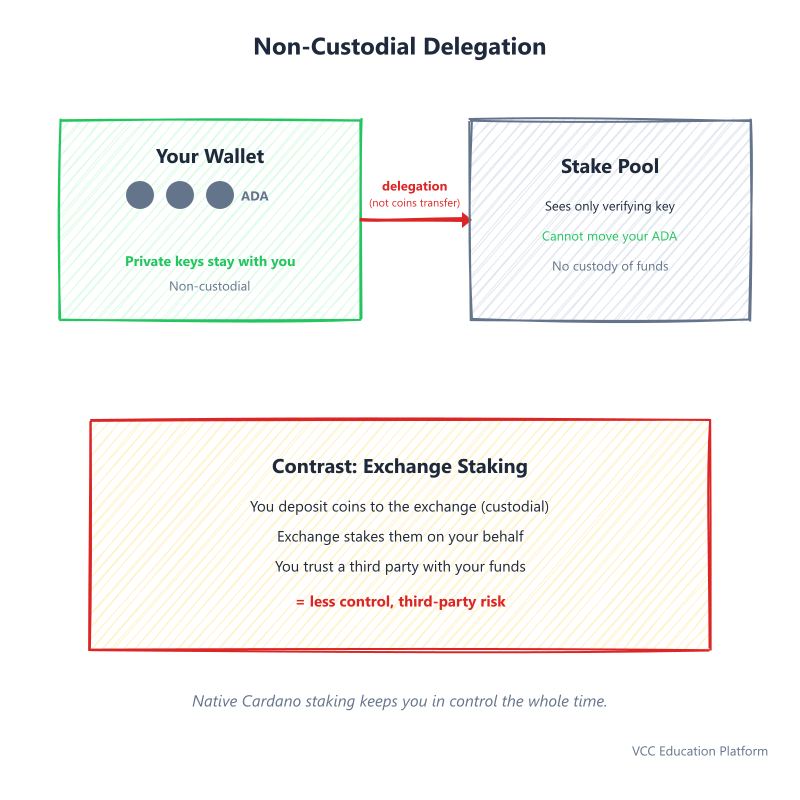
Figure 2: The non-custodial stake delegation flow — your ADA never leaves your wallet
This is quite different from staking on some centralized exchanges, where you deposit your coins with the exchange and they stake them for you. That can be convenient, but it is custodial: you are trusting the exchange with your funds. The native Cardano way keeps you in control the whole time.
A couple of specifics worth noting before we continue:
- Rewards arrive in a separate "rewards" balance attached to the same stake address. This means your reward balance is tracked separately from your main spendable balance, but both remain yours.
- Stake snapshot: only the balance you hold at the snapshot moment, at the end of each epoch, counts toward rewards for that period. Spending before the snapshot, or moving coins after it, changes nothing for that epoch already past.
The Epoch & Snapshot Cycle
Cardano time is divided into fixed epochs. Each epoch is exactly 5 days long. This regular rhythm is how the whole system keeps track of who gets what, so let me show you how the cycle plays out:
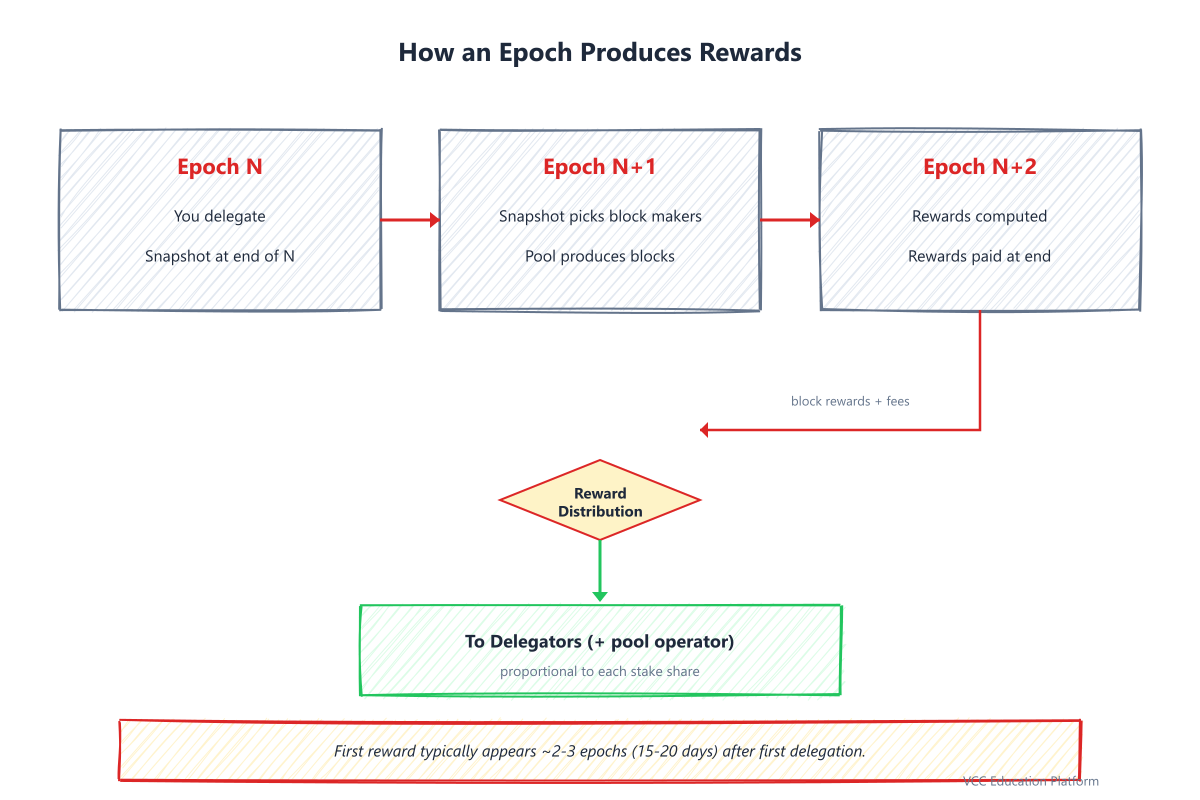
Figure 3: How an epoch snapshot produces rewards
The snapshot
At the end of each epoch, the network takes a "snapshot" of all the amounts delegations outstanding at that moment. There is no action required from you; the snapshot is automatic. This one important detail:
- Only the amount that is in your wallet at the moment of the snapshot counts toward rewards for the following epochs.
- If you delegate, or move funds, in the middle of an epoch, your new balance only becomes fully eligible at the next snapshot. It is normal therefore, that changes do not take effect immediately.
The two-epoch lag
This is the detail that confuses more beginners than anything else. When you delegate for the first time, do not expect rewards within a day. Because of how the reward clock works:
- Epoch N: your delegation is included in a snapshot at the end.
- Epoch N+1: the network uses that snapshot to select who produces blocks, and starts tracking the pool's work in this epoch.
- Epoch N+2: the rewards for what was tracked in N+1 are calculated (from the block production that happened in N+1).
- Rewards are paid at the end of N+2 — i.e., roughly 2-3 epochs, or between 15 and 20 days, after you first delegated.
In plain language, from the day you press "delegate," you may wait about 15-20 days (2-3 epochs) for the very first reward to appear. If you see nothing for the first couple of weeks, that is normal, that is not an error.
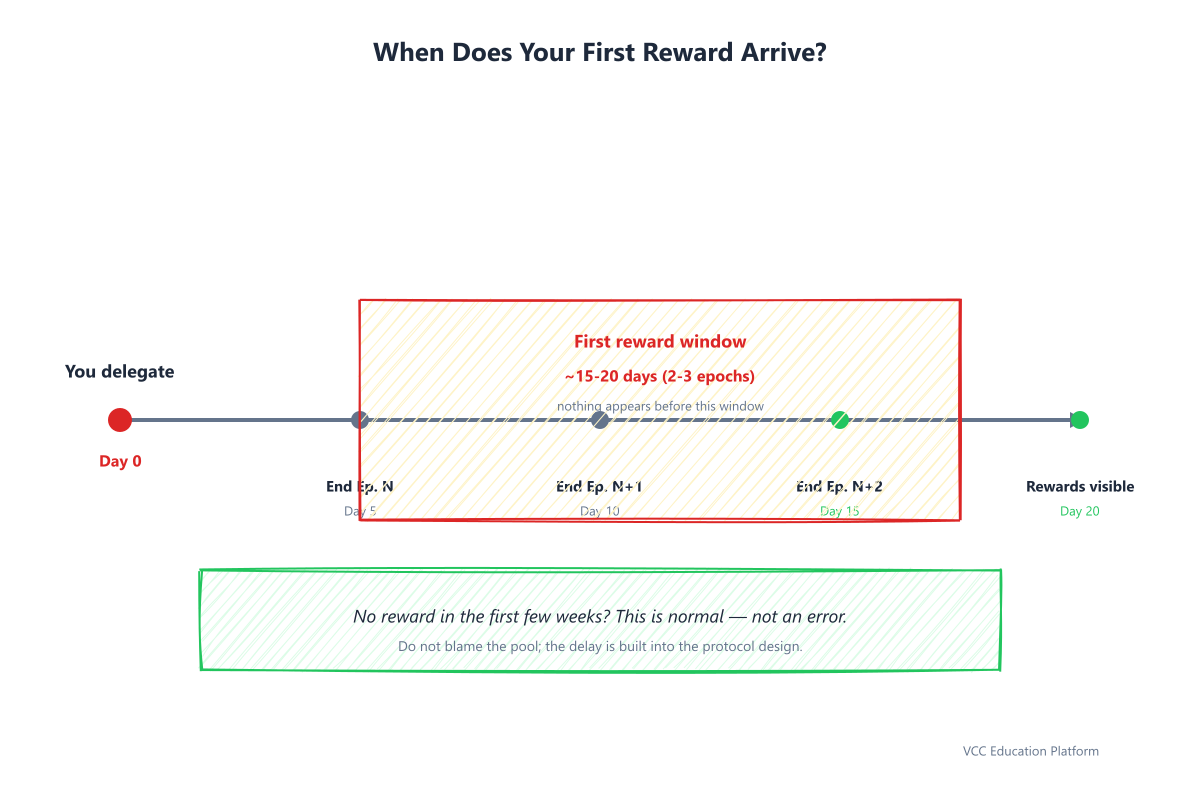
Figure 4: First reward timeline — from first delegation to first reward
A clear warning for beginners: this waiting is built into the design, and it affects every protocol. Do not "blame" the pool because you do not yet see a reward during the first period.
Where Do Rewards Come From?
You might wonder: where does that extra ADA actually come from? Is it "printed" from thin air like inflation? Not quite. Cardano distributes a fixed incentive reserve that was preminted at genesis, plus a share of transaction fees. Every new epoch, a reward pot is created by:
- Taking a portion of the reserve (the large pool of ADA set aside at protocol genesis to pay for incentives). The share added to each pot shrinks gradually as the reserve depletes, but this is designed to last for years.
- Adding a share of the transaction fees paid across the network during the epoch.
- Deducting a treasury cut (around 20%), which is channelled to fund Cardano's on-chain treasury for future development and funding of proposals.
Everything that remains in the pot for that epoch is distributed among delegators and pool operators, proportionally to how much active stake each helped secure.
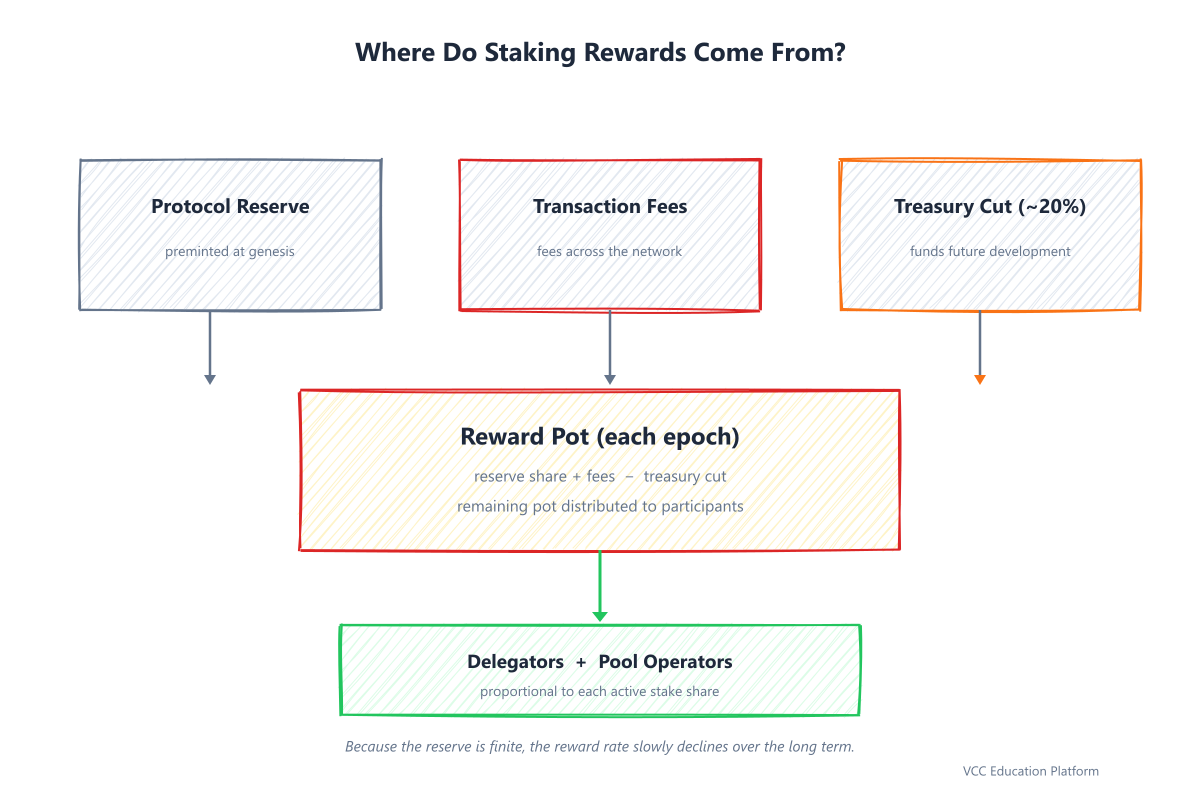
Figure 5: Sources of staking rewards — reserve + fees − treasury
Important implication: because the reserve is finite and gradually declines, the "rate" of rewards slowly drops over the long term. This is by design and is why the APY you see today may not be the same in a few years.
How Much Can You Earn? (Setting Realistic Expectations)
Steep warning: Search any source and you will find different numbers — some guides say a 3-4% range, others 2-4%, others 3-5%, and sometimes 1-3%. These are all snapshots taken at different times, from different pools, under different saturation levels. The honest answer is that the reward rate changes over time and depends on several facts that we will detail. So never trust a single number; instead understand these drivers, then check your wallet for the live rate.
The factors that move your rewards:
- Pool performance — The more reliably a pool produces the blocks it is scheduled to, the closer your rewards are to the theoretical maximum. A pool that misses blocks reduces its delegator rewards.
- Saturation level — Each pool has a saturation point (roughly a ~62 million ADA scale today). If delegations put a pool far above that point, the rewards those hugely over-delegated coins would earn are reduced. Delegating to an over-saturated pool lowers your effective yield even if the pool looks big.
- Fees — Pool operators are paid first (a fixed cost, plus a small margin), and the rest is split between delegators. See below.
- Network participation — How much of total circulating ADA is being staked at all influences the ratio of rewards to total stake.
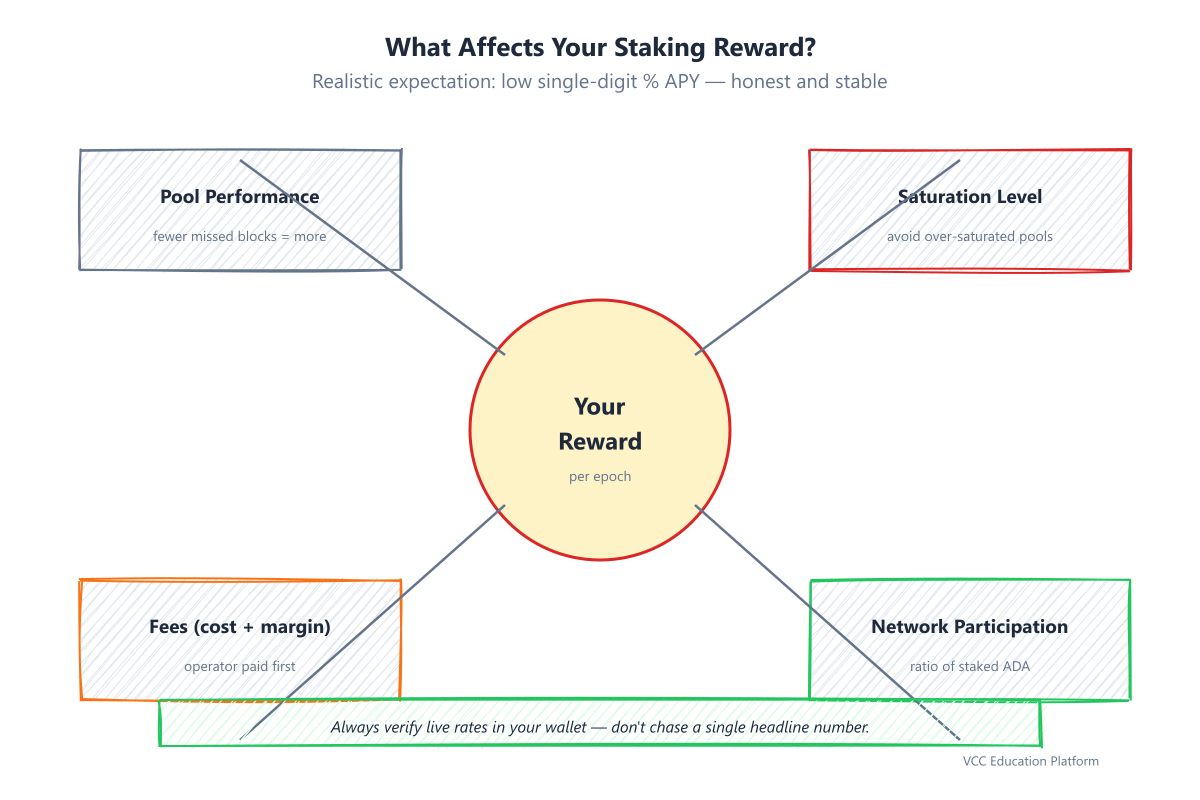
Figure 6: Factors that affect your reward
So a realistic expectation for an average, well-chosen pool is currently around the low single-digit percent per year — think of this as a low-but-stable passive income, not a get-rich-quick mechanism. The real value of staking isn't a big yield; it is that your ADA keeps working instead of sitting idle, without risk of loss.
Delegator vs Pool Operator: Who Gets Paid, and How
To understand your rewards, it helps to see the flow of the whole reward pot. There are two roles:
1. The Pool Operator
The operator runs the hardware that actually produces blocks. They get compensated in a structured way:
- A fixed cost (around 340 ADA per epoch), which is paid first from the pool's pot.
- A margin (a percentage of the remaining rewards, typically small, e.g. 0-3%).
- Operators often also pledge some ADA of their own, but the fixed cost and margin above are the formal reward structure.
2. The Delegators (you)
After the fixed cost and the margin have been deducted, the remaining pot is shared among the delegators proportionally to how much ADA each contributed (relative to the pool's total stake). The larger your share of the pool, the larger your slice of the remaining pot.
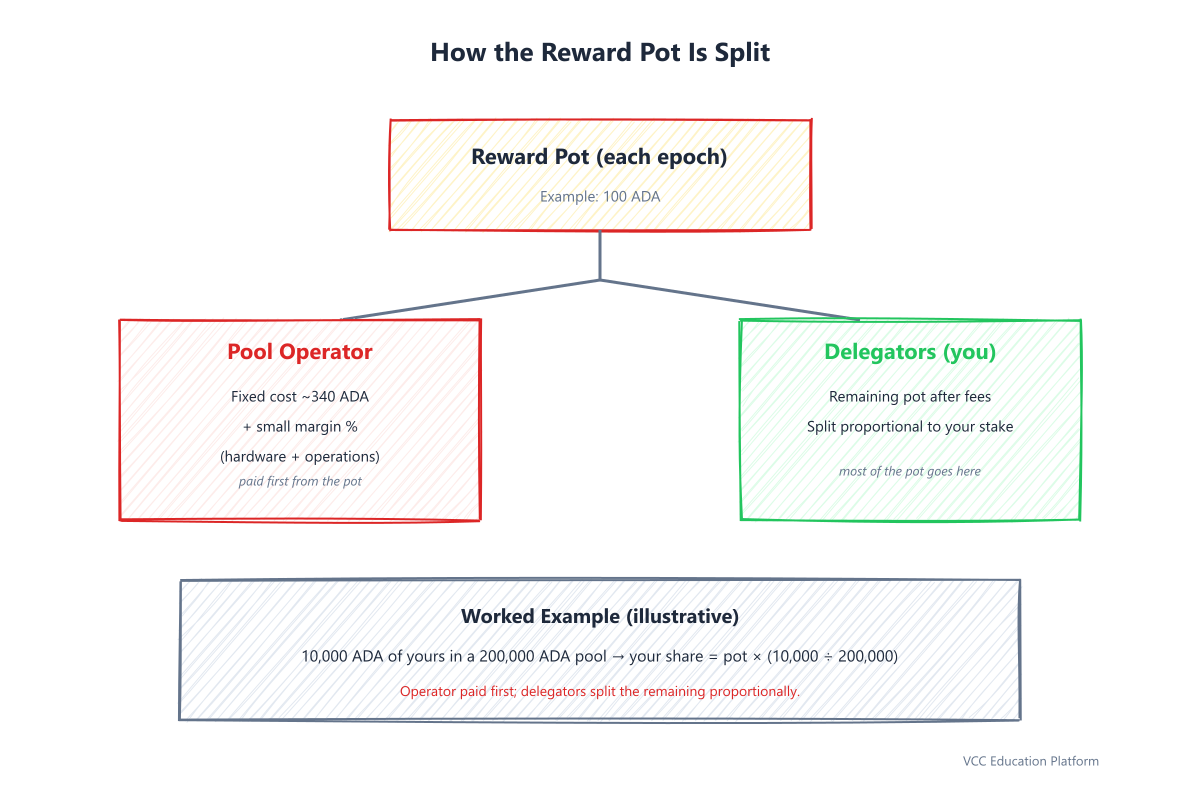
Figure 7: Delegator vs pool operator reward split
A worked example with 10,000 ADA
Let's suppose a mid-size pool that, in a given epoch:
- Produces a reward pot of 100 ADA total for delegators after bringing in block rewards and fees.
- You have 10,000 ADA staked in the pool, and the pool's total active stake is 200,000 ADA.
Then your share of the pot is roughly:
Your share = Pot × (Your stake / Total pool stake)
           = 100 ADA pot × (10,000 / 200,000)
           = 5 ADA  per epoch
With ~73 epochs per year, that compounds into roughly 365 ADA/year on 10,000 ADA — i.e., around 3.6% APY. This is illustrative; the real numbers fluctuate, but this is why the returns sit in the low single digits: each epoch your "savings" growth is small but constant, and it re-invests automatically (see below).
I kept the example simple: deposit 10,000 ADA and you can reasonably expect a few hundred ADA per year.
Auto-Compounding: Your Rewards Go to Work Automatically
Here is the best hidden feature of Cardano staking for beginners: as soon as a reward is credited at the end of an epoch, it becomes part of your delegate balance for the next snapshots. You never have to "click, claim and re-stake" manually. Each 5-day epoch, whatever was earned is automatically counted toward your next epoch's earnings. This is called auto-compounding.
Because you do not have to manage it, staking is genuinely set-and-forget — the opposite of labor-intensive yield farming that some other ecosystems require. Over a year, that automatic re-investing nudges your effective return slightly above the non-compounded headline number.
No Slashing: Your Principal Is Never at Risk
A fear many beginners carry from other proof-of-stake networks is slashing — the punishment where your stake can be taken away if you or your pool misbehave.
- On Cardano, delegated funds are never slashed.
- The worst outcome if a pool underperforms (e.g., misses several blocks) is that you earned fewer rewards that epoch or those epochs. Your principal and your wallet's ADA are never reduced.
This is designed specifically to make staking safe and predictable for ordinary users. In the worst realistic case, you simply earn less, not lose what you have. That is a very different risk profile from other proof-of-stake ecosystems that can penalize misbehaving delegators.
How Do You Get Going? (Non-custodial)
Here is the practical, ordinary path, with a non-custodial wallet:
- Set up a Cardano wallet such as a well-known one (e.g., Yoroi, Daedalus, or a light wallet). Your private keys stay on your device. Write down your phrase securely (your 15/24 words) and never share it.
- Buy/send ADA into that wallet.
- Go to the "Stake" / "Staking" tab.
- Choose a stake pool. Look for a pool with:
- Reliability: good uptime and few or no missed blocks in recent epochs.
- Not over-saturated: its live stake below the saturation cap (the wallet clearly marks a "saturated" pool).
- Reasonable fees: paid fixed cost is similar; low margin is a plus, but not the only factor.
- Confirm the delegation. This costs a small one-time transaction fee and, depending on the wallet, a 2 ADA deposit (returnable). This is to set up your stake address; it is not a "pool fee".
One tricky step to note: delegating does use a very small fee because the delegation itself is a chain transaction, but your ADA is not spent or moved, only registered.
Note: your wallet UI will now show a separate Rewards available balance for the same stake address, and you can track the epoch progress.
Changing Pools & Spending While Staked
Two more comfort facts:
- You can switch pools any time — re-delegate to a different pool immediately with only a small transaction fee, and (as with the initial yield) the new pool's effect takes a couple of epochs to show up. There's no long unbonding queue on Cardano.
- You can spend your ADA more freely while staked. Your liquid balance remains usable for transfers, NFC payments, or anything else at all times. The rewards continue meanwhile as long as the delegation is active. Staking does not trap your day-to-day money.
Common Misconceptions (from real fears of countless beginners)
- Misconception: "The pool can steal my ADA." ✗ Wrong. The pool never gets custody. Your ADA stays in your wallet. The worst a bad pool does is not produce rewards; it cannot take funds.
- Misconception: "Staking means my ADA is locked." ✗ Wrong. Not locked; spendable at any time.
- Misconception: "I need to claim and re-stake manually." ✗ Wrong. Rewards compound automatically; nothing to re-stake.
- Misconception: "If I don't see a reward I am not staking." ✗ Wrong. The 2-3 epoch (15-20 days) lag is normal.
- Misconception: "Higher yield of a pool always = better." ✗ No: a suspiciously high rate can often mean an over-saturated or risky pool; check saturation and history.
Conclusion
Staking rewards on Cardano are an ideal, safe, compounding passive income even for a complete beginner, precisely because they are non-custodial, don't lock your funds, and protect your principal from slashing. The headline numbers are honestly modest — roughly low single-digit percent per year — but they cost you nothing, block nothing, and grow steadily without constant effort.
The golden takeaways to walk away with:
- Non-custodial = your coins never leave your wallet. No one can take them.
- No lock-up = spend or re-delegate anytime; zero notion of unbonding.
- First reward ~15-20 days = normal, do not panic.
- Rewards auto-compound = nothing to manage.
- No slashing = worst case is fewer rewards, never losing principal.
Now that you understand the mechanics, go choose a healthy, unsaturated pool in your Cardano wallet and let your ADA start to do the "savings" work. It is one of the safest, most accessible introductions to passive income in crypto.
Quick Reference
| Term | Definition |
|---|---|
| Staking | Delegating your wallet's ADA to a stake pool to help secure the network and earn rewards; you keep your coins |
| Delegation | The instruction that links your ADA to a specific pool, non-custodial by nature |
| Epoch | A fixed 5-day block of Cardano time; a snapshot happens at its end |
| Snapshot | A moment where the network fixes a record of effective delegations to compute rewards |
| Two-epoch lag | Rewards become visible only 2-3 epochs (15-20 days) after first delegation |
| Reward pot | Epochly fund sourced from reserve + transaction fees, minus the treasury cut, shared with delegators and operators |
| Fixed cost | ~340 ADA per epoch paid to the pool operator from the pot first |
| Margin | A small % taken by the operator from the rewards left after fixed cost |
| Saturation | A pool cap above which each per-delegator effectively earns less; avoid over-saturated pools |
| Auto-compounding | Rewards automatically get added to your staking balance each 5 days, so your earnings compound |
| Slashing | A penalty in other networks that can trim the principal; Cardano does not slash delegated ADA |
Published by VCC Education Platform. For more Cardano educational content, visit our knowledge base.