
Smart contracts on Cardano are programmable rules that live on the blockchain and run exactly as written — no middleman, no "trust me", no manual enforcement. A cardano smart contract is a validator script that acts like a security guard at a gate: it checks every proposed transaction against its rules and either lets it pass or turns it away. This guide explains how they work for beginners, why Cardano's design is different, and what you can actually build with them.
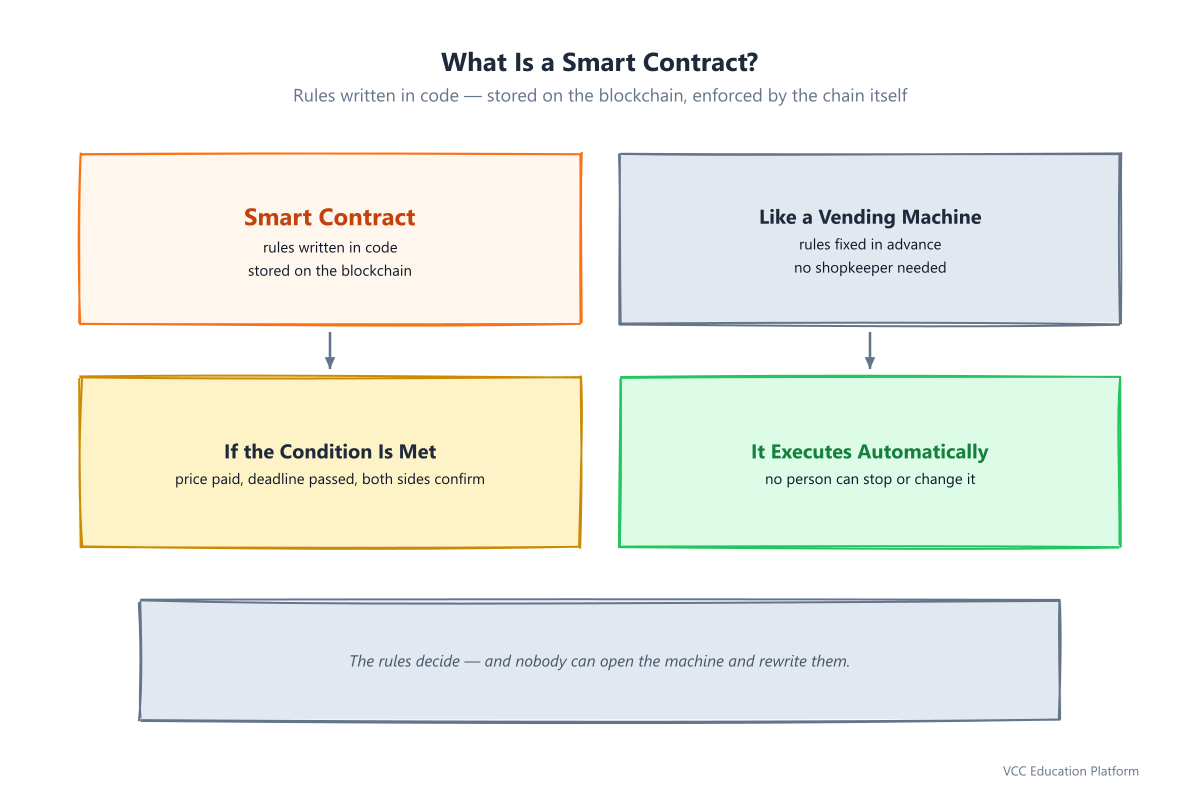
Figure 1: A smart contract is a guard — if the condition is met, the action happens automatically
1. What Is a Smart Contract?
A smart contract is a set of rules written in code and stored on a blockchain. When certain conditions are met, the rules are enforced automatically — not by a company or a person, but by the code itself.
Think of a vending machine. You put in money, choose a snack, and the machine gives you the snack. No shopkeeper is needed. The machine's rules are fixed in advance: price, selection, change. A smart contract is like a vending machine for digital rules — except nobody can open the back and tamper with the machine once it is running.
Smart Contract vs. Normal Contract
| Aspect | Normal contract | Smart contract |
|---|---|---|
| Written in | Human language | Code |
| Enforced by | Courts, lawyers, trust | The blockchain itself |
| Cost of enforcing | Time, money, risk | One transaction fee |
| Can it be changed mid-way? | Often renegotiated | No — rules are final |
| Transparency | Private | Public for everyone to inspect |
A normal contract between two people relies on enforcement. If one side breaks the deal, the other must sue, wait, and hope. A smart contract removes the waiting and the hoping — the outcome is decided by code at the moment of execution.
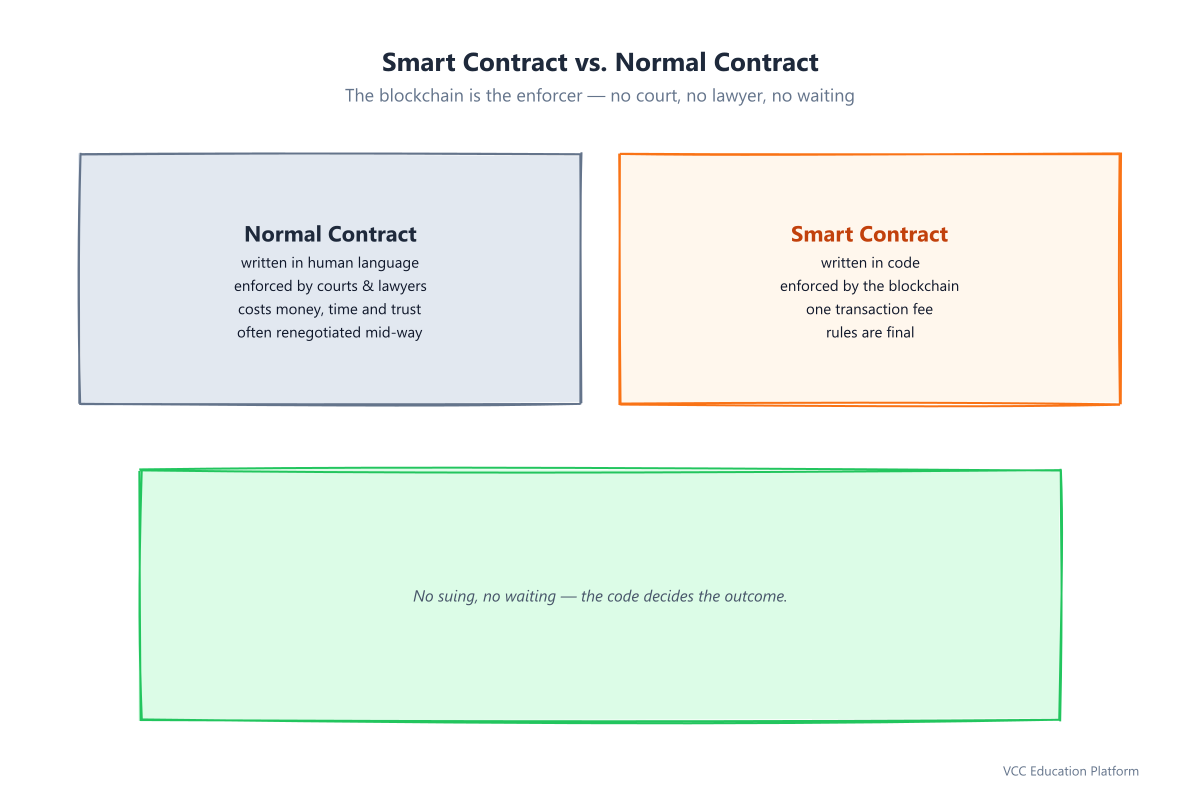
Figure 2: Normal contract vs smart contract — who enforces the rules
2. The Guard at the Gate: How Cardano Validates
On Cardano, a smart contract is not a program that runs in the background doing things on its own. It cannot send money by itself, call another contract, or loop forever. Instead, it is a validator — a pure function that answers one question about every attempt to spend its funds: approve or reject?
This is the single most important mental shift for a beginner. Ethereum-style contracts feel like active robots; Cardano's feel like strict guards. Someone (a person, an app) builds a transaction, proposes it, and the guard checks whether it follows the rules.
Three Inputs, One Answer
Every Cardano validator receives exactly three arguments:
- Datum — the state stored in the box it guards. Like a label taped onto a locked crate describing what is inside.
- Redeemer — the action the spender is requesting. Like a key plus a filled-out request form.
- Script context — the whole delivery file: the full transaction, who sent what, to whom, and when.
The validator reads these three inputs and returns a single boolean: true (let it pass) or false (turn it away).
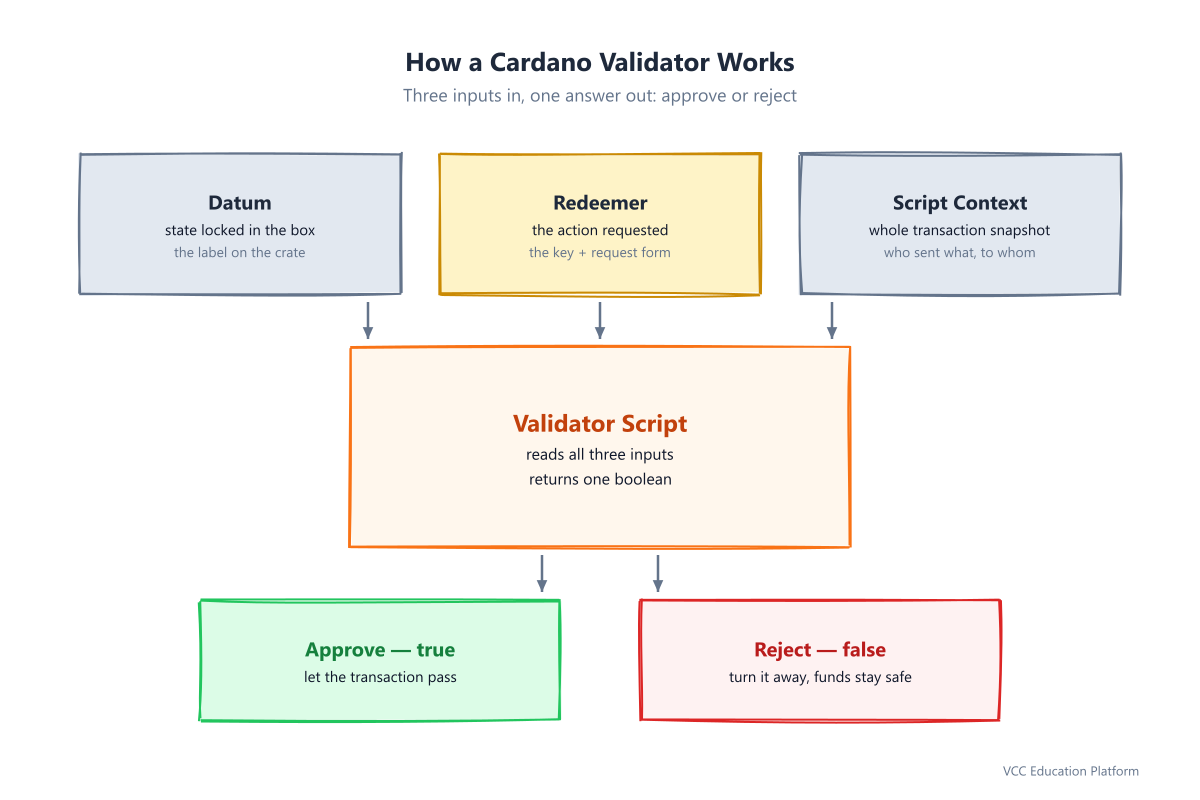
Figure 3: Three inputs in, one answer out — how a Cardano validator decides
Where Does the State Live?
Cardano has no hidden storage. Contract state lives in data attached to UTXOs — the unspent transaction outputs, the "boxes" of the ledger. Updating state means consuming an old box and creating a new one with the new label. On other chains this is like editing a ledger book in place; on Cardano it is like swapping a whiteboard for a fresh one — and every old version stays permanently visible on the public chain. No edits behind the curtain, everything auditable forever.
3. eUTXO: Why Cardano's Model Is Different
Cardano uses the extended UTXO (eUTXO) model. UTXO is the accounting model Bitcoin uses — money moves in and out of boxes, and each box can only be spent once. Cardano extends it by attaching datums, redeemers, and scripts to the boxes.
| Feature | eUTXO (Cardano) | Account model (Ethereum-style) |
|---|---|---|
| State location | Inside UTXOs (boxes) | In each contract's storage |
| Update style | Consume old box, create new | Edit state in place |
| Parallelism | Multiple boxes can move at once | One shared state, one at a time |
| Fee predictability | Cost known before sending | Can surge under congestion |
| Front-running risk | Lower — outcome is deterministic | Higher — order can be exploited |
The trade-off is real: the account model is more flexible for complex global state, which is why it is popular. Cardano chose predictability and parallelism instead. A practical consequence for you: when you interact with a Cardano smart contract, you usually know exactly what will happen and what it will cost before you confirm — like a fixed-price ride instead of a taxi meter during surge pricing.
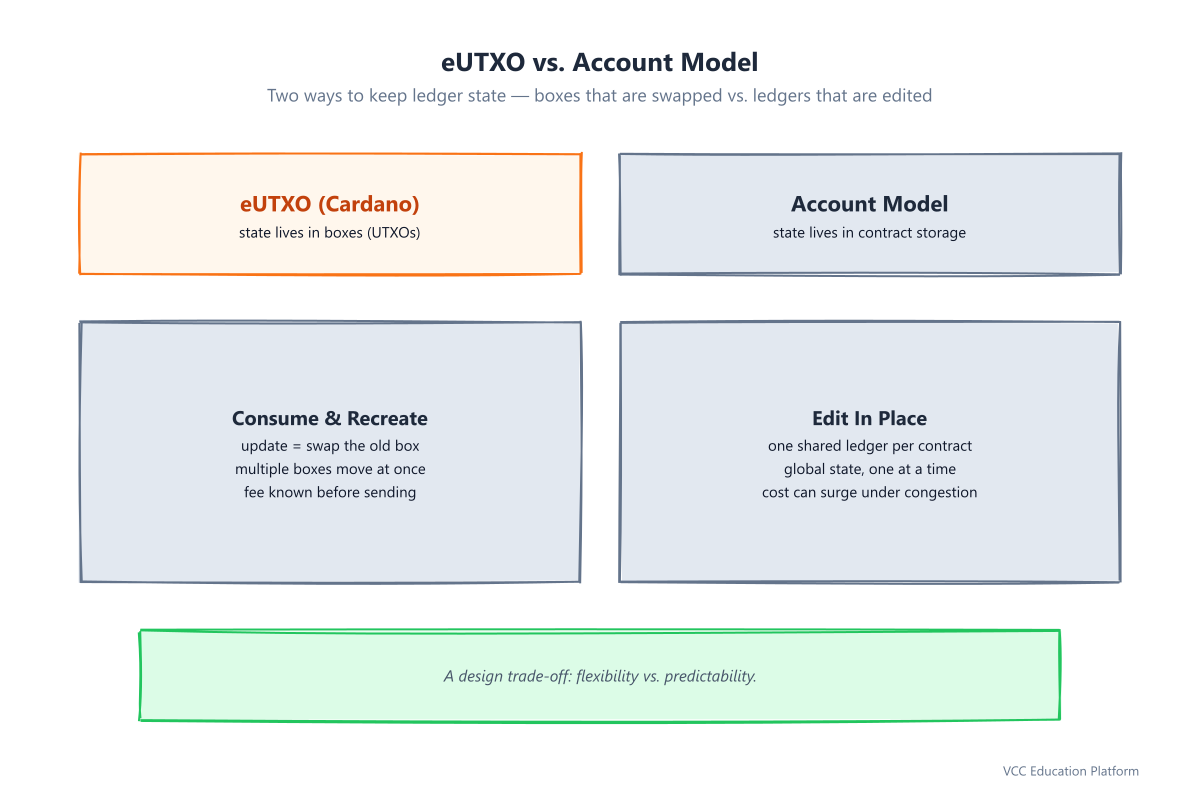
Figure 5: eUTXO vs account model — two ways to keep ledger state
4. On-Chain vs. Off-Chain: Two Halves of Every dApp
A working Cardano decentralized application (dApp) has two parts:
- On-chain — the validator script. It runs on every node, is immutable, and is written in a purpose-built language. It decides what may happen.
- Off-chain — the application. It finds the locked boxes, builds transactions the validator will accept, and gives you a friendly interface. It can be written in any language and can change over time.
You interact through the off-chain app, but the guarantee comes from the on-chain script. When you click "send", the app constructs the transaction, your wallet shows you exactly what you are signing, and you approve it. Only then does the network run the validator. If the transaction would break the rules, the validator rejects it and nothing happens — you keep your money.
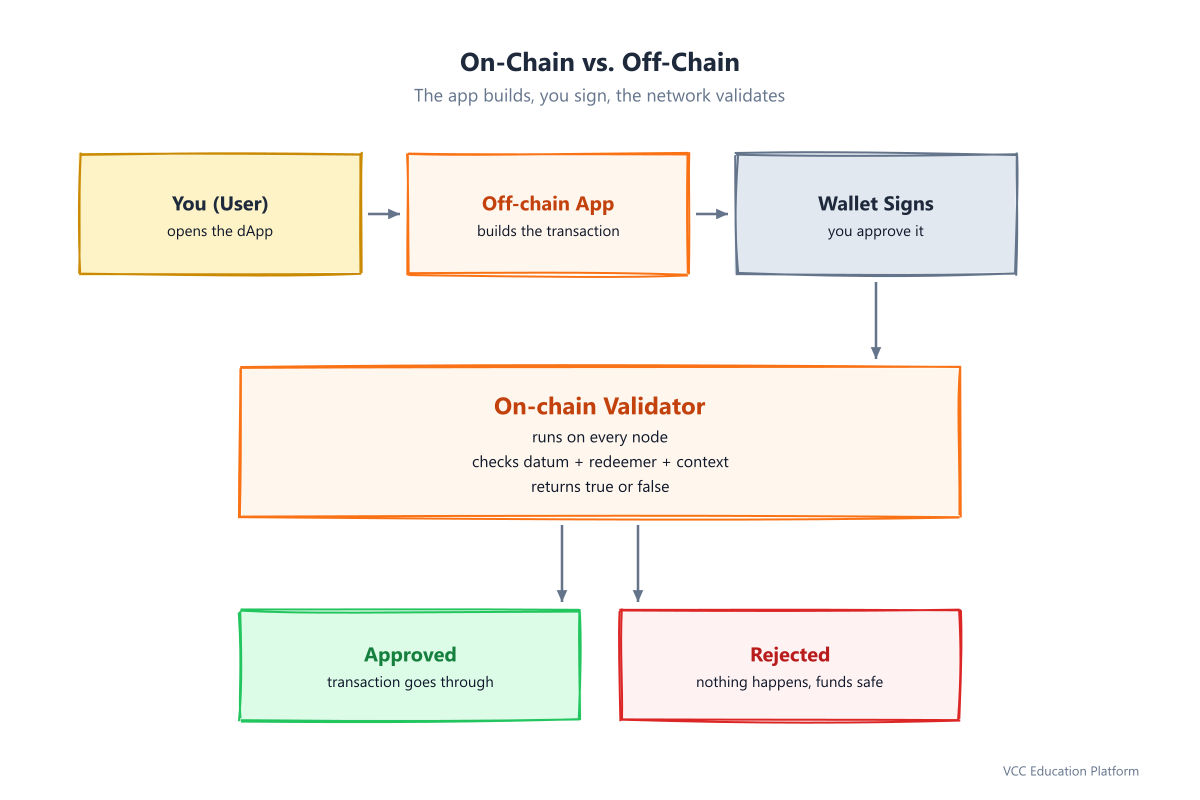
Figure 4: On-chain vs off-chain — the two halves of every Cardano dApp
5. What Can You Build?
The same guard mechanism powers nearly everything in the Cardano ecosystem:
- DeFi — lending pools, decentralized exchanges, automatic market makers.
- NFTs — minting policies that guarantee a collection is limited and authentic, because NFTs are native to the chain.
- Stablecoins — rules that peg a token to a real-world asset.
- Escrow — money locked until both sides confirm, like a "trung gian thanh toán" that cannot run away with the funds.
- Voting & governance — the validator mechanism even powers on-chain voting, which scales into Cardano's Voltaire governance era.
- Subscriptions & savings — scheduled rules, recurring payments, goal-locked savings.
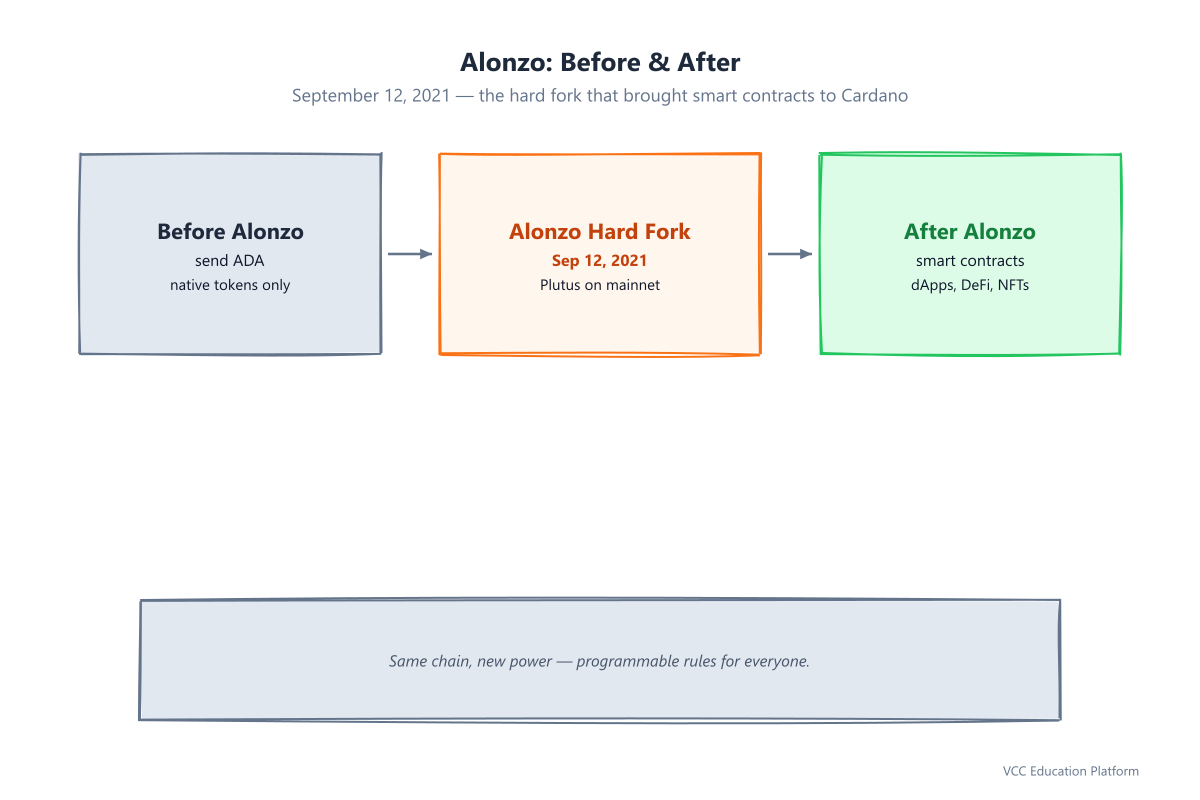
Figure 6: The Alonzo hard fork — September 12, 2021
The Alonzo Hard Fork
Before September 12, 2021, Cardano was mainly for sending value and native tokens. That day the Alonzo hard fork went live and brought Plutus to mainnet — turning Cardano into a platform where anyone can publish programmable rules. Plutus is based on Haskell, a mathematics-inspired language, which is why Cardano smart contracts can be formally verified: proofs that the code matches its specification, checked by machines rather than opinions. That is why audit firms love it. You do not need to learn Haskell to use a Cardano dApp — only to build one.
The Blueprint Convention
Modern Cardano contracts ship with a Plutus blueprint (CIP-57): a machine-readable JSON file that documents the contract's validators, their inputs, and their compiled code — like an ABI for the contract. If a project shares its blueprint, its contract is open, checkable, and integrable. No blueprint is a red flag.
6. Security: What Vietnamese Users Should Check
Smart contracts are not magic. They enforce the rules you actually wrote — so the rules had better be right. Three habits from daily life translate directly:
- Check the license (kiểm tra giấy phép). Is the contract audited? Is the audit public? Would you hire a shop without checking its license?
- Open the shop front. Is the code open-source and does it publish a blueprint? A locked door is a warning.
- Read before signing. A good wallet shows exactly what you approve. If a transaction looks surprising, reject it — the validator will protect you from breaking the rules, but only you can protect you from approving something foolish.
7. Quick Recap
- A cardano smart contract is a validator script — a guard that approves or rejects proposed transactions.
- It receives datum, redeemer, and script context, and returns one boolean answer.
- State lives in UTXOs, updated by consume-and-recreate — no hidden edits.
- The eUTXO model gives predictable fees and parallel processing.
- dApps split into on-chain logic and off-chain apps; you sign, the validator checks.
- Alonzo (Sep 2021) brought Plutus to mainnet; blueprints (CIP-57) make contracts checkable.
- Always verify audits and open-source status before using any dApp.
Want to go deeper? This article is part of a series on Cardano development. The next stops cover how to write your own contract, the difference between Plutus and Aiken, and how the eUTXO model powers real dApps.