
When Vietnamese developers and compliance officers search for midnight y tế việt nam, they are usually asking one practical question: can a privacy-first blockchain actually help hospitals, insurers and banks handle sensitive data — bệnh án, credit profiles, KYC records — without leaking it? The short answer is yes, and the timing could not be better. Vietnam is racing toward full digitalization at the same moment it is tightening personal-data protection: hồ sơ bệnh án điện tử goes nationwide by the end of 2026, biometric eKYC is mandatory for wallets, and Nghị định 13/2023/NĐ-CP already treats health data as sensitive personal data with criminal penalties for mishandling. Midnight, Cardano's privacy-focused partner chain, was built precisely for this contradiction: digitize everything, but leak nothing.
This guide explains how Midnight works, walks through concrete healthcare and finance flows built on it, and maps the technology onto the Vietnamese regulatory landscape — so you can judge for yourself whether Midnight is a plausible "midnight use case" for your organization.
What Makes Midnight Different From Every Other Blockchain
Most blockchains force you to choose: transparency (Bitcoin, Ethereum, Cardano) or anonymity (Monero, Zcash). Midnight removes the choice with a hybrid design that the docs call a data-protection blockchain.
Two ledgers, one chain. Midnight runs a public ledger for things that should be visible — governance, token transfers, smart-contract proofs — and a private state that lives encrypted on each user's device. The bridge between the two is zero-knowledge: a zk-SNARK proof of about 128 bytes is enough for the public chain to verify that a private computation was done correctly, in milliseconds, without seeing any of the underlying data.
Privacy is the default, disclosure is explicit. Midnight's smart contracts are written in Compact, a TypeScript-like language. In Compact, any data derived from the private "witness" is blocked from leaving the contract unless the developer writes an explicit disclose() call. The compiler literally refuses to leak. Midnight's team calls this the Witness Protection Program — and it means a hospital or bank cannot accidentally ship personal data on-chain: the tooling won't let it.
Two tokens with clear roles. NIGHT is the unshielded governance and utility token (fixed supply of 24 billion, launched December 2025). Simply holding NIGHT generates DUST, a shielded, non-transferable token used to pay transaction fees. The design separates speculation (NIGHT, public) from usage (DUST, private) — privacy applies to your activity, not to the price of the network.
A real, live network. Midnight's mainnet went live on 30 March 2026 after years of R&D funded by roughly $200M from Charles Hoskinson, with an airdrop across 37 million wallets. It launched with a federated ("guarded") set of operators — including Google Cloud, MoneyGram, Vodafone Pairpoint, eToro and Worldpay — and is scheduled to decentralize to stake-pool operators in the Mōhalu phase in mid-2026. It is not vaporware; it is a working chain with a roadmap.
Why Healthcare in Vietnam Is Ready for Midnight
Vietnamese healthcare is being digitized on a strict clock, and that clock is about to create a serious data-sharing problem.
By 31 December 2026, every hospital, clinic and outpatient facility in Vietnam must run hồ sơ bệnh án điện tử (electronic medical records), under Thông tư 13/2025/TT-BYT and the Ministry of Health's Quyết định 586/QĐ-BYT. From 1 January 2027, paper records are no longer accepted. Meanwhile Quyết định 965/QĐ-BYT pushes for integrating these records into VNeID as a national sổ sức khỏe điện tử — and pilots at Bạch Mai and Chợ Rẫy are already exchanging medical data between facilities.
At the same time, Nghị định 13/2023/NĐ-CP classifies health data as sensitive personal data. Handling it requires strict consent, purpose limitation and security measures — and violations can carry administrative, disciplinary or even criminal consequences. Every hospital that digitizes a record is therefore storing a sensitive asset it is legally bound to protect and to move between specialists, insurers and the health insurer bảo hiểm y tế (which covers more than 90% of the population).
That is the two clocks in action: digitize by the deadline, but do not expose sensitive data. Sharing a full record with a second hospital, an insurer or an employer is both necessary (referrals, claims, workplace screening) and risky (every copy is a new attack surface). Midnight changes the shape of the problem: instead of sending the record, you send a proof about the record.
The Patient Story: Your Records, Your Device
In a Midnight-based system, a patient's medical history lives encrypted on the patient's own device. When a specialist needs information, the patient's wallet generates a zero-knowledge proof that says exactly what the specialist needs to know — "this patient is vaccinated," "this patient is eligible for this treatment," "this test result is within normal range" — and nothing else. The specialist verifies the proof against Midnight's public ledger. No records are uploaded, copied, or exposed. The patient stays in control, and the hospital stays compliant.
Selective Disclosure for Doctors, Insurers and Employers
This is Midnight's flagship feature, and it maps directly onto the three parties in Vietnamese healthcare:
- Hospitals prove a patient is a current patient with a valid referral,
- Insurers (BHYT) verify eligibility and claim conditions without receiving
- Employers and schools verify that an employee or student is vaccinated
Community experiments confirm the pattern is buildable today: the Project Catalyst-funded Private Health Test Verifier proves vaccination and test results on Midnight, and the open-source ZK-VCR project demonstrates an "airlock" model where one trusted clinic signs a credential and an insurer's contract checks it on-chain without ever seeing the raw data.
Consent That Is Actually Enforceable
Consent on paper is a signature on a form. Consent on Midnight is a smart contract: the patient approves exactly one disclosure, for exactly one verifier, for exactly one purpose, with an auditable trail. Revoking access means revoking a proof, not hoping a hospital deletes a spreadsheet. For compliance officers staring at Nghị định 13, that is the difference between a policy and a technical guarantee.
Healthcare on Midnight: The Flow
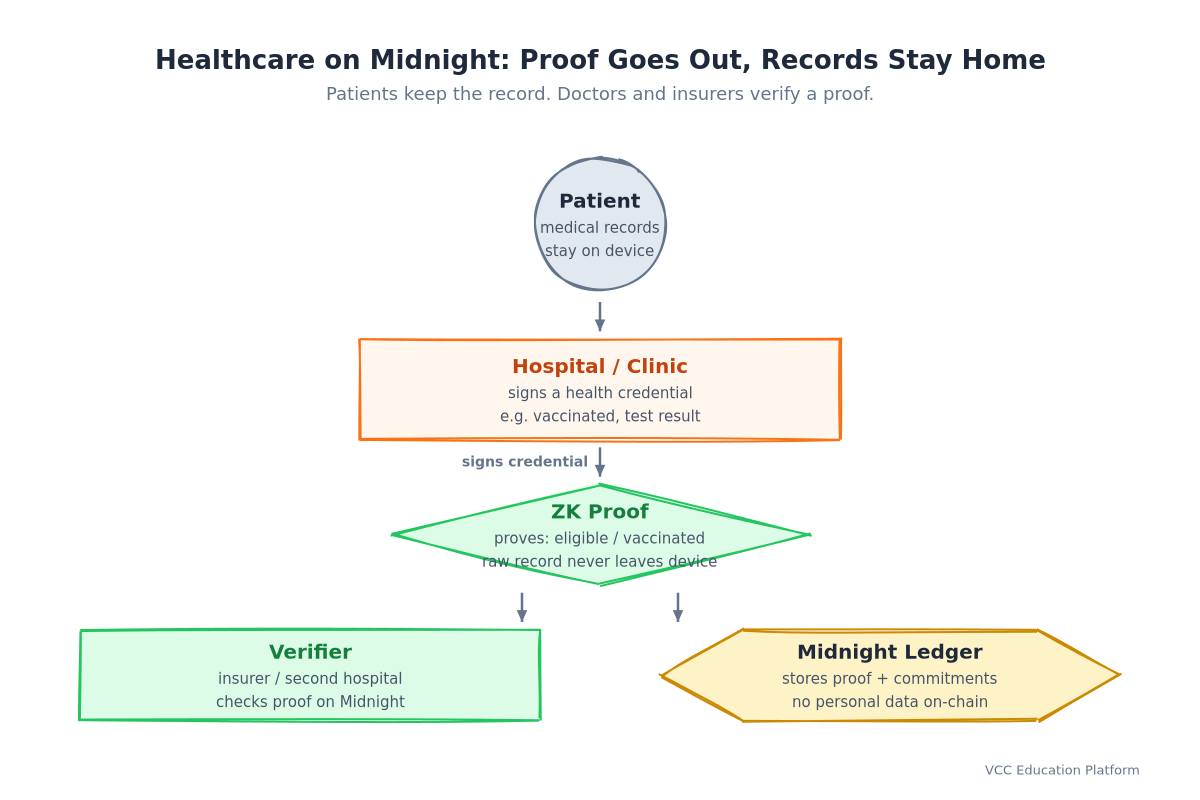
Figure 1: Healthcare on Midnight — the proof goes out, the records stay home
The flow is short: sign, prove, verify. The hospital issues a signed credential once. The patient's device turns that credential into a ZK proof on demand. The verifier checks the proof on-chain in milliseconds. The raw record never moves, so there is nothing to intercept, copy or subpoena. If a regulator ever needs to audit the disclosure, the smart contract holds the audit trail — not the clinical data.
Blockchain Tài Chính Riêng Tư VN: Midnight for Finance
If healthcare is about records, finance is about balances and identities — and Vietnamese finance has already embraced the same two clocks. From 1 January 2025, the State Bank of Vietnam (Thông tư 40/2024/TT-NHNN and Thông tư 18/2024/TT-NHNN) made biometric authentication mandatory for online banking and e-wallet transactions; MoMo and ZaloPay both now verify users via VNeID, and ZaloPay has integrated its payment gateway into VNeID itself for health insurance and social insurance payments. Financial institutions are digitizing their onboarding and credit processes while simultaneously being told their customers' data is sensitive and protected.
That creates a market for "blockchain tài chính riêng tư vn" — private finance infrastructure — and Midnight's documented patterns fit it exactly.
Private Credit Scoring Without a Credit Bureau in the Room
Midnight's own ZK Loan example is the cleanest illustration. A borrower keeps their credit profile — score, income, tenure — on their device. An attestation provider (a bank or credit bureau) signs that profile off-chain using a signature scheme that the Midnight circuit can verify internally. The borrower then submits a proof to a loan contract: "my signed profile shows I qualify for this tier." The contract checks the signature inside the zero-knowledge circuit and records only the outcome on-chain: loan approved, at this amount. Neither the score nor the income ever touches the ledger. Even better, the borrower's identity is derived from a PIN, so repeated loans cannot be linked back to one person.
Verifiable Financial Reporting Without Exposing the Books
Midnight's Request for Startups programme explicitly calls for a ZK Proof-of-Reserves Auditor, proofs of liquidity and private collateral ratios — the exact checks regulators and counterparties want from exchanges, stablecoin issuers and lenders. The pattern: a custodian proves "our reserves cover our liabilities" with a cryptographic proof instead of a screenshot. Trust, minus the data.
zk-KYC and Nghị định 13 Compliance
KYC today means sending your ID, address and selfie to every wallet, exchange and bank you touch — and hoping each one stores it safely. With Midnight, a qualified issuer (a bank, Bộ Công an's VNeID system, or a regulated fintech) signs your KYC status once, and you prove "KYC passed, level 2" to any on-chain service with a proof. Each service learns only that fact. This is selective disclosure applied to compliance, and it directly reduces the number of copies of your sensitive personal data floating around the economy — which is exactly what Nghị định 13 demands.
The Adoption Map: Where Midnight Could Fit in Vietnam
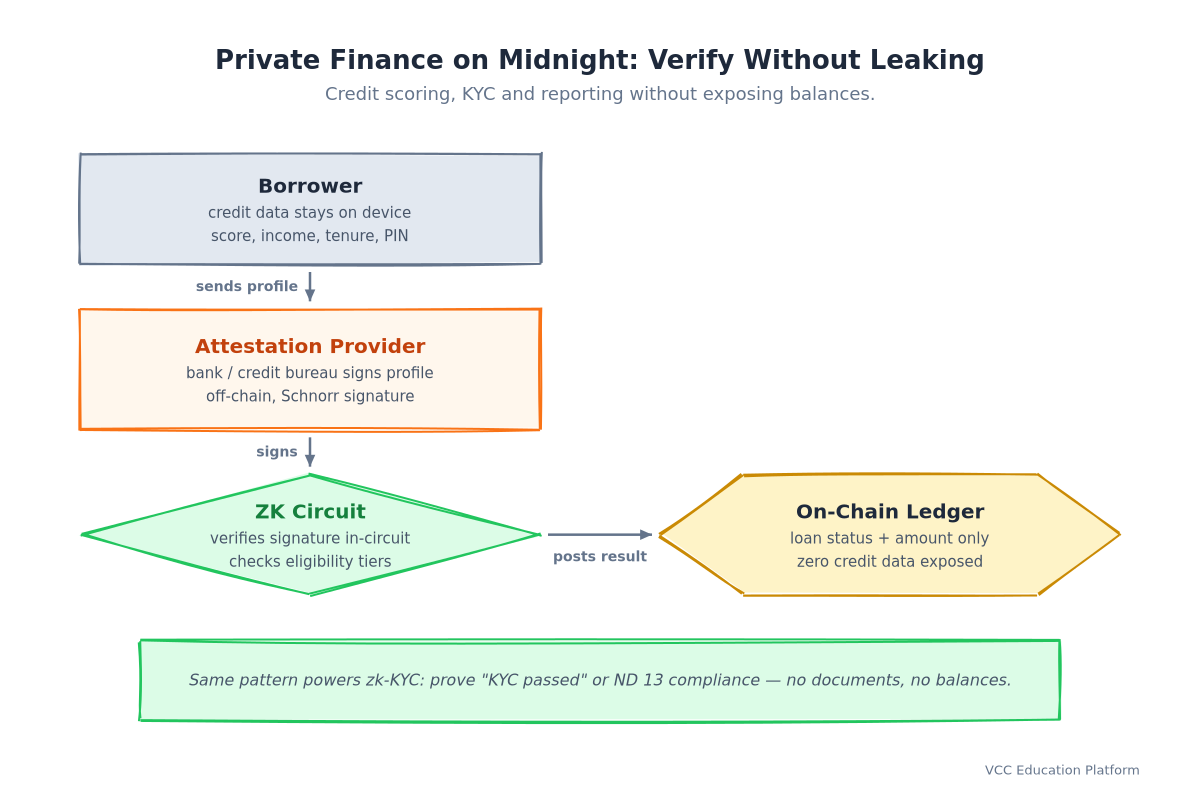
Figure 2: Private Finance on Midnight — verify without leaking balances
Putting the two sectors side by side reveals a single architecture serving three regulated parties: healthcare (hospitals, BHYT, sổ sức khỏe điện tử), finance (banks, e-wallets, fintech) and digital identity (VNeID, CCCD, Đề án 06). In every case the same shape applies: a trusted issuer signs a fact, the holder proves it, a verifier checks the proof, and nothing sensitive is stored where it does not have to be.
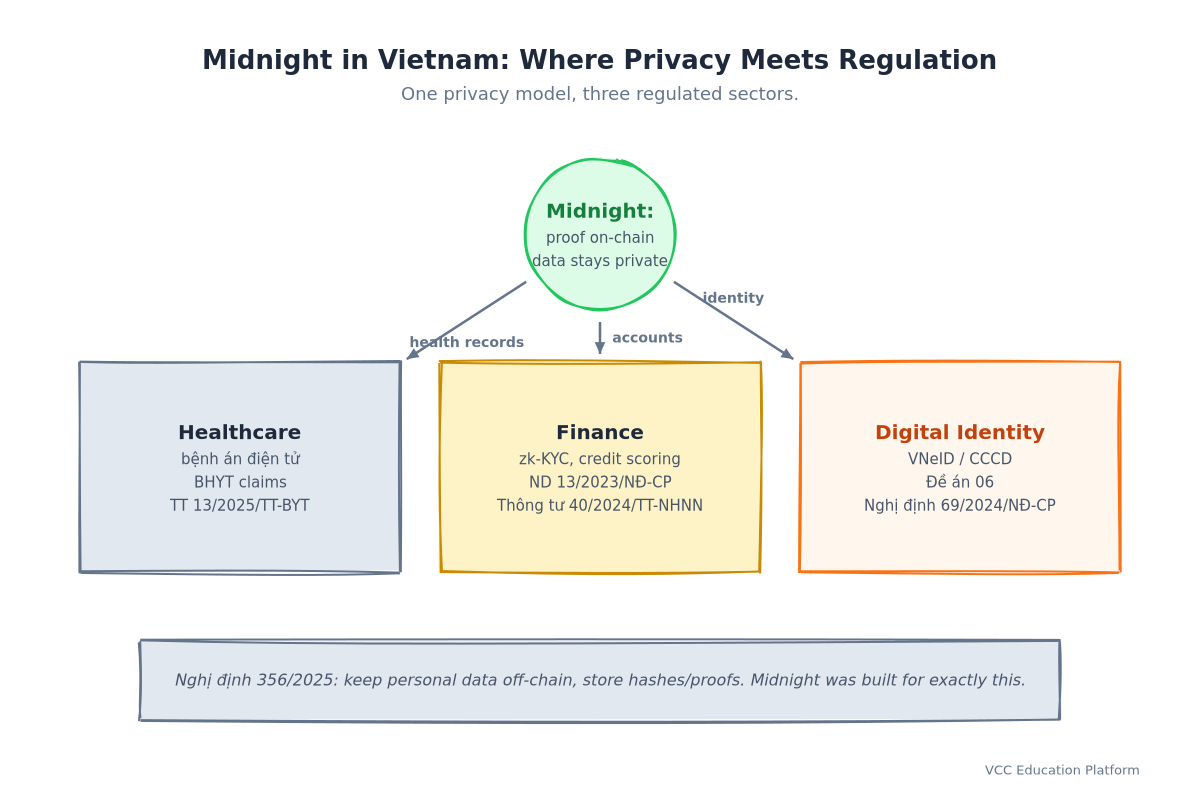
Figure 3: Midnight in Vietnam — where privacy meets regulation
Hospitals and Insurers
The most realistic near-term users. They already exchange digital data, they already face a 31/12/2026 deadline, and they already have compliance pressure from Nghị định 13. A proof-based referral or claim system reduces data copies and simplifies consent — two problems their current software vendors are not solving with cryptography.
Banks, E-Wallets and Fintech
MoMo and ZaloPay already hold KYC data verified through VNeID; banks already run credit bureaus. They are the natural attestation providers. The first production use is likely zk-KYC for wallet interoperability or private credit scoring for underserved borrowers — lending based on proof, not on a single central bureau's records.
Regulators and the State
The strongest structural signal is Nghị định 356/2025/NĐ-CP, effective from 1 January 2026 — the first Vietnamese decree with explicit rules for blockchain: do not store personal data directly on-chain; store only de-identified data or hashes; use verified cryptographic algorithms; assess compliance annually. Read that decree as a spec sheet and it describes Midnight: proofs on-chain, personal data off-chain, hashes where necessary. For a state agency exploring blockchain for eID, health or payments, Midnight is a rare case where the technology's design is the compliance posture.
Honest Limits
A balanced article has to say what Midnight cannot do yet.
It is young. Mainnet is barely five months old and still federated. The decentralization roadmap (Mōhalu) lands mid-2026; until then, a handful of large operators run the network. For mission-critical state or hospital systems, that is a real, current concern.
Zero-knowledge is not free. Circuits are complex, audits are expensive, and mid-size Vietnamese teams will need specialist help (or turnkey providers) to build production ZK systems. The tooling is improving, but "download and go" is still a few iterations away.
Law is still settling. Nghị định 356/2025 bans raw personal data on-chain but is silent on some edge cases (e.g. who is liable when a verifier leaks a proof, or how cross-border chains fit Vietnam's data-localization rules). Enterprises adopting Midnight will still need lawyers, not just cryptographers.
Crypto stigma. Vietnamese regulators have historically been cautious with crypto assets. Midnight's unshielded NIGHT token, regulated disclosure posture and compliance-first framing make it more governance-friendly than classic privacy coins — but "cryptocurrency" remains a sensitive word in Hanoi, and adoption will depend on framing the product as private data infrastructure, not as a token.
Common Questions
Is "midnight y tế việt nam" a real product? There is no single national "Midnight for Vietnamese healthcare" product today. What exists is the technology (Midnight mainnet, live since March 2026), the proven patterns (selective disclosure, ZK loan-style proofs) and Vietnamese regulation that creates a clear opening. The term describes an opportunity and a design pattern, not a shipped government system.
What is the best "midnight use case" to start with? The lowest-risk, highest-clarity one is zk-KYC: one issuer signs KYC status, every service verifies a proof. It needs the fewest moving parts, delivers immediate Nghị định 13 / biometric-eKYC compliance value, and can be piloted with a single wallet and a single verifier.
Does Midnight replace the medical record system? No. Midnight is not a database to store bệnh án; it is a layer that lets you prove things about records that stay where they belong — with the patient, or in an accredited hospital system. Think of it as the proof layer on top of today's HIS/EMR software, not a replacement for it.
Is data stored on-chain? Personal data does not belong on Midnight's public ledger by design: the private state is encrypted on device, and what reaches the public chain is a proof or commitment. Under Nghị định 356/2025, that is precisely the compliant way to operate a blockchain that touches personal data.
Is Midnight just another privacy coin? No. Privacy coins hide everything from everyone. Midnight's dual-ledger design makes privacy the default while keeping explicit, auditable disclosure possible — the "regulated privacy" position that Vietnamese institutions can actually adopt.
What is the difference between NIGHT and DUST? NIGHT is the public governance token (fixed supply, launched December 2025); holding it generates DUST, the shielded, non-transferable token that pays transaction fees. NIGHT is about the network; DUST is about using it privately.
The Bottom Line
Vietnam has two clocks running at once: a digitalization clock (electronic medical records by 2026, biometric eKYC, VNeID everywhere) and a protection clock (Nghị định 13, Nghị định 356/2025, criminal liability for data misuse). Every institution caught between them faces the same problem — how to share enough to serve the customer without sharing so much that it becomes a liability. Midnight's selective-disclosure model is the rare technology that answers both clocks at once: prove what you need to prove, store nothing you do not have to, and keep the audit trail on-chain. For Vietnamese healthcare and finance, that is not a feature wish-list. It is a way to make the digital transformation actually safe.