
Imagine a currency whose supply is fixed forever — a number written in stone that no government, no company, and no software update can ever increase. Now imagine that, unlike Vietnam's đồng (which the State Bank can print in unlimited quantities), this currency can only ever produce exactly 45 billion units, no more. That is the single most important fact about Cardano's ADA, and in this article we will unpack everything that statement implies: where the 45 billion came from, how it is being released, where transaction fees go, and why all of this matters for your decision to hold ADA.
"Tokenomics" sounds like a scary technical word, but it simply means the economics of a token: how much exists, who owns it, how new units are created, and what gives it value. Understanding tokenomics is like reading the "terms and conditions" of a currency before you trust it with your savings. Let's walk through Cardano's, step by step, in plain language.
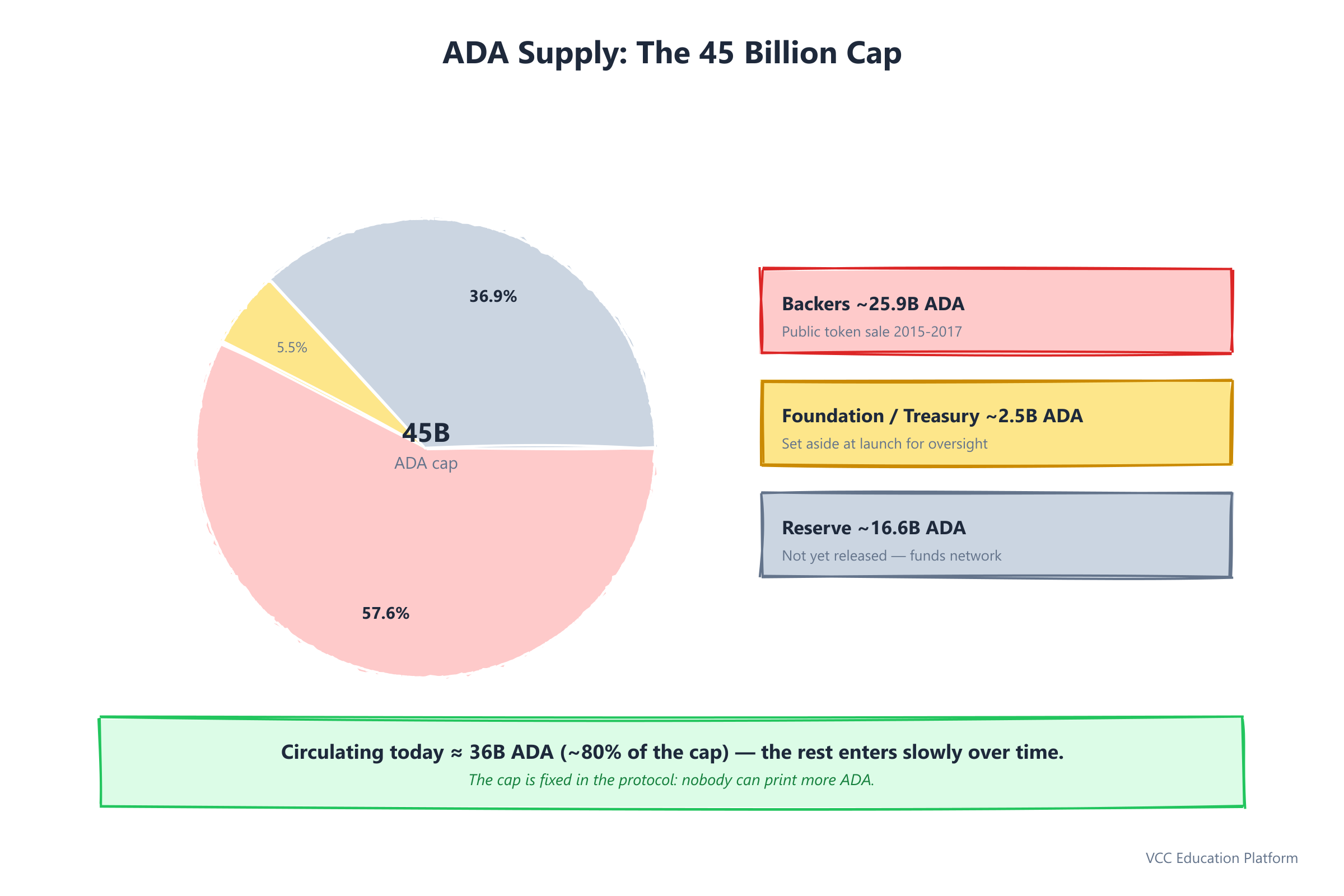
Figure 1: The 45B ADA hard cap and the total supply picture
What Is the 45 Billion ADA Cap?
The maximum supply of ADA is 45,000,000,000 — exactly 45 billion. This figure was fixed in Cardano's protocol at launch and it is the foundation of everything else in this article. Two words matter here:
- Maximum supply: the largest number of ADA that can ever exist. Cardano can never mint more than 45 billion.
- Circulating supply: the ADA that actually exists and moves today. In mid-2026, roughly 36 billion ADA — about 80% of the cap — is in circulation. The remaining ADA is held in a special pool we will talk about in a moment.
Why does a fixed cap matter? Because in traditional finance, a central bank can create new money whenever it wants, which over time dilutes the value of what you already hold (this is a big reason for inflation). A hard-capped cryptocurrency removes that lever entirely: nobody can print ADA. For a Vietnamese reader, the comparison writes itself — while the State Bank can issue more đồng to cover budget needs, Cardano literally cannot. The cap is not a promise; it is enforced by the network's rules on every computer running the protocol.
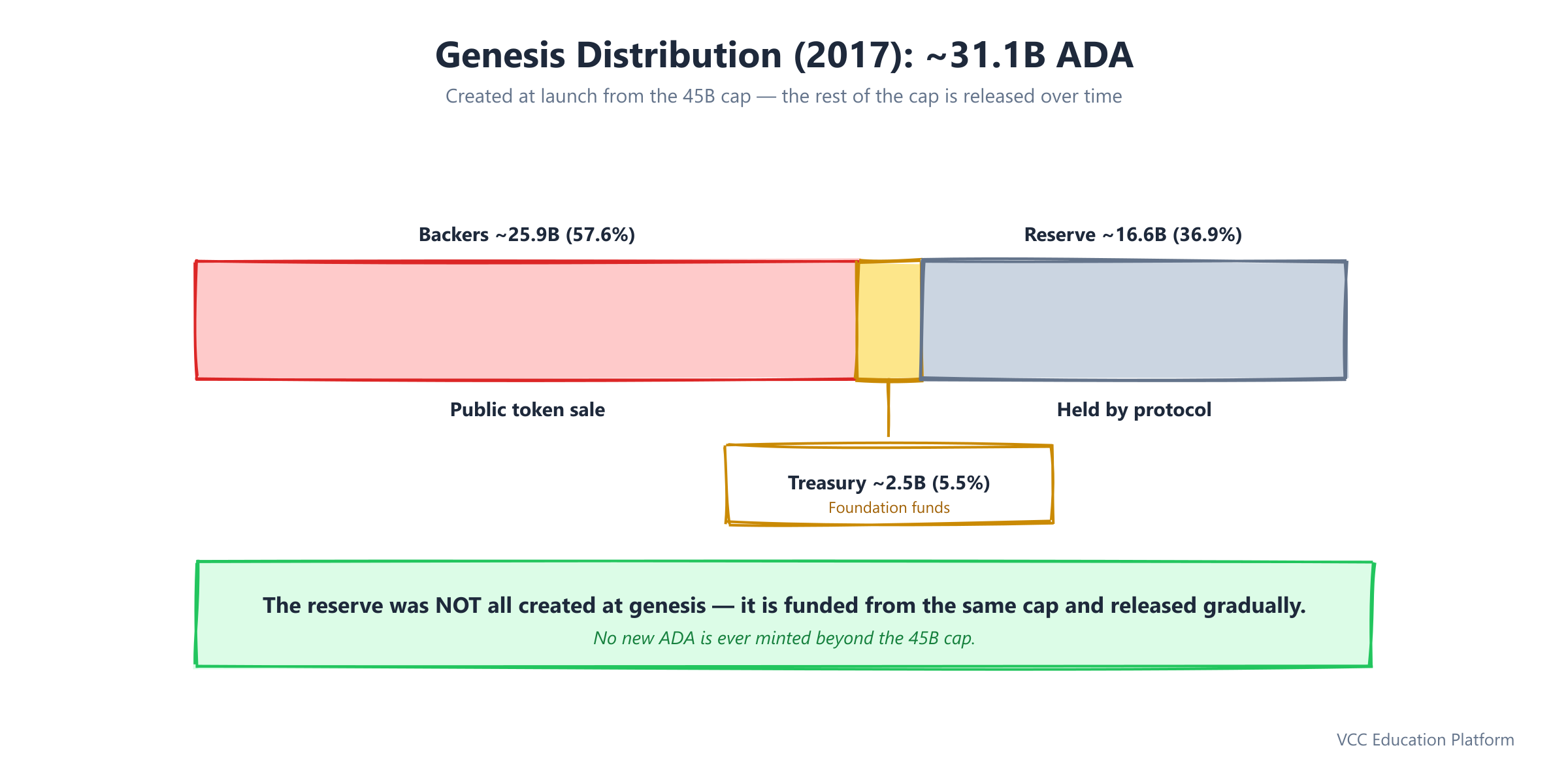
Figure 2: The genesis supply distribution — ICO backers, treasury, and reserve
Where Did the Initial ADA Go? (The Genesis Distribution)
When Cardano launched in 2017, the protocol created roughly 31.1 billion ADA out of the 45 billion cap, in what is called the genesis block. That initial supply was divided among three groups. If you think of the full 45 billion as one pie, the commonly cited split is:
- Initial backers (ICO participants) — about 25.9 billion ADA (57.6%). From 2015 to 2017, Cardano ran a public token sale (in those days called an ICO) to fund development. People who bought in received their ADA at launch. This is the biggest single slice.
- The Cardano Foundation / treasury — about 2.5 billion ADA (5.5%). This portion was set aside for the foundation that oversees the project and for a community treasury.
- The protocol reserve — about 16.6 billion ADA (36.9%). This is the pool of ADA that was not released at launch. It sits in the protocol and is trickled out over time to pay for network incentives (see the next section).
A common beginner reaction is worry: "Backers got more than half? Isn't that unfair?" Here is the honest picture: this was a public sale model that was the norm in 2015-2017, the amounts are visible on the public ledger for anyone to verify, and the reserve exists to fund the network itself, not to enrich founders. As you will see next, that reserve is what pays the people who keep Cardano running.
The Reserve: Why New ADA Is Released (Monetary Expansion)
Here is the subtle part that most explanations skip: ADA's supply does grow over time, but only up to the 45 billion cap. Each epoch (Cardano's 5-day time period), the protocol releases a small amount of ADA from the reserve into the "reward pot" that pays block producers and delegators. This gradual release is called monetary expansion.
In plain terms: the reserve is like a pre-funded treasury chest that Cardano spends from, a little at a time, to reward the computers and people who secure and run the network. Because the reserve is finite, the amount released each epoch is designed to shrink over time, and the funding is expected to last for many decades.
This one design detail explains a lot of things you may have heard:
- Why staking APY drifts downward over the years — as the reserve depletes, there is less "new" ADA to hand out, so the reward rate naturally declines over the long term.
- Why "ADA supply increases slowly" is not the same as inflation in the fiat sense — the growth is capped, pre-scheduled, and has a known ceiling (45 billion).
- Why the system is self-sustaining — the reserve + fees fund rewards and development without needing anyone to "print" money on a whim.
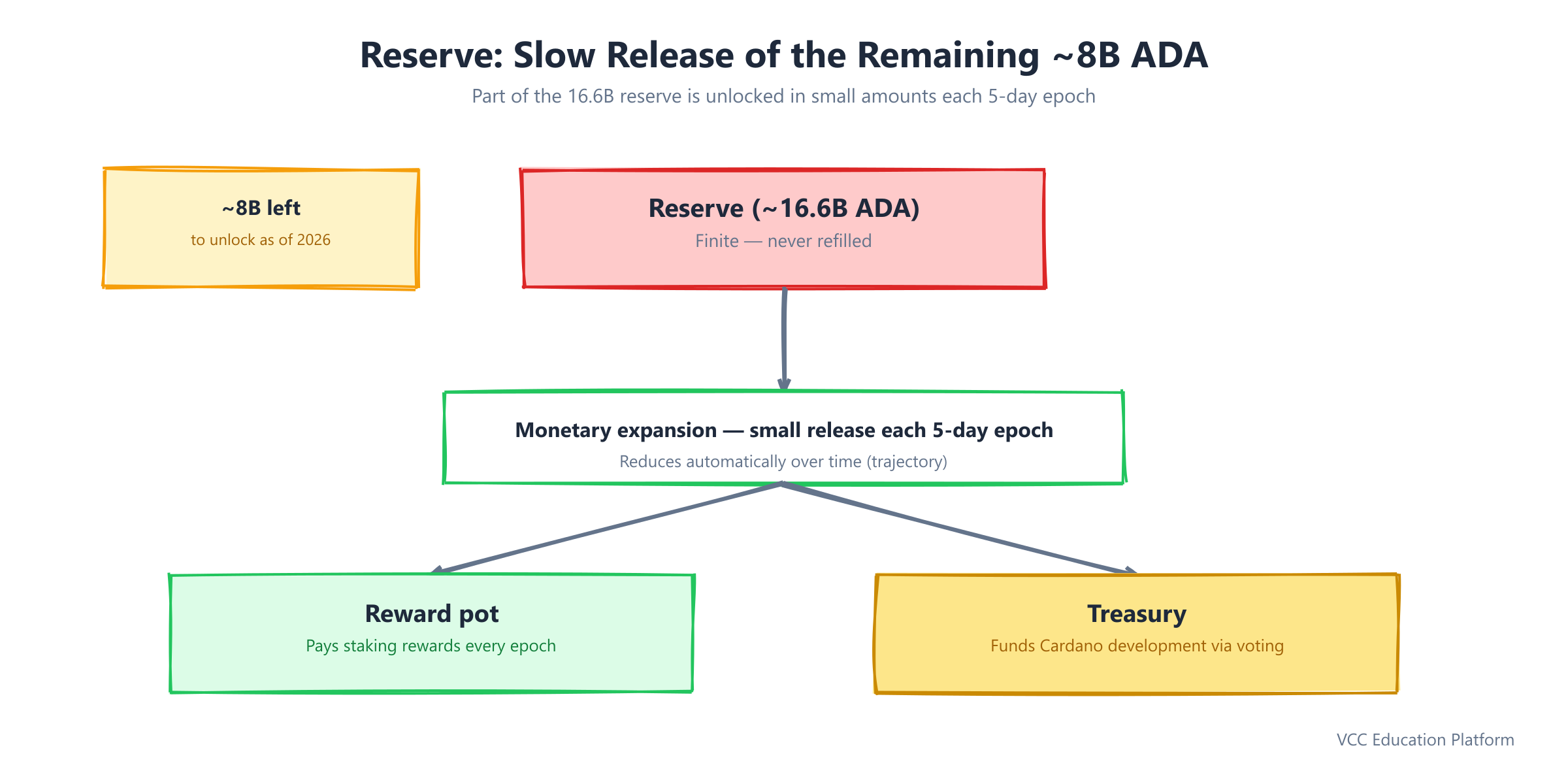
Figure 3: How the reserve releases ADA over time into rewards and treasury
So a useful one-line summary for beginners: ADA is "capped inflation," not deflation. The cap never grows, ADA is gradually released into circulation, and — crucially — ADA is not burned when you pay fees (more on this next). Bitcoin fans sometimes call Cardano's model "dilutive," but the honest framing is that the dilution is fixed, known, and ends at 45 billion.
Where Do Transaction Fees Go? (Hint: They Are Not Burned)
One of the most common beginner misconceptions is that "all cryptocurrencies burn transaction fees, which makes the coin scarcer over time." That is true for some networks (Ethereum burns part of its fees), but it is not true for Cardano. On Cardano, transaction fees are collected by the protocol and reused to fund the network:
- About 80% of fees (together with the reserve release) flows into the reward pot that pays stakers and pool operators.
- About 20% of fees flows into the treasury — the on-chain fund used to pay for development and community projects.
This is a deliberate design choice: instead of destroying fees, Cardano recycles them to keep the network secure and self-funding. The "scarcity" of ADA comes from the fixed cap, not from burning. This distinction is worth understanding because it means ADA's value thesis rests on the hard cap plus usefulness, not on a shrinking supply.
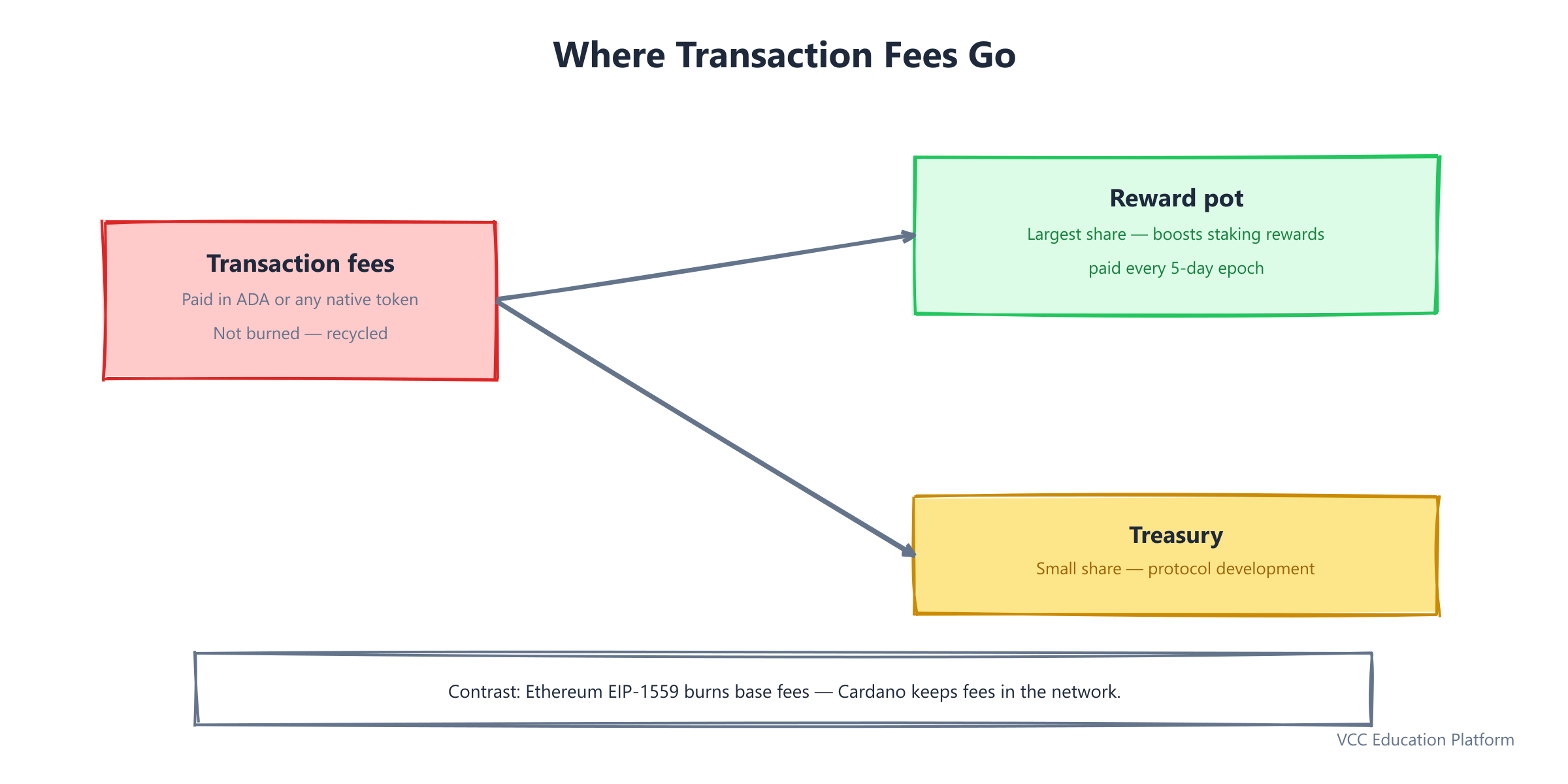
Figure 4: Where transaction fees go — reward pot (80%) + treasury (20%)
Another beginner-friendly detail: ADA is divisible down to one-millionth of an ADA, a unit called a lovelace. So 1 ADA = 1,000,000 lovelaces. This is just like how a đồng is the smallest unit of Vietnamese currency — except with six decimal places, ADA is far more practical for small payments.
What Is ADA Actually Used For? (Utility)
Scarcity alone does not create value; a currency also needs to be useful. ADA has several genuine uses, which makes it far more than a collectible:
- Transaction fees — you must pay a small ADA fee for every transaction on the network, just as you pay a bank fee for transfers. Every active user needs some ADA.
- Staking — holding ADA lets you delegate to a stake pool and earn rewards (as covered in our companion guide, Staking Rewards Explained). The ADA stays in your wallet and works for you.
- Native tokens — since the "Mary" upgrade in 2021, Cardano supports native tokens that live directly on the ledger. You can create and send custom tokens (NFTs, stablecoins, community coins) without needing a smart contract, and you pay the network fee in ADA. This makes ADA the "fuel" for an entire token economy.
- Governance — under the Conway era (CIP-1694, in force since 2024), ADA holders can vote directly or delegate their voting power to DReps (delegated representatives). Votes decide protocol changes and how the treasury spends its money. In effect, ADA holders govern the network's budget — something no đồng holder can do with the State Bank's budget.
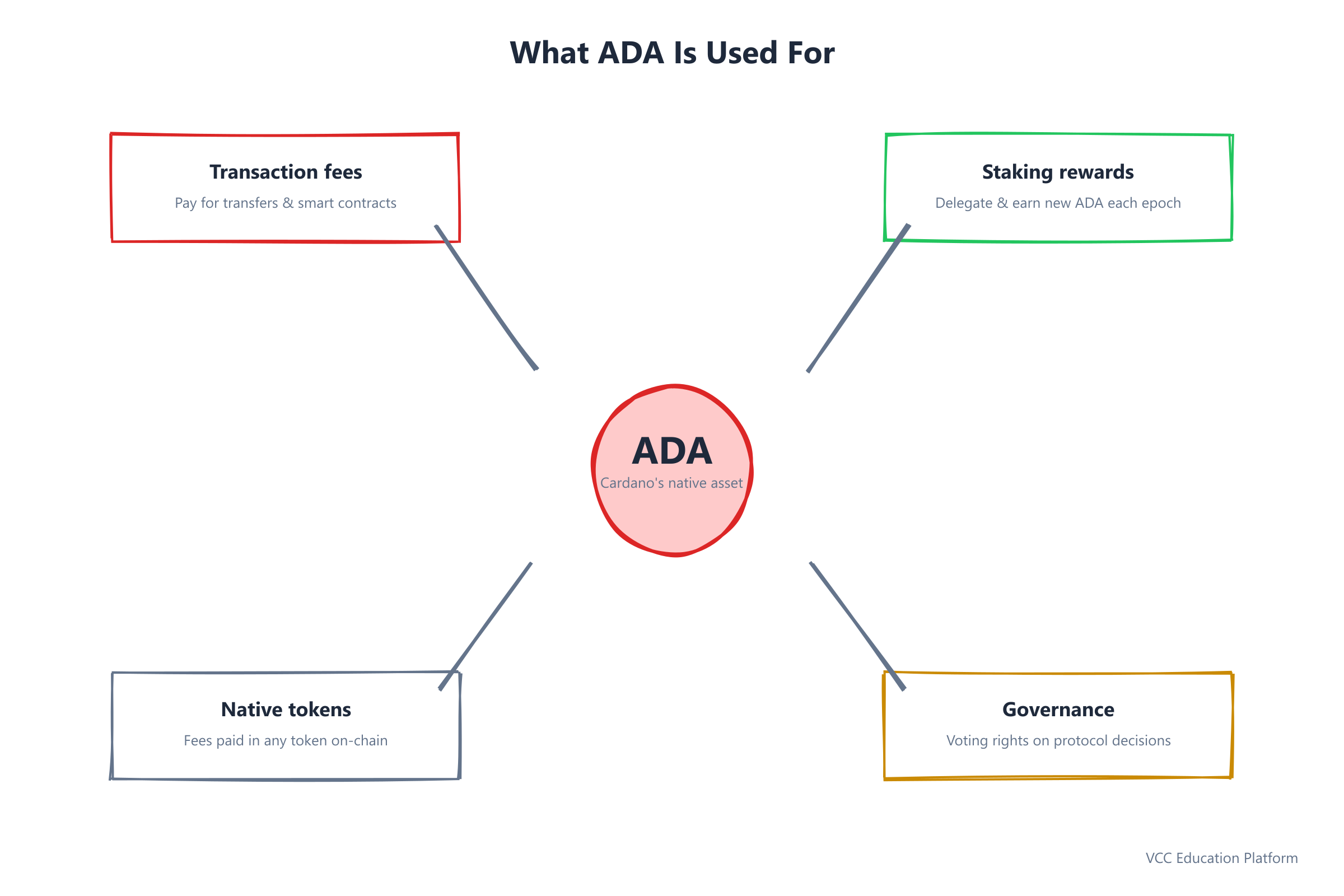
Figure 5: The many uses of ADA — fees, staking, native tokens, and governance
Because all of these activities require ADA, demand for ADA rises as the network gets more use — and the fixed cap means that growing demand meets a supply that cannot expand beyond 45 billion. That combination (limited supply + real utility) is the core of Cardano's value story.
The Treasury: A Self-Funding Development Budget
Let's zoom in on the treasury, because it is one of Cardano's most distinctive features. Every epoch, the treasury collects roughly 20% of fees and a share of monetary expansion. This money accumulates and is then spent only if ADA holders approve it through the governance process — on development, education, infrastructure, and community projects.
You can think of the treasury like a "quỹ phát triển" (development fund) that belongs to the community and is managed by the community's votes, rather than by a single company or a central bank. It is what allows Cardano to keep improving and building for years without depending on donations or outside investors. In the earlier Vietnam comparison: the network has its own budget that its citizens (ADA holders) vote on — a genuinely different model from a state bank.
Supply, Value, and the "Check the Tokenomics" Lesson
Now let's tie everything together with the practical question: does understanding tokenomics help you buy better? Yes, in one very important way: it trains you to ask "how many of these exist, and who can create more?" before you put money in.
For ADA, the answer is clean:
- Maximum supply: fixed at 45 billion, enforced by the protocol.
- Who can create ADA: nobody. Not the founders, not the treasury, not the government.
- How ADA enters circulation: only the pre-scheduled reserve release, which is capped and shrinking.
- What destroys ADA: nothing. No burning. The cap is the ceiling.
For comparison, when you look at an unknown token on Cardano or any chain, the first thing to check is its minting policy — the rules that decide who can create more units. A token whose creator can "print" unlimited supply is a red flag; a token with a fixed, auditable policy is a credibility signal. This is the same diligence you would apply to checking the legal papers ("giấy tờ") of an apartment before buying: kiểm tra tokenomics trước khi mua — check the tokenomics before buying.
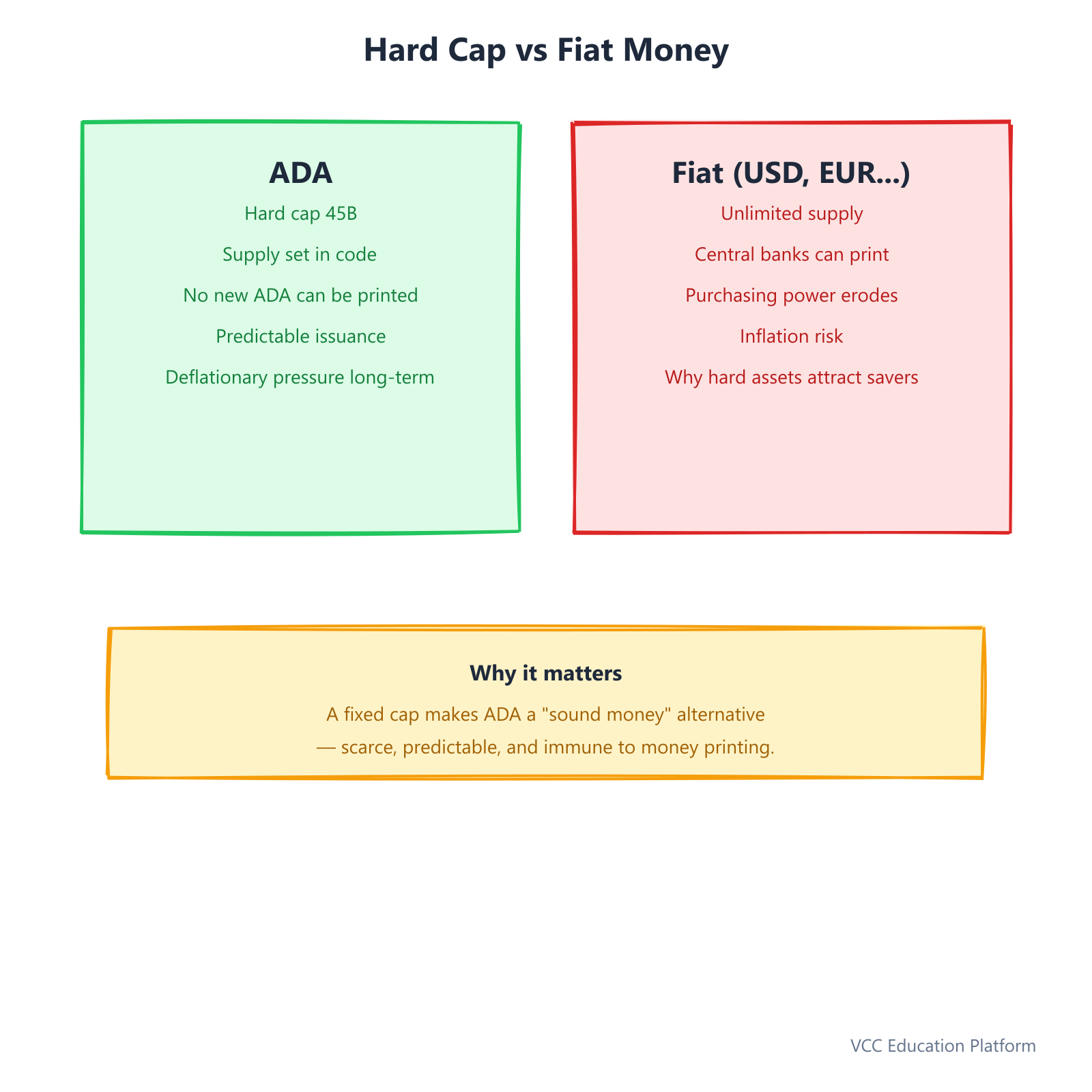
Figure 6: ADA hard cap vs fiat money printing (VND inflation)
One final honesty note: tokenomics is about supply honesty, not a price guarantee. ADA's price still goes up and down with markets, hype, and global sentiment — just like gold and land, whose prices also fluctuate despite being "scarce." What tokenomics gives you is confidence about what cannot happen: the supply can never be inflated past 45 billion. The value of that certainty is exactly what Vietnamese families have understood for generations by preferring gold over paper money.
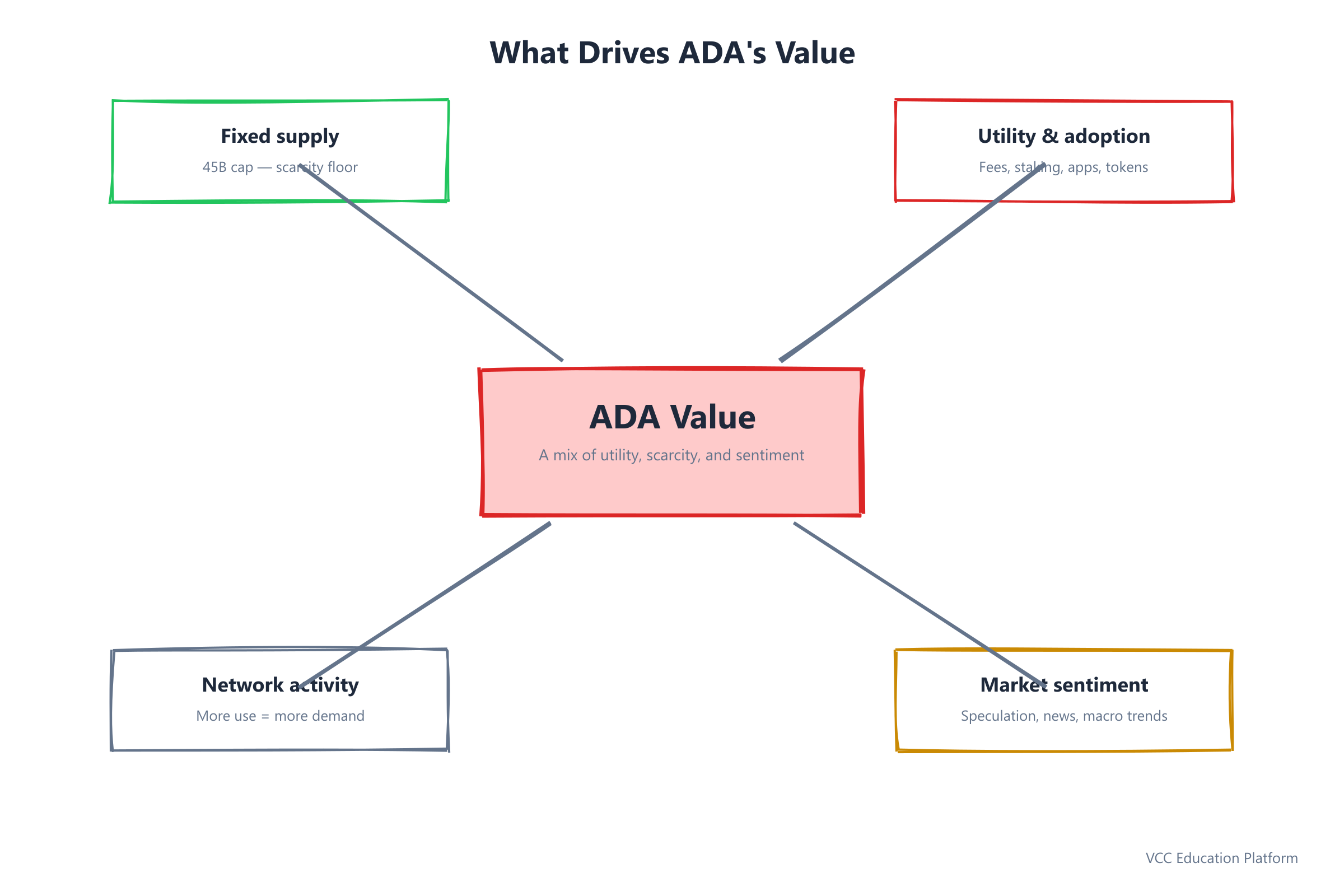
Figure 7: What actually drives ADA's value — fixed supply, utility, network activity, market sentiment
Conclusion
Cardano's tokenomics in one paragraph: a fixed 45 billion ADA cap, roughly 36 billion already in circulation, a reserve releasing the rest slowly to pay for network security, fees recycled into staking rewards and a community treasury (not burned), and a currency with real uses — paying for transactions, powering native tokens, enabling staking income, and granting voting power over the network's budget.
The golden takeaways:
- The cap is absolute — 45 billion ADA, no exceptions, no printing.
- Supply grows only to the cap — the reserve release is pre-scheduled, shrinking, and ends at 45 billion.
- Fees are not burned on Cardano — they fund the people and the projects that keep the network alive.
- ADA has real utility — fees, staking, native tokens, and governance all require it.
- Check the tokenomics of any new token — the same way you check the papers before a big purchase.
Tokenomics is not a magic formula for getting rich; it is a way to read a currency's "rulebook." For ADA, that rulebook is short, public, and honest: a hard cap, a transparent distribution, and a self-funding system. If you understand this one article, you already know more about what you are holding than most people who buy and sell crypto — and you will be far better equipped to evaluate every other token you meet.
Quick Reference
| Term | Definition |
|---|---|
| Tokenomics | The economics of a token: supply, distribution, creation, and value drivers |
| Maximum supply | The largest number of ADA that can ever exist — 45 billion |
| Circulating supply | ADA that exists and moves today (~36 billion, ~80% of the cap) |
| Genesis block | The launch block in 2017 that created ~31.1 billion ADA |
| Reserve | ~16.6 billion ADA held by the protocol and released gradually to fund rewards |
| Monetary expansion | The gradual release of reserve ADA into the reward pot each epoch |
| Reward pot | Epochly fund of reserve release + ~80% of fees, paid to stakers and pools |
| Treasury | On-chain fund collecting ~20% of fees; spent only with ADA-holder approval |
| Lovelace | The smallest ADA unit — 1 ADA = 1,000,000 lovelaces |
| Native token | A token living directly on the Cardano ledger, no smart contract needed |
| DRep | A "delegated representative" who votes on governance on behalf of ADA holders |
| CIP-1694 | The 2024 governance upgrade giving ADA holders on-chain voting power |
Published by VCC Education Platform. For more Cardano educational content, visit our knowledge base.