
Hùng is a developer at a Hanoi startup that wants to build a private, KYC-friendly DeFi app. His first instinct: build it as a layer-2 on Cardano. His colleague disagrees — Midnight is Cardano's partner chain, not a sidechain. "So which is it?" Hùng asks. "What does partner chain cardano actually mean, and why would Midnight choose a partner chain over a sidechain?" Good question — and the answer reshapes how the whole ecosystem fits together. This article explains the difference, the history behind it, and the mechanics that make a partner chain secure.
What a sidechain really is
A sidechain is a separate blockchain that runs in parallel with a main chain, linked by a bridge, under its own rules and its own — usually weaker — security. Bitcoin's Liquid Network is the classic example: fast settlement on a small, trusted set of operators, accepted because it is not the main chain.
The word itself comes from Cardano research. IOG's 2019 paper Proof-of-Stake Sidechains explored how an independent chain could interoperate with a mature network while preserving security and flexibility. That paper is the ancestor of everything Midnight does today — but the team did not stop at sidechains.
Why "midnight sidechain" is the wrong label
If you have read older articles about Midnight, you have seen it called a "Cardano sidechain." Even IOG's own March 2023 press release announcing Midnight's CEO used that word. Today the official terminology is different, and the change matters.
A sidechain, a layer-2, and a partner chain are three different relationships — and generalist articles still recycle the 2023 wording. Midnight is neither of the first two. It is not a layer-2, because it does not post proofs back to Cardano to rent its security. It is not a sidechain, because it does not depend on Cardano for its operation — a sidechain's security is typically far weaker than its main chain, the risk Midnight wants to avoid.
So when someone says "midnight sidechain," treat it as an outdated label, not a technical description. Midnight is an independent blockchain that cooperates with Cardano instead of renting from it — a relationship with a name: a partner chain.
Partner chain — a third path
IOG developed the partner chain framework to answer a simple question: how can a new blockchain inherit the trust and security of a mature network like Cardano without being chained to its constraints?
Think of three business relationships:
- A sidechain is a tenant. It runs its own shop in someone else's building under its own (often weaker) security — and if the building changes management, the tenant has no say.
- A layer-2 is an employee. It lives by the host's rules, posts its receipts (proofs), and survives on borrowed security.
- A partner chain is a strategic partner. It is an independent company with its own brand, token, and rules, but it shares a security alliance and coordinates through a settlement layer.
That last relationship is formalized by what Cardano researchers call the firewall property: if one chain in the ecosystem is compromised, the failure must not spread to the others. A compromised partner chain cannot take down Cardano — and Cardano's design decisions do not limit what the partner chain builds. Independence, cooperation, and safety, all at once.
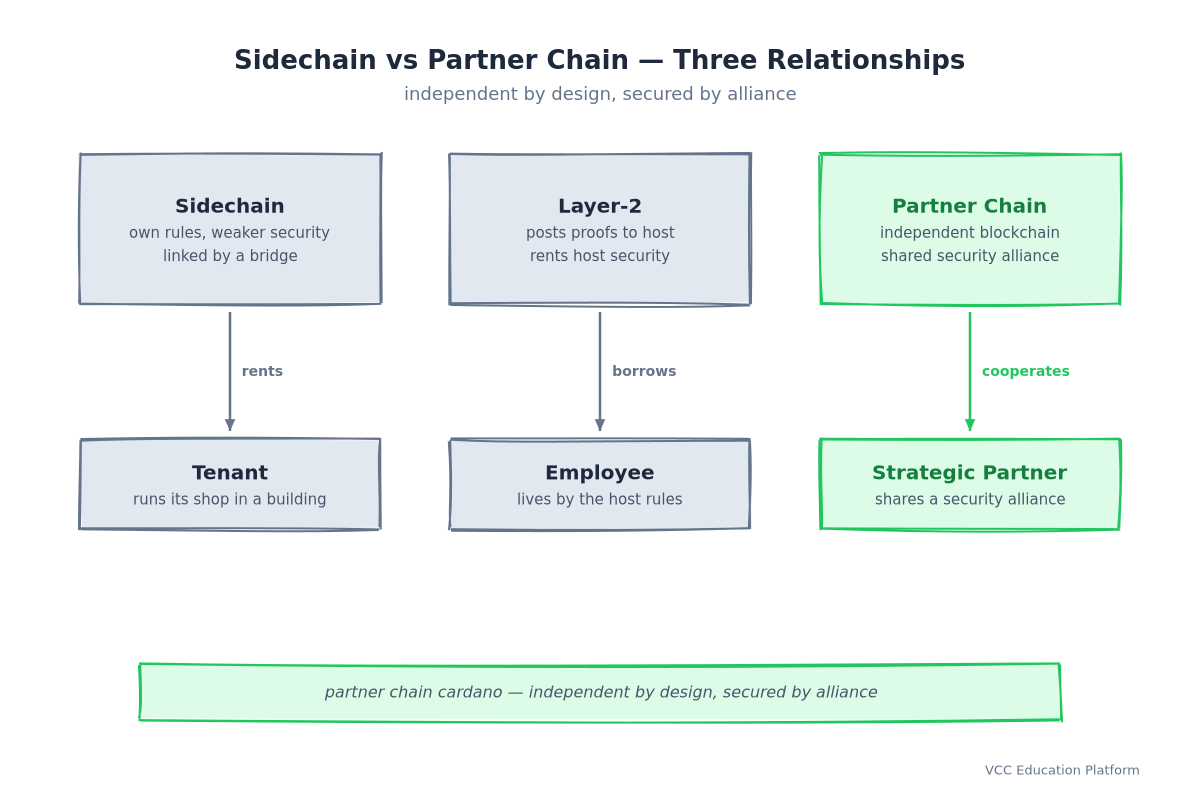
Figure 1: Three relationships — a partner chain is a strategic partner, not a tenant or an employee
Shared security: how Cardano's SPOs secure a partner chain
The heart of the partner chain idea is shared security — and this is where Midnight's architecture gets interesting, because Cardano does not validate Midnight's transactions. Cardano's people do.
Midnight runs its own consensus built on Substrate, the framework behind Polkadot. Blocks are produced every six seconds by AURA and finalized by GRANDPA, which gives fast, deterministic finality. What makes Midnight a partner chain is a custom twist: its validator selection function accounts for stake delegation from Cardano's stake pool operators (SPOs). Cardano validators can opt in to run Midnight software alongside their existing Cardano nodes — IOG calls this merged staking — and their delegated Cardano stake influences their participation and rewards on Midnight.
Security, in other words, is not borrowed on paper. It is delivered by an existing, battle-tested community of operators who already secure Cardano, choosing to also secure Midnight. IOG research underpins the flexibility with Minotaur, a multi-resource consensus algorithm that combines selection mechanisms without weakening the overall guarantee.
For bootstrapping, Midnight uses a D-parameter: a ratio between permissioned and publicly registered validators. Today the network runs on Federated Node Operators (FNOs) — a small, permissioned set including institutional partners. That is a deliberate staging choice, not the final design. The next phase, Mōhalu, opens validation to Cardano SPOs, moving toward the decentralized end-state. Shared security is a path, and Midnight walks it in controlled steps.
One correction worth making: you will sometimes hear this described as "Kachina consensus." That is a mistake. Kachina is not a consensus mechanism; it is the smart-contract model that keeps Midnight's data private. Shared security comes from the validator selection and merged staking above. Kachina solves a different problem — how to write contracts that keep private state on the user's machine while proving public state changes. The two layers are easily confused because they arrive together, but they are separate.
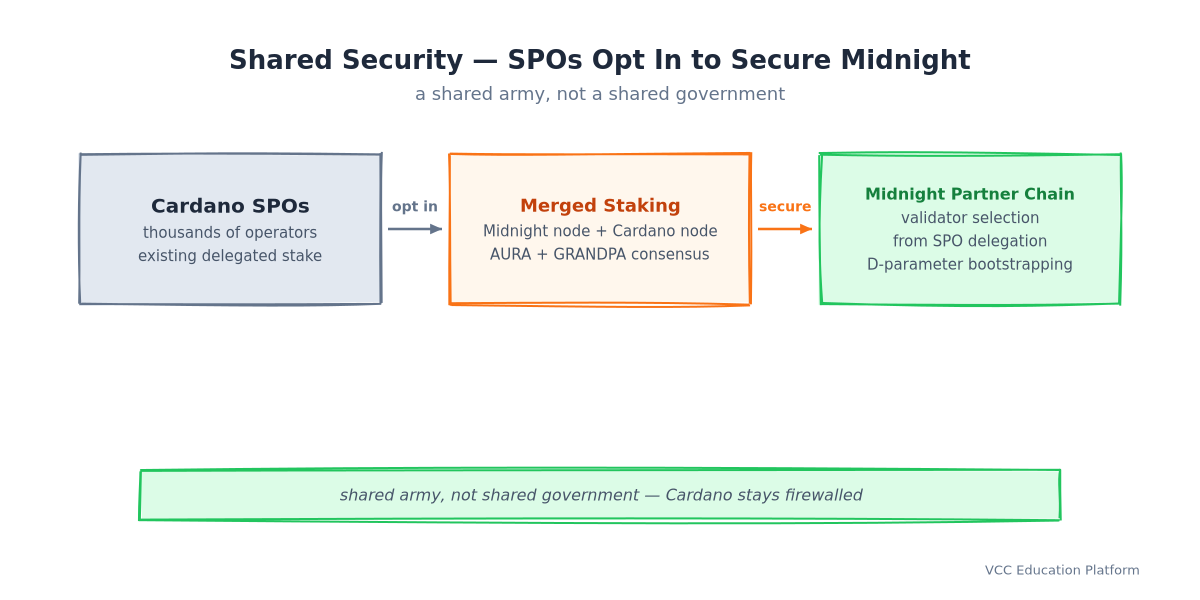
Figure 2: Shared security — a shared army, not a shared government
Checkpoints: the partner chain watches Cardano
For cooperation to be real, the two chains must see each other. A partner chain does not just believe Cardano's state — it observes it, from a fixed point.
That fixed point is the dataCheckpoint (in Midnight's code, the next_cardano_position): the lower bound of observability, set at genesis. It is the Cardano block position from which Midnight starts watching the Cardano chain. Midnight nodes track Cardano scripts and balances using the ecosystem's own tooling — Cardano-db-sync over PostgreSQL — and the observation is idempotent: the same Cardano block is never processed twice, even after a restart or a chain reorganization.
Think of the checkpoint as a company's registered address. Both sides point at the same fixed reference, so there is no room for double-claiming events. This is the mechanism behind the bridge's security — and it is also why Cardano's finality rules flow into Midnight: Midnight treats a Cardano transaction as final only after Cardano's security parameter says so — 2160 blocks, roughly 12 hours on mainnet.
ADA as gas: Babel fees and the settlement layer
A partner chain has its own economy, but the ecosystem's settlement currency is still ADA. This is where Babel fees come in — a Cardano research concept that lets a network's users pay in whatever token they hold, while the fee still settles in ADA behind the scenes.
Imagine paying through Momo or ZaloPay: you tap, and the QR pays from your balance, but the actual clearing happens in VND at the bank. Babel fees work the same way. Midnight users never need to hold ADA; they pay fees in the tokens they actually use. The operator who supplies the ADA — typically an SPO or a liquidity provider — earns it. That is why IOG describes Babel fees as letting "SPOs be compensated in ada": every partner chain transaction eventually converts to Cardano's settlement currency.
On Midnight itself, though, transaction fees are paid in DUST, not ADA. DUST is a shielded, non-transferable, renewable resource generated by holding NIGHT. It cannot be bought, sold, or transferred — it exists only to pay for private transactions and is burned on use. So keep two layers separate:
- DUST is the capacity ticket you spend on Midnight for private computation.
- ADA is the settlement-layer gas: what SPOs are paid in, and what Babel fees convert to behind the scenes.
Most articles conflate the two. Midnight's own Babel Station service even lets users submit transactions without DUST at all — the station supplies it and the user pays in any token they prefer, which then settles toward ADA. The ecosystem currency is Cardano's; the capacity ticket is Midnight's.
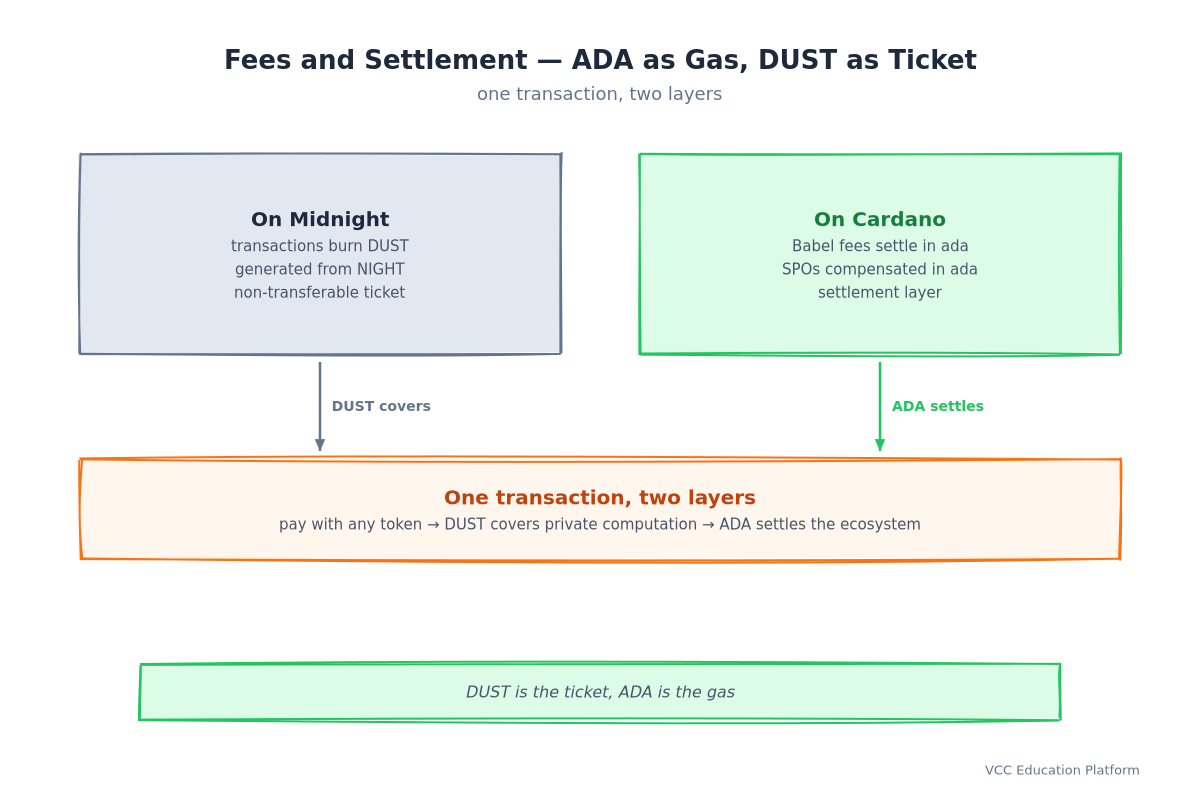
Figure 4: DUST is the ticket, ADA is the gas
Inside the midnight cardano bridge
Now the pieces connect. The bridge is how value actually moves between Cardano and Midnight — and it has no middlemen.
The midnight cardano bridge is a protocol-level, unidirectional transfer of NIGHT from Cardano to Midnight. It works like an overnight interbank transfer: you initiate it, wait one clearing cycle, and receive the funds on the other side — with the guarantee that the transfer cannot be reversed.
Here is the flow:
- Lock. You send cNIGHT (NIGHT as it exists on Cardano) to the Illiquid Circulation Supply (ICS) validator — a Plutus script on Cardano — specifying the Midnight address that should receive the funds.
- Observe. Midnight's nodes see the lock through the checkpoint observation described above, watching for exactly this kind of transaction. Idempotency guarantees nothing is double-counted.
- Wait for finality. The bridge waits roughly 12 hours — Cardano's security parameter, 2160 blocks — so the lock is truly irreversible before anything moves.
- Batch. Confirmed locks are collected and settled in a single
BridgeSettlementV1system transaction on Midnight, with a deterministic idempotency key per transfer. - Claim. The recipient unlocks the same amount of mNIGHT (Midnight-native NIGHT) from the Midnight Locked pool and claims it with their private key — minus a small fee.
Because Midnight nodes natively observe Cardano state, the bridge needs no multisig committee, no external relayers, and no wrapped-asset custodian — the three intermediaries behind most of the industry's biggest bridge hacks. Total supply is conserved across both chains, and the claim cannot be duplicated.
One limit to know: the bridge is currently one-way (Cardano → Midnight). A reverse path is planned but not yet live — a good reminder that the partner chain relationship is still evolving. And a practical detail for Vietnamese users: exchanges list cNIGHT (Gate, Kraken, and others), while mNIGHT lives on Midnight and is what generates DUST once it arrives. The token you buy on an exchange is not yet the token that powers private on-chain transactions — the bridge is the step in between.
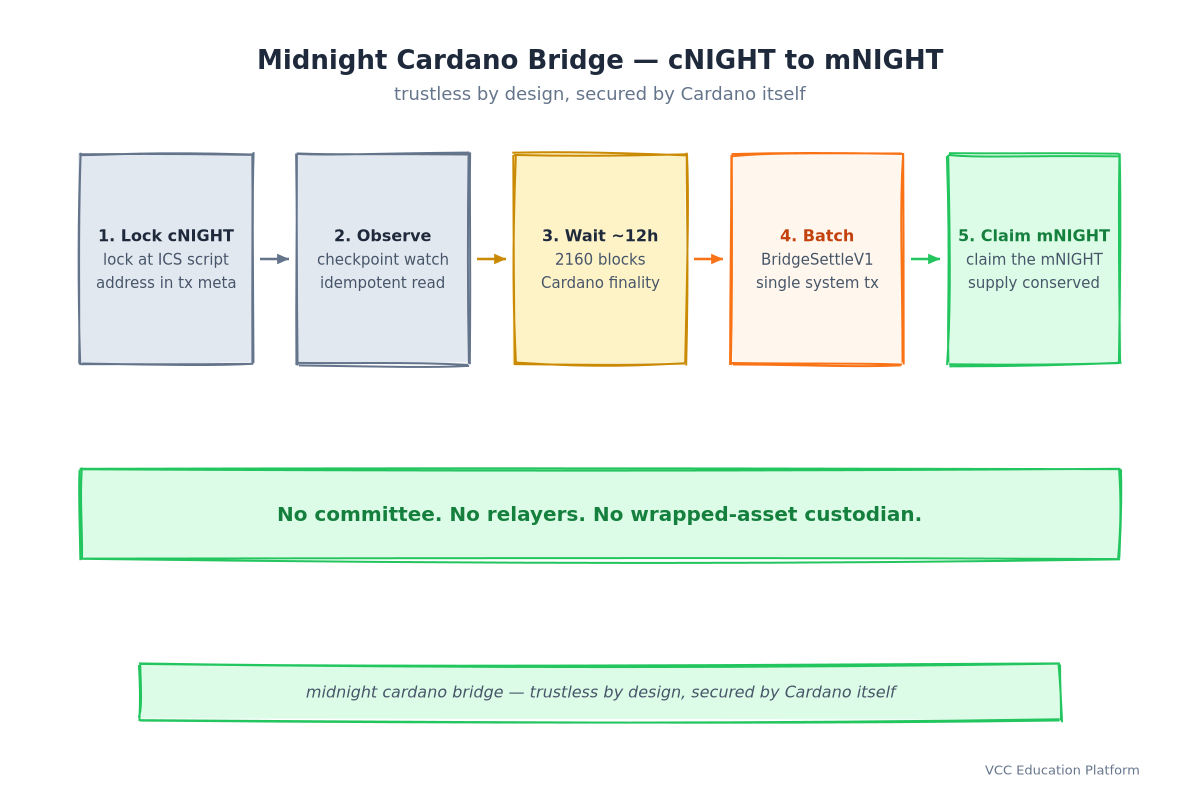
Figure 3: The midnight cardano bridge — no committee, no relayers, no wrapped-asset custodian
Partner chain vs sidechain vs rollup vs parachain
Lining up all the candidates side by side shows how each answers the question of who secures what.
| Property | Sidechain | Rollup (L2) | Parachain | Partner Chain |
|---|---|---|---|---|
| Runs its own consensus | Yes | No | Yes | Yes |
| Rents host security | No | Yes (via proofs) | Yes (via relay chain) | Partly (via SPO opt-in) |
| Main chain validates its state | No | Yes | Yes | No |
| Firewall from main chain | Weak | Yes | Yes | Yes (firewall property) |
| Can use a different token | Yes | Usually | Yes | Yes |
| Example | Liquid Network | Arbitrum, zkSync | Polkadot parachain | Midnight |
The key column is the fourth: does the main chain validate your state? Rollups and parachains both hand their state transitions to a host for verification — that is what "renting security" means. A partner chain never does. Cardano validates neither Midnight's blocks nor its proofs; it simply observes what Midnight needs observed and settles the assets that flow through the bridge.
That is why the security model is best described as a shared army, not a shared government. A parachain's relay chain is a government: it operates and verifies the parachain's own validation. Cardano provides an army — thousands of SPOs who choose to also secure Midnight — while each network keeps its own government. Independence is preserved, and so is the firewall.
Why this matters for Vietnam
For Hùng's startup the distinction is not academic. A layer-2 would inherit a host's rules and fees; a sidechain would inherit weak security; a partner chain gives them Midnight's privacy architecture — shielded ledger, zero-knowledge proofs — with Cardano's security and reputation behind it, and ADA kept in the settlement loop.
There is also a compliance angle. Nghị định 13/2023 and the Law on Personal Data Protection, in force since 2026, classify financial and biometric data as sensitive personal data and name blockchain among the regulated high-tech domains. A partner chain's firewall and shielded ledger let a Vietnamese business run private transactions on a network anchored by an established, decentralized community — without exposing customer data to a public ledger. And when customers hear "12-hour finality," they already understand it: it is exactly how overnight interbank transfers work in Vietnam — slow, but guaranteed.
Frequently asked questions
Is Midnight a sidechain of Cardano?
No. Midnight is Cardano's first partner chain. A sidechain runs under its own weaker security and depends on a bridge; a partner chain is an independent blockchain that cooperates with Cardano, inherits security through SPO opt-in, and uses Cardano as a settlement anchor. Calling it a "midnight sidechain" reflects 2023 press-release wording, not the current architecture.What does partner chain cardano mean?
An independent blockchain that shares a security alliance with Cardano instead of renting its security: Cardano's stake pool operators can validate the partner chain and earn rewards, Cardano acts as a public settlement layer, and the firewall property keeps a failure on either side from spreading.What is the midnight cardano bridge and how does it work?
A protocol-level, unidirectional bridge that moves NIGHT from Cardano to Midnight (cNIGHT → mNIGHT). You lock cNIGHT at the ICS validator on Cardano, Midnight observes the lock, waits for Cardano finality (~12 hours), settles it in batches, and the recipient claims mNIGHT. No multisig committee, no relayers, no wrapped-asset custodian.Can I use ADA to pay for transactions on a Cardano partner chain?
Through Babel fees, yes. Users can pay in whatever token they hold while the fee settles in ADA behind the scenes — and SPOs are compensated in ADA for supplying it. On Midnight itself, private transactions burn DUST, a non-transferable resource generated from NIGHT; ADA is the ecosystem's settlement gas, DUST is the capacity ticket.What is the difference between a partner chain and a parachain?
A parachain sends its state transitions to a relay chain that validates and secures it — a shared government. A partner chain is not validated by Cardano; it is secured by Cardano SPOs who opt in as individuals — a shared army — while each chain keeps its own governance and firewall.Why does the midnight cardano bridge take about 12 hours?
The bridge waits for Cardano's security parameter: 2160 blocks on mainnet, roughly 12 hours. That wait is not a queue — it is the guarantee that the lock is irreversible before mNIGHT is released, which is what makes the bridge safe without a trusted third party.Conclusion
Hùng's question — why partner chain cardano instead of a sidechain — has a precise answer. A sidechain would have given Midnight speed and independence but weak security and a weak firewall. A layer-2 would have rented Cardano's security. The partner chain framework, born from Cardano's own 2019 sidechains research, found a third path: an independent blockchain that shares Cardano's security through the people who already secure it, anchors its economy to ADA, observes Cardano from a fixed checkpoint, and moves value across a trustless bridge. It is an alliance, not a tenancy — and for Vietnamese builders who need privacy without cutting themselves off from a mature ecosystem, that distinction is exactly the point.
Quick Reference
| Question | Answer |
|---|---|
| What is a sidechain? | Separate chain linked by a bridge; own rules, usually weaker security (e.g., Liquid Network) |
| Why not call Midnight a sidechain? | 2023 press release wording; Midnight is independent and does not depend on Cardano |
| What is a partner chain? | Independent blockchain cooperating with Cardano: SPO shared security, settlement anchor, firewall |
| How is shared security delivered? | AURA + GRANDPA consensus; validator selection from Cardano SPO delegation; merged staking; D-parameter |
| What is Kachina? | The smart-contract privacy model (not consensus) — private state + ZK proofs |
| How do the chains see each other? | dataCheckpoint / next_cardano_position; idempotent observation via Cardano-db-sync |
| What is ADA's role? | Settlement-layer gas: Babel fees settle in ADA, SPOs compensated in ada |
| What is DUST? | Shielded, non-transferable fee resource on Midnight, generated from NIGHT |
| How does the midnight cardano bridge work? | Lock cNIGHT at ICS → observe → ~12h finality → batch settle → claim mNIGHT; one-way today |
| Partner chain vs parachain? | Parachain = shared government (relay validates); partner chain = shared army (SPO opt-in) |