
You've learned about Ouroboros consensus and stake pools. Now let's look at the physical network underneath — how thousands of computers actually talk to each other, route messages, and stay synchronized across the globe.
Here's the one-sentence version: Cardano's network is a peer-to-peer mesh of three node types — core nodes that produce blocks, relay nodes that route traffic, and edge nodes that serve wallets — connected without any central coordinator.
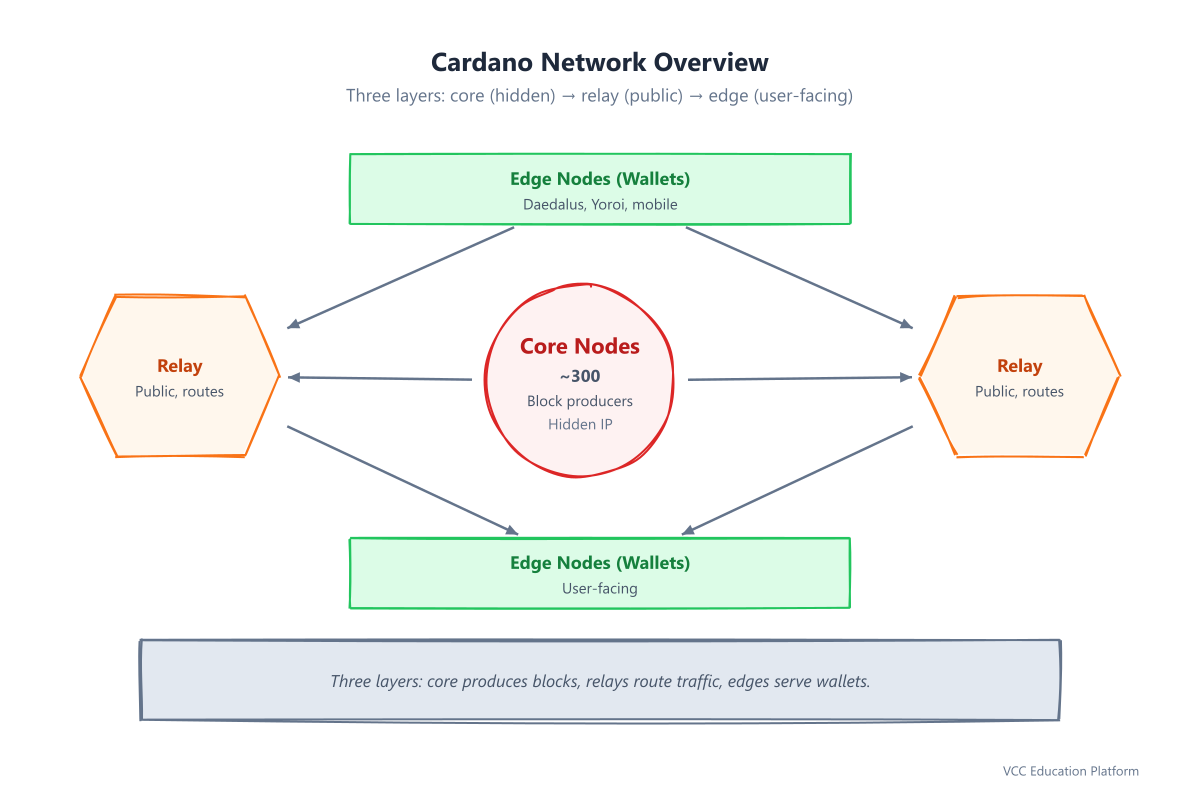
Figure 1: Cardano network — three layers of nodes
Three Node Types: Core, Relay, Edge
Cardano's network separates responsibilities into three node types. This separation is a security feature — it hides block producers from direct internet exposure.
Core Nodes (Block Producers)
~300+ worldwide. These are the nodes that actually produce blocks when their stake pool wins a slot. Critical security feature: core nodes are NOT directly reachable from the public internet. Their IP addresses are hidden behind relay nodes. An attacker cannot DDoS a block producer because they don't know where it is.Relay Nodes (Communication Hubs)
~1000+ worldwide. Relays are the public face of stake pools — they receive transactions from users, forward them to the core node, and broadcast produced blocks to the rest of the network. Think of relays as post offices: they forward messages without knowing (or needing to know) the full content of every package.Edge Nodes (Wallet Servers)
These serve end-user wallets — Daedalus, Yoroi, mobile wallets. Edge nodes connect to relays to submit transactions and query balances. They don't produce blocks or route traffic for others.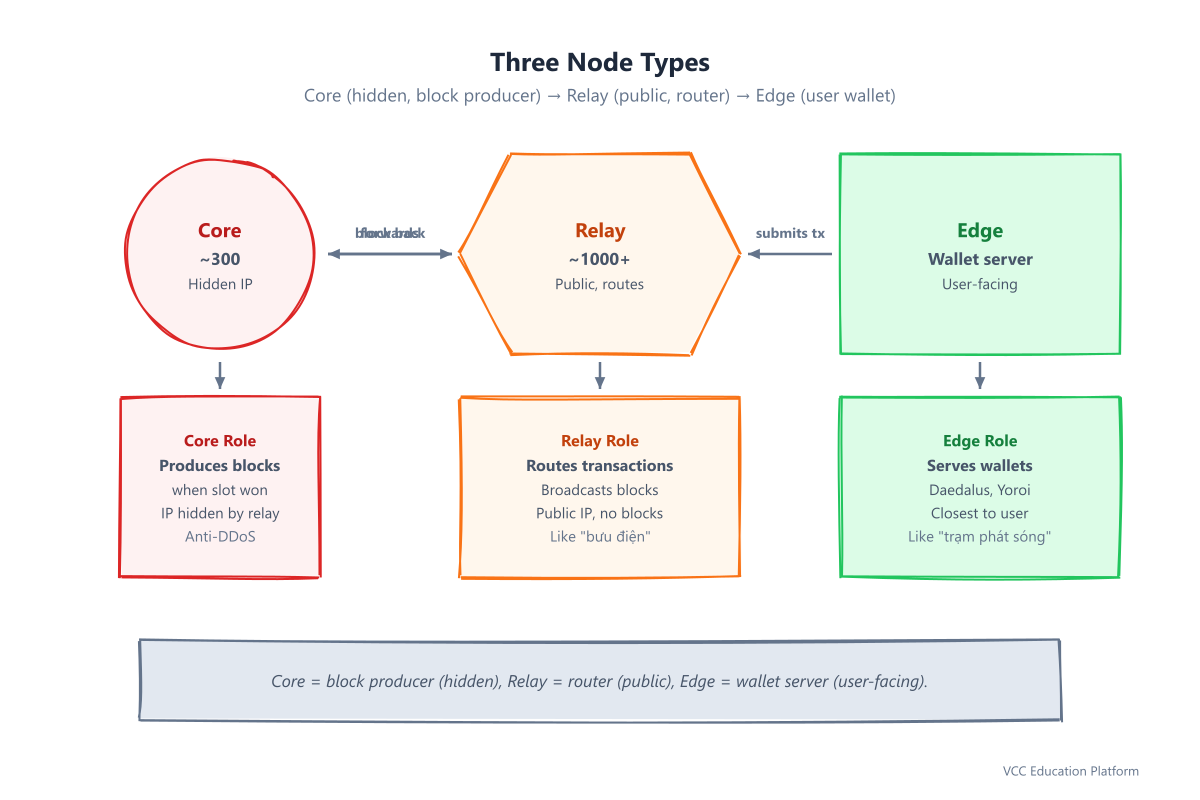
Figure 2: Core, Relay, Edge — three node types with distinct roles
The P2P Revolution (2023)
Until 2023, Cardano's network was federated — IOG (the development company) operated the relay nodes that connected all stake pools. This was a temporary measure for network bootstrapping, but it meant IOG was a central point of control.
In 2023, Cardano activated P2P (peer-to-peer) networking:
- Nodes now discover each other directly via DHT (distributed hash table)
- No central relay operator — every pool runs its own relays
- Network is truly decentralized: no single entity can shut it down
This was Cardano's "Napster to BitTorrent" moment — from centralized coordination to distributed discovery.
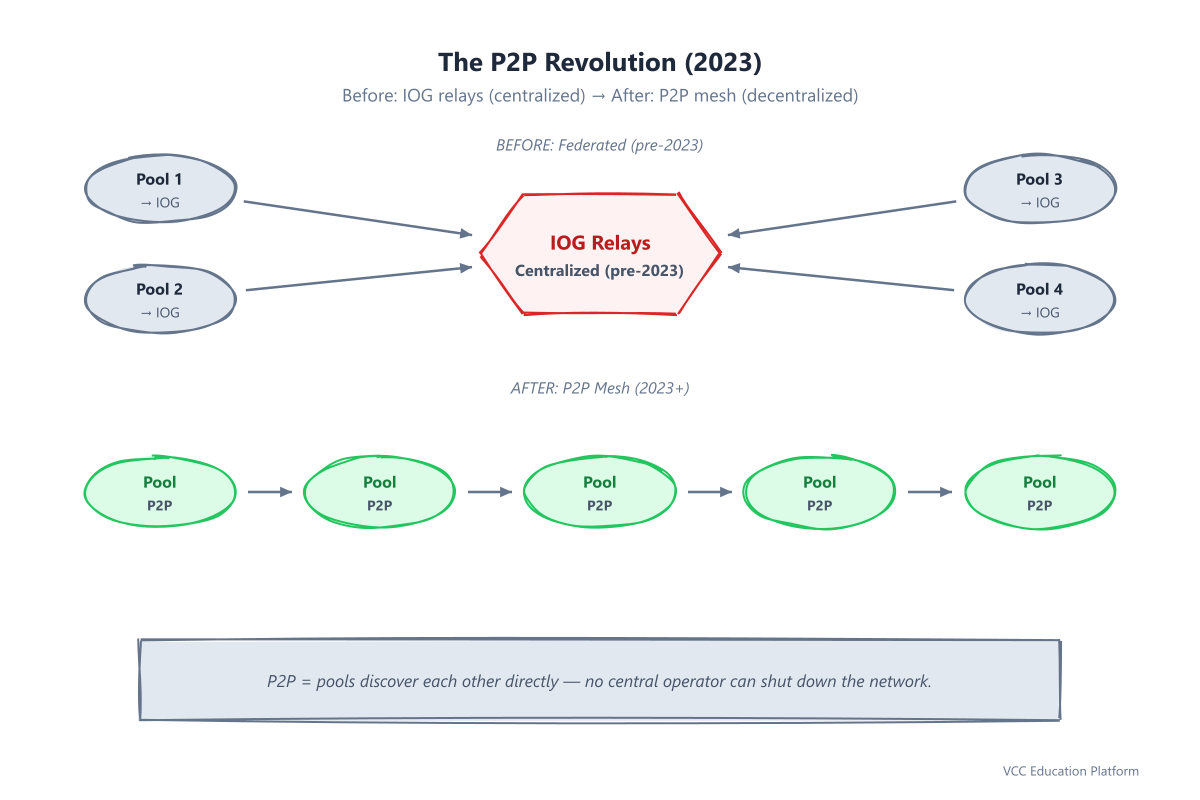
Figure 3: The P2P revolution — from centralized to decentralized mesh
Two-Layer Architecture: CSL and CCL
Cardano has two blockchain layers:
- CSL (Cardano Settlement Layer): handles ADA transactions — sending, receiving, staking. This is the "ledger" layer. Lightweight, fast, optimized for value transfer.
- CCL (Cardano Computation Layer): handles smart contracts (Plutus), tokens, DApps. This is the "compute" layer. Heavier, more complex.
Why split? Separation of concerns: the settlement layer stays simple and secure (it only moves ADA), while the computation layer can evolve (new Plutus versions, new features) without risking the core ledger. Compare this to Ethereum, where smart contracts and transactions share one layer — a bug in a smart contract feature can affect the base ledger.
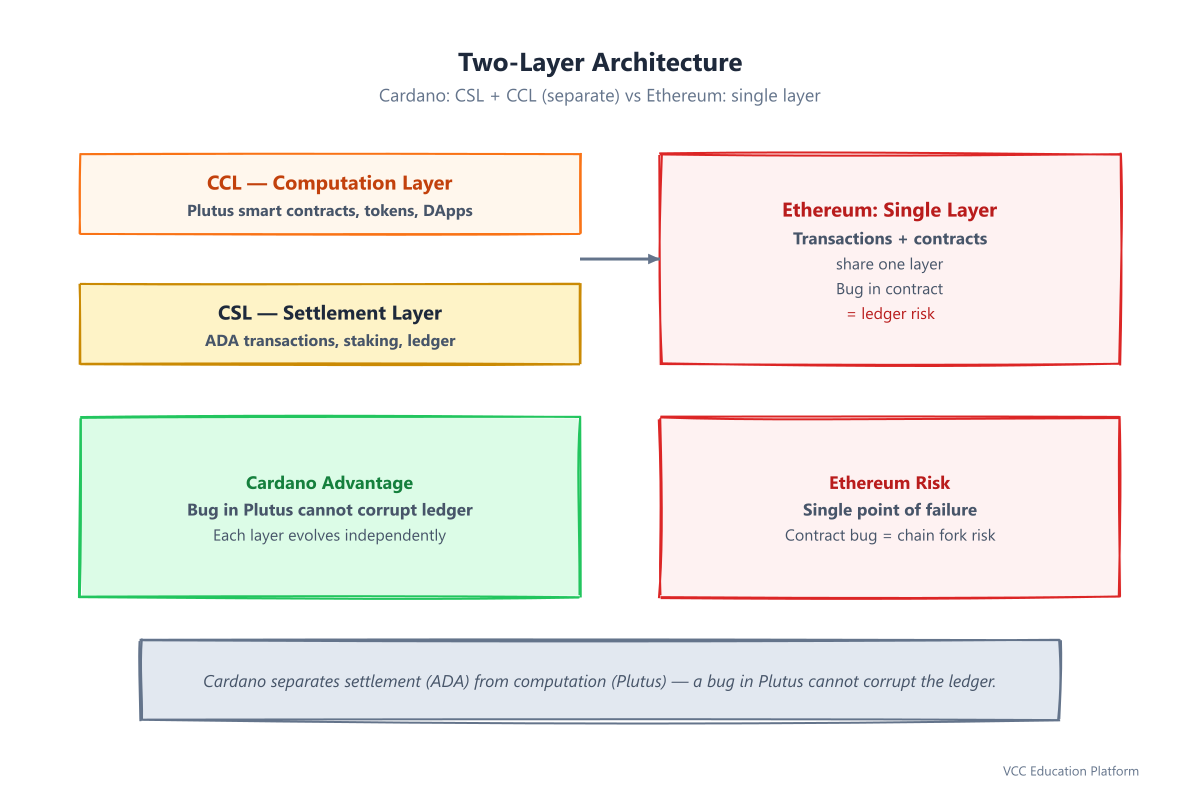
Figure 4: Cardano two-layer vs Ethereum single-layer
How a Transaction Travels
When you send ADA from your wallet, here's the network path:
- Your wallet (Daedalus/Yoroi) creates a signed transaction
- Edge node receives it, validates the signature
- Relay node receives it from the edge, broadcasts to other relays
- All relays gossip the transaction across the network (~2 seconds globally)
- Core node (if it's the next slot leader) includes it in a block
- Block is broadcast back through relays to all nodes
- Your wallet sees the block — transaction confirmed
Total time: ~20 seconds for inclusion + confirmation (1 block = 20 seconds on average).
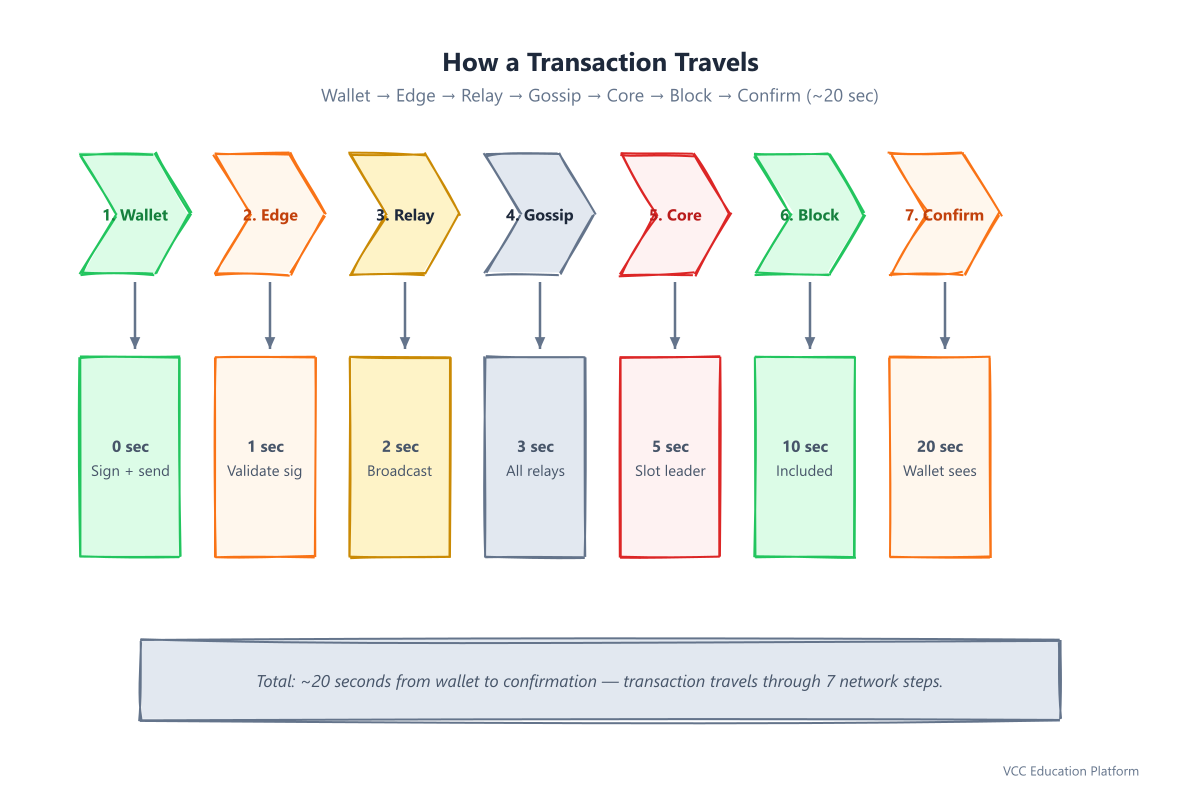
Figure 5: How a transaction travels through the network
Mithril: Lite Clients for Mobile
A full Cardano node downloads ~150GB of blockchain history. That's fine for a stake pool operator, but impossible for a mobile wallet. Mithril solves this.
Mithril is a stake-based multi-signature protocol:
- Stake pools collectively sign snapshots of the chain state
- A lite client (mobile wallet) downloads a small snapshot + signatures
- It verifies the signatures against the stake distribution
- Result: verify chain state in seconds, not hours — without trusting any single party
This is how Cardano achieves "trustless lite clients" — mobile wallets that don't need to download 150GB but still verify everything cryptographically.
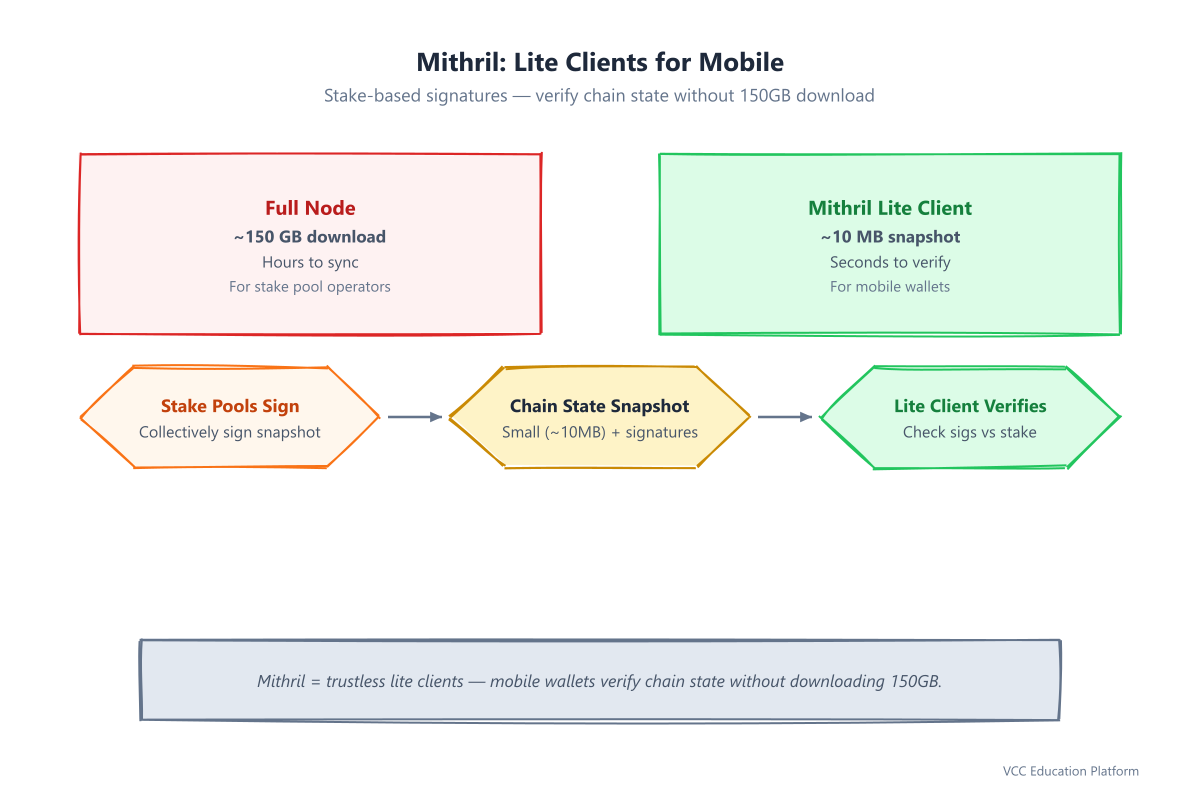
Figure 6: Mithril — lite clients for mobile wallets
For Vietnamese Readers: "Bưu Điện" and "Trạm Phát Sóng"
Two Vietnamese analogies make the network intuitive:
"Bưu điện" (post office) = relay nodes: When you send a letter, you don't deliver it yourself — you drop it at the post office, and they route it to the destination. Relay nodes work the same way: your transaction goes to a relay, and the relay routes it to the block producer. The post office doesn't read your letter (the transaction is encrypted); it just forwards it.
"Trạm phát sóng" (broadcast tower) = edge nodes: Your phone connects to the nearest cell tower to access the network. Edge nodes are like cell towers for blockchain — they're the closest point of contact between your wallet and the Cardano network. You don't need to know where the post office (relay) or the sorting center (core) is; you just connect to your nearest tower.
This is why Cardano's three-layer architecture matters: it separates "user-facing" (edge), "routing" (relay), and "block production" (core) — each optimized for its job, none overloaded with the others' work.
Quick Reference
| Component | Role | Count | Public IP? |
|---|---|---|---|
| Core node | Block producer | ~300 | No (hidden) |
| Relay node | Traffic router | ~1000+ | Yes |
| Edge node | Wallet server | Many | Yes |
| CSL | Settlement layer (ADA) | 1 | — |
| CCL | Computation layer (Plutus) | 1 | — |
| Mithril | Lite client verification | Protocol | — |
| P2P | Peer discovery | Since 2023 | — |