
You have heard "the Alonzo hard fork" and "cardano smart contract launch" — but could you explain what the upgrade actually changed? Most summaries jump to DeFi hype or price talk. This article does neither: you will learn exactly what the Alonzo upgrade did and why it matters, with a mental model you can keep for life.
Here is the one-sentence version: the Alonzo hard fork was the protocol upgrade that gave Cardano smart contracts, turning a ledger that could only record balances into one that can also enforce rules and run programs. Datums, redeemers, Plutus, collateral — the machinery behind that.
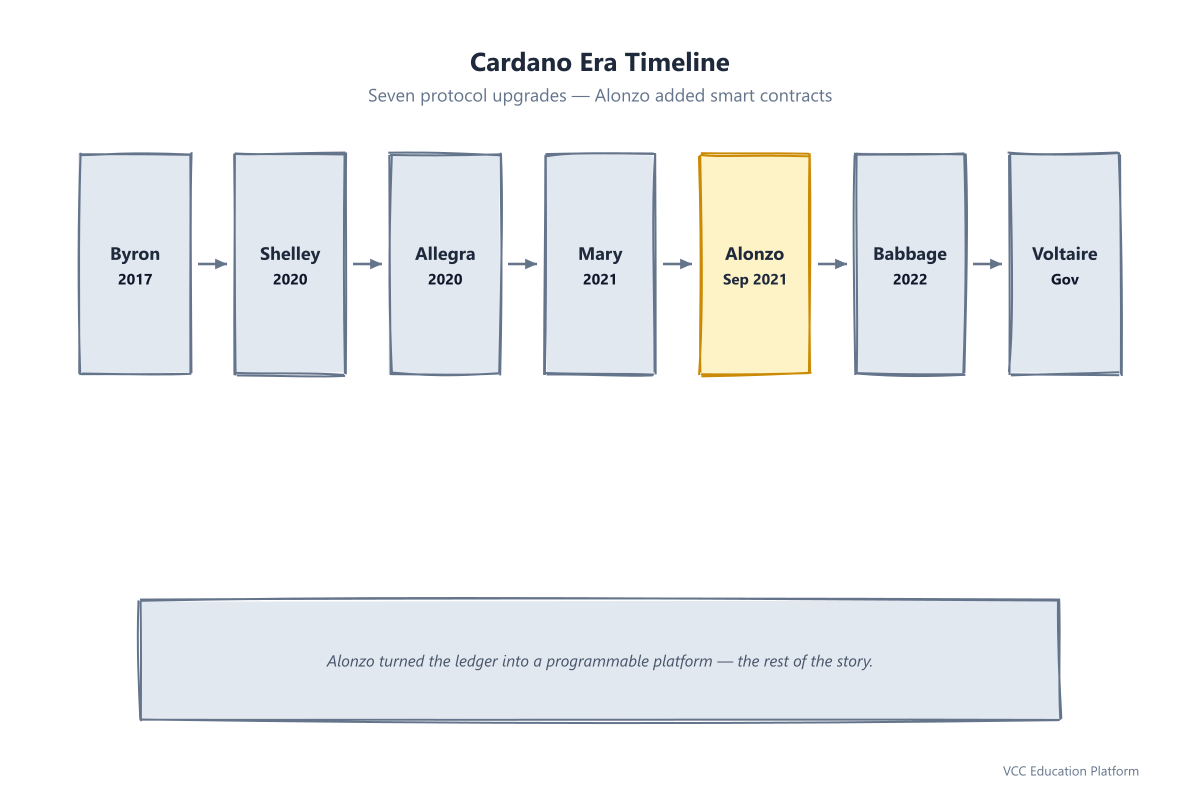
Figure 1: The Cardano eras — Alonzo added the smart-contract layer
What Exactly Is a Hard Fork?
A "hard fork" sounds scary, but on Cardano it is just a protocol upgrade: a new set of rules the network agrees to follow. The word scares beginners because of famous coin-split cases. The hard fork combinator — Cardano's special mechanism — does the opposite: old and new nodes keep running on one chain while the rules change. No split, no new coin, no airdrop; your ADA was untouched on September 12, 2021, while the chain underneath became more capable.
The Alonzo Upgrade Was the Final Layer of an Existing Plan
The "cardano alonzo" story is best understood as construction, not a single event. The Alonzo upgrade was the last layer of the Goguen phase, standing on two earlier upgrades:
- Allegra (December 2020) added metadata and token locking — the "floor" that let the chain carry extra information.
- Mary (February–March 2021) added native assets — the "wiring" that lets users create tokens that are not ADA (NFTs, stablecoins) without smart contracts.
- Alonzo (September 12, 2021) added the execution layer — the "smart appliances": programs (Plutus scripts) that run on the ledger and enforce rules.
Without Allegra and Mary, Alonzo would have had nothing to stand on — each upgrade added a layer the next one built upon.
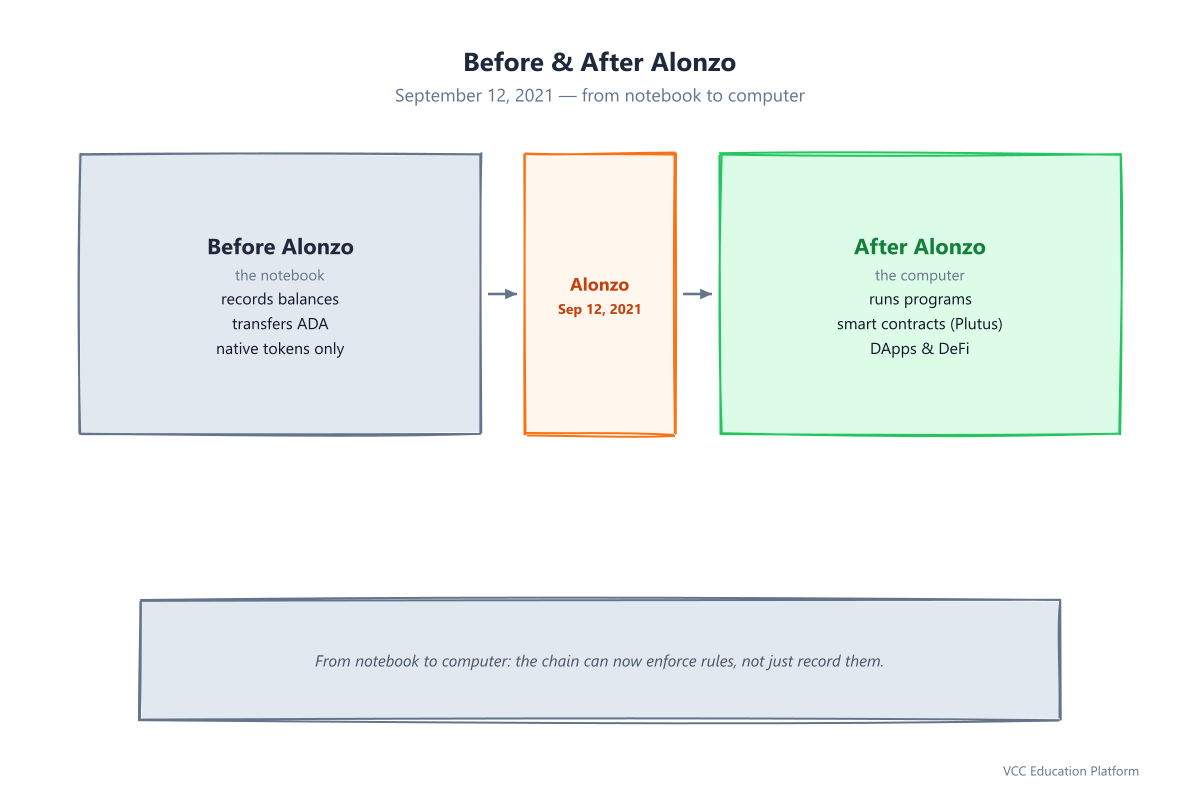
Figure 2: Before vs after Alonzo — from notebook to computer
Before Alonzo: The Chain Could Record
Before the Alonzo upgrade, Cardano did one thing extremely well: record who owns what and move it securely. Every transaction was a simple transfer — Alice sends 5 ADA to Bob. The network verified the signature and the balance, and that was it. Like a very secure, tamper-resistant notebook, it held ownership records of ADA and native tokens (thanks to Mary), but could not act on them — there was no way to write "transfer to Bob only if Bob delivers the goods by Friday."
That is the key limitation the cardano smart contract launch removed: the chain gained the ability to hold and move value according to programmable rules, not just one-time signatures.
After Alonzo: The Chain Can Compute
With Plutus running on mainnet, Cardano became a computer as well as a notebook. A transaction could now carry a program, and the network would run it to decide whether the transaction is allowed.
The practical result: people can build decentralized applications (DApps) and DeFi products on Cardano — lending, exchanges, insurance — where the "bank" or "exchange" is a program running openly on the ledger, not a company behind a website. That was the hard fork's real purpose: a capability event, not a price event.
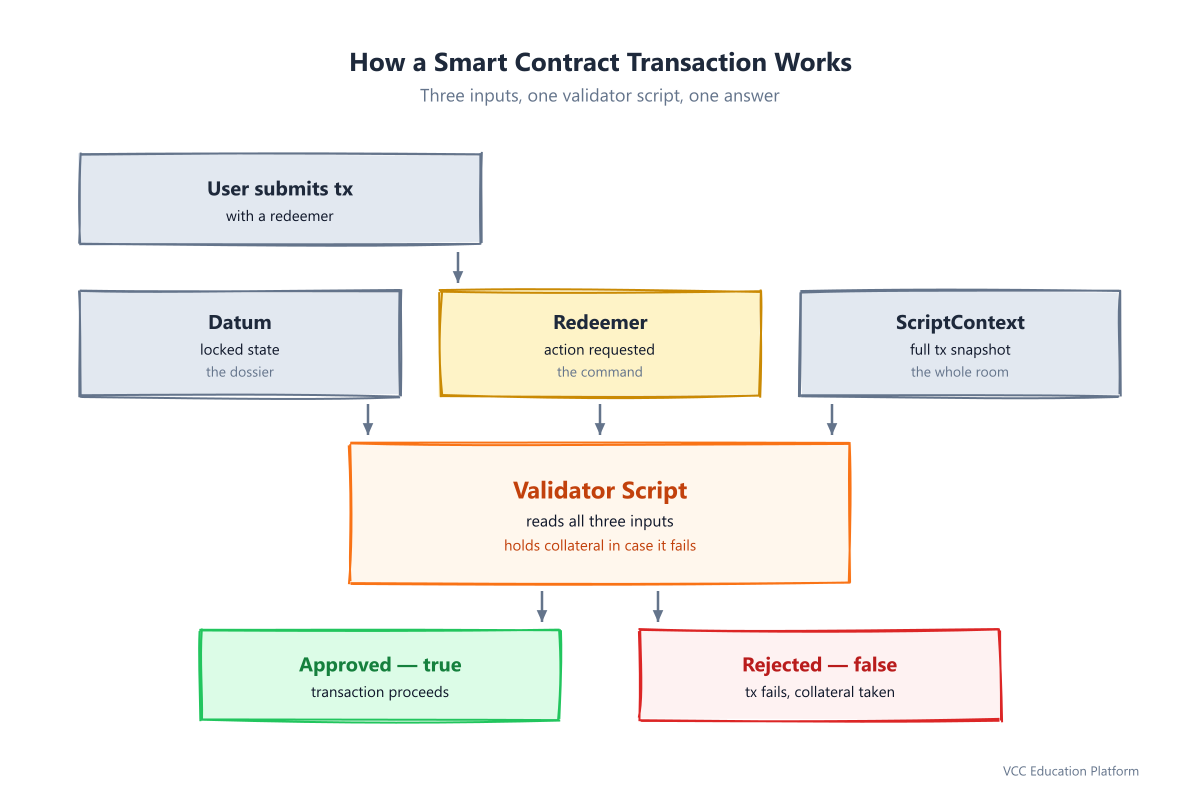
Figure 3: How a smart contract transaction works — the validator checks all three inputs
How a Smart Contract Transaction Actually Works
Here is the mental model that makes Cardano's smart contracts click. When value is locked at a script address, spending it requires a validator script to say "yes." The script receives three inputs, which map neatly to everyday Vietnamese concepts:
- The datum — "hồ sơ" (the dossier). The state locked at the script address: what is held and under what conditions.
- The redeemer — "lệnh" (the command). What the user is asking to do right now: "release these funds," "swap these tokens."
- The ScriptContext — "toàn bộ căn phòng" (the whole room). A snapshot of the entire transaction, so the script can check nothing shady is happening elsewhere in it.
The validator is a security guard who reads all three before opening the door: the dossier tells him what the box contains, the command what you want, the room what else is happening. Only if all checks pass does the transaction go through.
This is Cardano's EUTXO (Extended Unspent Transaction Output) accounting model — every script output is a separately validated "box," a deliberate design difference from Ethereum's account model.
The House Analogy: Remembering the Whole Story
Remember the eras as a house:
- Byron laid the foundation: a working, secure blockchain.
- Shelley built the walls: decentralization through stake pools.
- Allegra installed the floor: metadata so the ledger can carry extra information.
- Mary ran the wiring: tokens that are not ADA.
- Alonzo plugged in the smart appliances: programs that run on the ledger.
- Babbage added plumbing for scaling (sidechains, higher throughput).
- Voltaire adds the governance: the community votes on future changes.
The Alonzo hard fork is the moment the house became liveable — power lines but no appliances before it; appliances that could run after it.
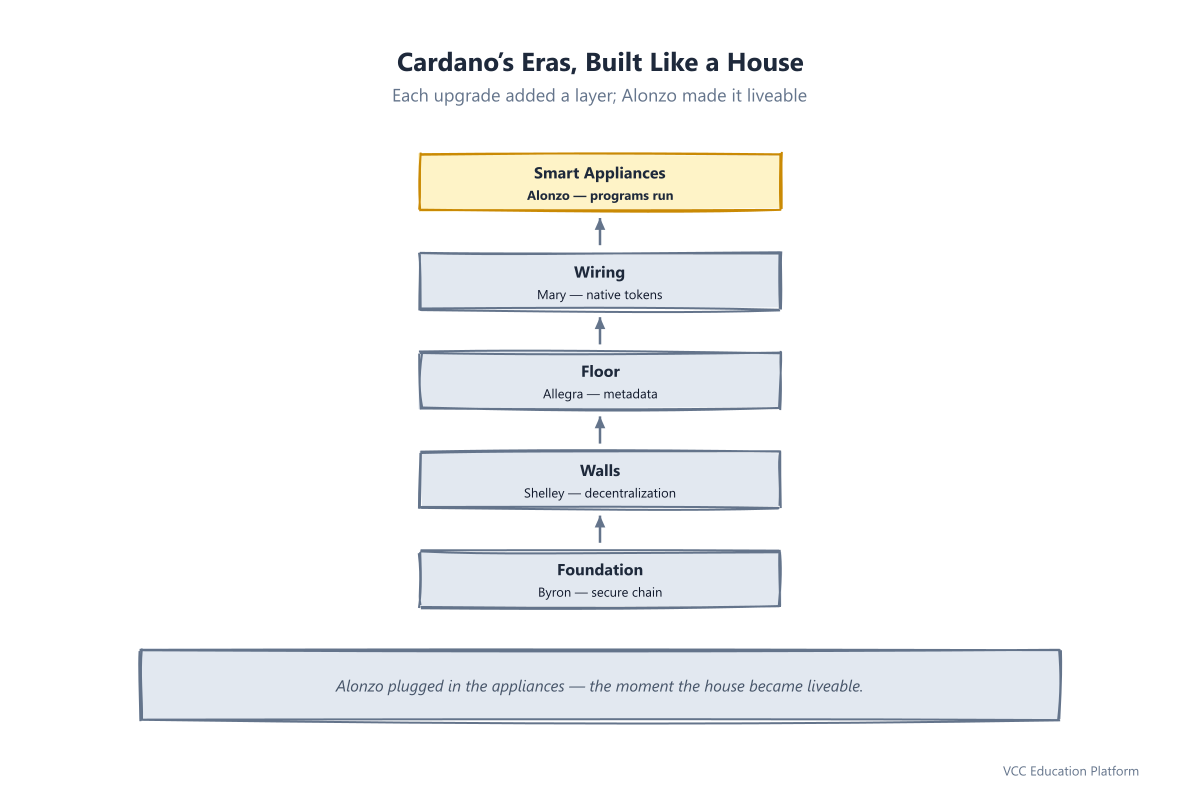
Figure 4: The house metaphor — Alonzo plugged in the appliances
Plutus: The Language That Made It Possible
The "alonzo plutus" story is one of deliberate engineering. Plutus is Cardano's smart-contract language, written in Haskell and rooted in the lambda calculus of Alonzo Church — the logician whose 1930s work also named the upgrade. Three things matter:
- It is deterministic. The same script with the same inputs produces the same result every time.
- It is costed explicitly. Running a script costs execution units (ExUnits) — CPU and memory — on top of the standard fee.
- It is protected by collateral. A transaction that runs a script must put up collateral — funds it loses if the script fails, like the đặt cọc (booking deposit) you put down for a rental. This anti-DoS mechanism stops attackers flooding the network with junk scripts for free.
How the Upgrade Actually Launched
The team did not flip a switch on mainnet in one day. The launch followed a staged testnet path:
- Alonzo Blue — the first testnet, an early alpha focused on core node networking.
- Alonzo White / Purple — fuller testnets where developers exercised real Plutus scripts.
- Mainnet — September 12, 2021 — the hard fork combinator activated Plutus on the production chain.
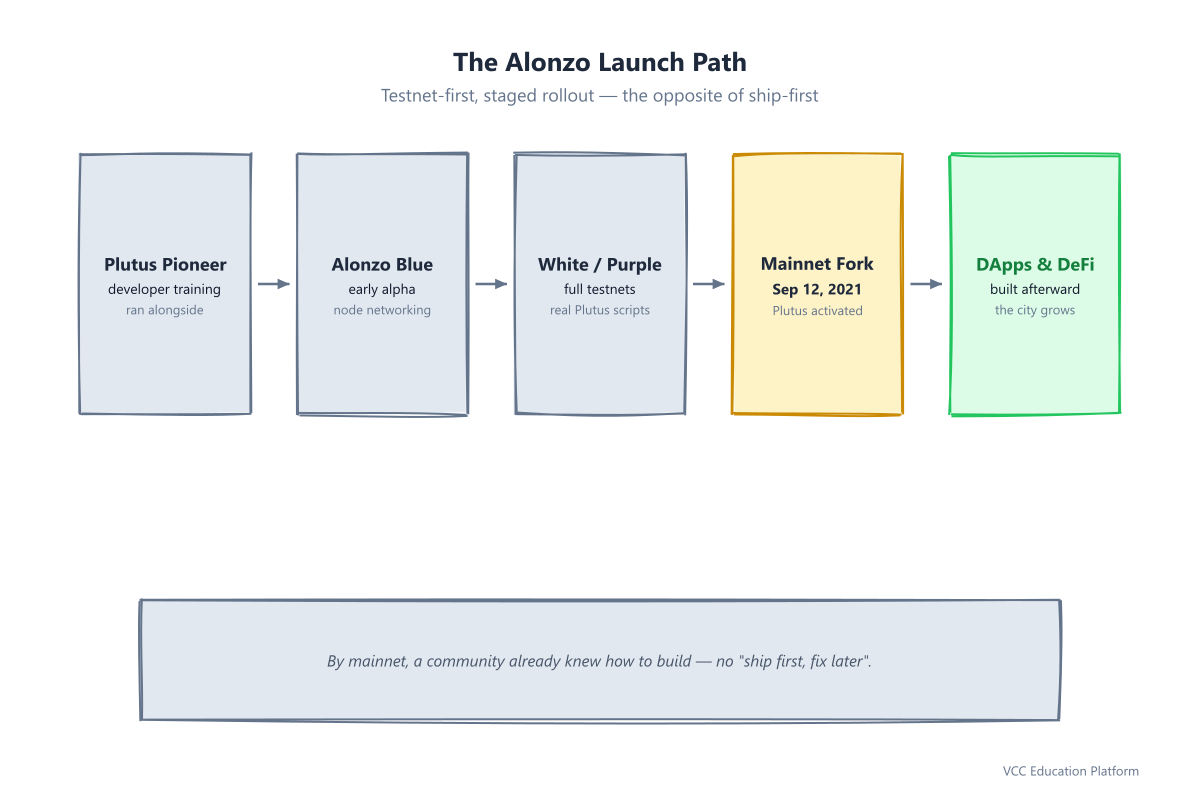
Figure 5: The staged Alonzo launch — testnet-first, the opposite of ship-first
The Plutus Pioneer Program ran alongside, training hundreds of developers before the platform was live — so by mainnet there was already a community that knew how to build. This staged, testnet-first approach is the opposite of crypto's "ship first, fix later" stereotype.
What Alonzo Really Changed — The Honest Version
Here is the honesty most articles skip: the capability arrived in September 2021, but the city was built later. The hard fork flipped the light switch; the rooms were lit but mostly empty at first. DEXes, lending apps, and the rest of DeFi took months to a year to mature.
The correct mental model: Alonzo turned Cardano from a record-keeper into a programmable platform — but programs had to be written. "Can do smart contracts" is not "has a full DeFi city."
FAQ
Was the Alonzo hard fork a coin split? No. Because Cardano used the hard fork combinator, old and new nodes stayed on one chain. No new coin, no airdrop — ADA balances were unaffected.
What is the difference between the Mary and Alonzo upgrades? Mary (early 2021) let users create tokens that are not ADA without smart contracts. Alonzo (September 2021) added the execution layer — programs (Plutus scripts) that can enforce rules and power DApps. Tokens first, programmability second.
Is Plutus the same as Solidity? Both are smart-contract languages with different designs. Plutus is Haskell-based and deterministic (same input → same result); Solidity (Ethereum) runs in an account model with different execution semantics, and Cardano's script costs are explicit and predictable.
Why do I have to pay even if a Cardano script fails? Running a script costs CPU and memory (execution units), and the transaction must put up collateral (a deposit). If the script fails, the deposit is taken to cover the work and to deter attackers from spamming the network.
Does the Alonzo upgrade affect ADA's supply? No. It changed what the chain can do, not ADA's fixed 45-billion supply cap, a protocol rule set at genesis.
The One-Sentence Takeaway
If you remember nothing else: the Alonzo hard fork was the September 12, 2021 protocol upgrade that gave Cardano smart contracts — turning a ledger that could only record balances into a platform that can run programs, with explicit costs and anti-abuse collateral. Before it, a secure notebook; after it, a computer. The applications came later, but the capability arrived that day.
Quick Reference
| Term | Definition |
|---|---|
| Hard fork combinator | Cardano's upgrade mechanism that changes chain rules without splitting the network |
| Alonzo | The September 12, 2021 protocol upgrade that brought smart contracts to Cardano mainnet |
| Plutus | Cardano's Haskell-based smart-contract language, rooted in lambda calculus |
| Datum | The state locked at a script address ("hồ sơ" / dossier) |
| Redeemer | The action a user wants to take ("lệnh" / command) |
| ScriptContext | A snapshot of the whole transaction the script runs inside ("căn phòng" / the room) |
| EUTXO | Cardano's accounting model where each script output is an independently validated "box" |
| Execution units (ExUnits) | The CPU and memory cost of running a Plutus script, charged as a fee |
| Collateral | Funds a transaction puts up, lost if the script fails (like a đặt cọc / deposit) |
| Goguen | The era Alonzo completed: turning Cardano into a programmable, smart-contract chain |