
Today we answer zk rollup là gì — what is a zkRollup? — in the simplest way possible, through the image of a city bus. When Ethereum (L1) gets jammed because every small car carries just one passenger, Layer 2 (L2) solutions step in like shared buses: many transactions "get on board" together, share the gas fare, and need only one ticket (a validity proof) for the whole trip to be accepted. This article gives you a zkrollup L2 giải thích — a visual, step-by-step explanation of how a zero knowledge rollup works — and why this technology is becoming the most important "bus" for the future of blockchain.
How Ethereum Gets Jammed
Before we talk about buses, we need to understand the problem with the "main road" — Ethereum Layer 1. Every transaction on L1 is like a private motorbike taxi (xe ôm): one passenger, one driver, one route. Each bike pays its own fuel (gas), takes up its own lane on the block, and must be verified step by step by the network's "checkers."
When thousands, then millions of people all call for a xe ôm at once, the main road clogs. Gas fees spike, transactions crawl. This is the "scalability problem" Ethereum faces: security, decentralization, and speed — hard to have all three on a single road.
The solution? Stop forcing everyone to ride alone. Put them on a bus.
Introducing Layer 2 (L2) and the Bus
Layer 2 (L2) is a layer that sits "on top of" Ethereum (L1), like a system of side roads and buses running parallel to the main road. L2 picks up passengers (transactions), runs them at high speed and low cost, then "gathers the trip" (gom chuyến) and brings the whole convoy back to the central station (L1) to close the books.
There are many kinds of L2, but the two biggest "bus companies" are:
- Optimistic rollup — the "trust the passenger" type: let everyone on board, and only check if someone complains (a fraud proof) within a window of about 7 days.
- zkRollup (zero knowledge rollup) — the "check before departure" type: before the whole trip is accepted, there must be one mathematical proof (a validity proof) showing the entire journey was correct.
This article focuses on zkRollup — the smartest bus.
**
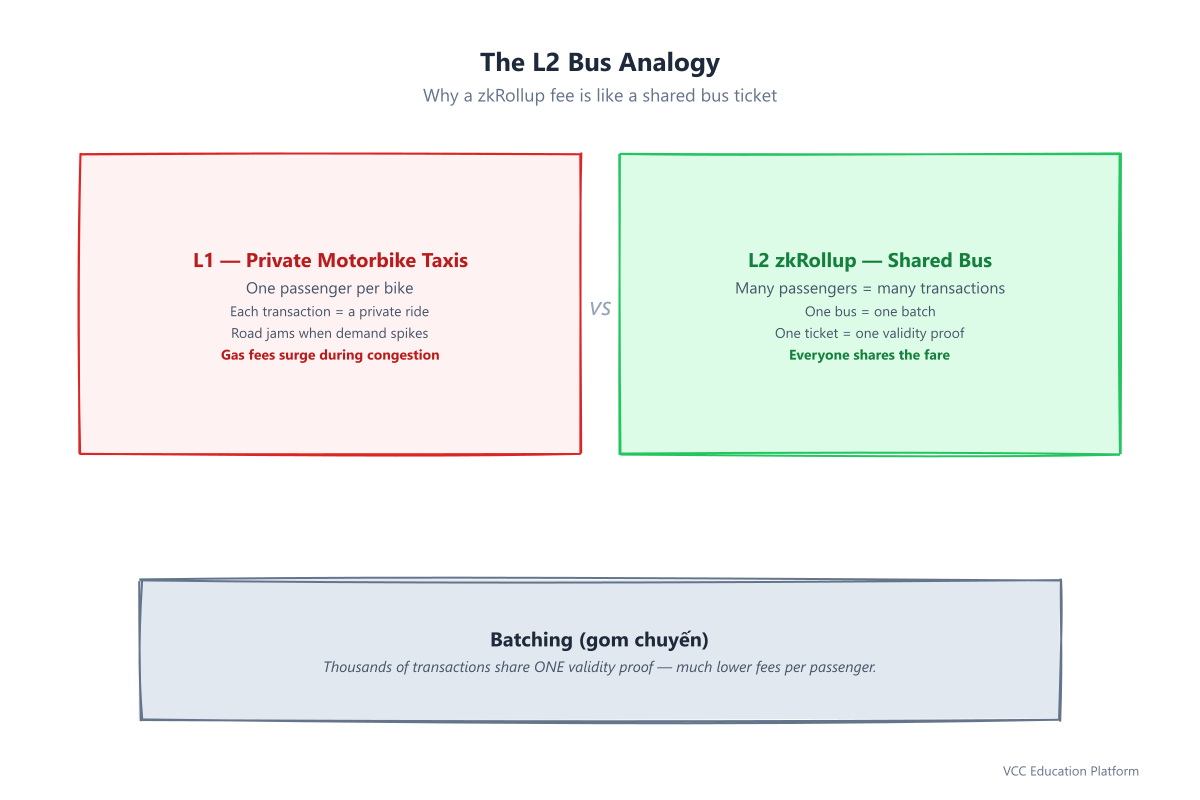
Figure 1: The L2 bus analogy — many transactions share one validity proof
**
Left: many private motorbike taxis (L1 transactions), expensive, one passenger per bike. Right: one L2 bus carrying many passengers, one ticket (validity proof) for the whole trip.
zkRollup L2 Giải Thích: How the Ride Actually Works
Now let's "get on the bus" and see how the trip unfolds. A zkRollup has four main characters:
- Passengers (users) — send their transactions to L2.
- Driver (sequencer) — receives the transactions, orders them, and gathers them into one trip (a batch).
- Garage worker (prover) — creates the "bus ticket" (validity proof): mathematical proof that the whole trip followed the rules.
- Checker (L1 verifier contract) — the contract on Ethereum that checks the ticket; if valid, it lets the whole trip "dock" (update the state root).
Step by Step
Step 1 — Passengers board: Users sign their transactions and send them to the L2's sequencer. The sequencer is the only one allowed to "drive" (today it is usually centralized) — just like the driver is the only one at the wheel.
Step 2 — Batching (gom chuyến): Once enough transactions arrive, the sequencer gathers them into a batch (a bus trip) and executes them offchain. Instead of sending every transaction to L1, it sends a summary of the state.
Step 3 — Making the ticket (proving): The prover takes the batch and its execution trace, then uses zk-SNARK / zk-STARK technology to produce a validity proof — a short proof that says: "Given the old state + this batch, the new state is the correct result of execution."
Step 4 — Checking the ticket (verification): The verifier contract on Ethereum checks the proof. If valid, it updates the new state root (the fingerprint of the entire L2 state) on L1. If not, the whole trip is rejected.
The key point: Ethereum does not re-run every transaction. It only verifies ONE proof for the WHOLE trip. That is how the cost is spread across thousands of passengers — each person pays only a tiny fraction of the fare.
**
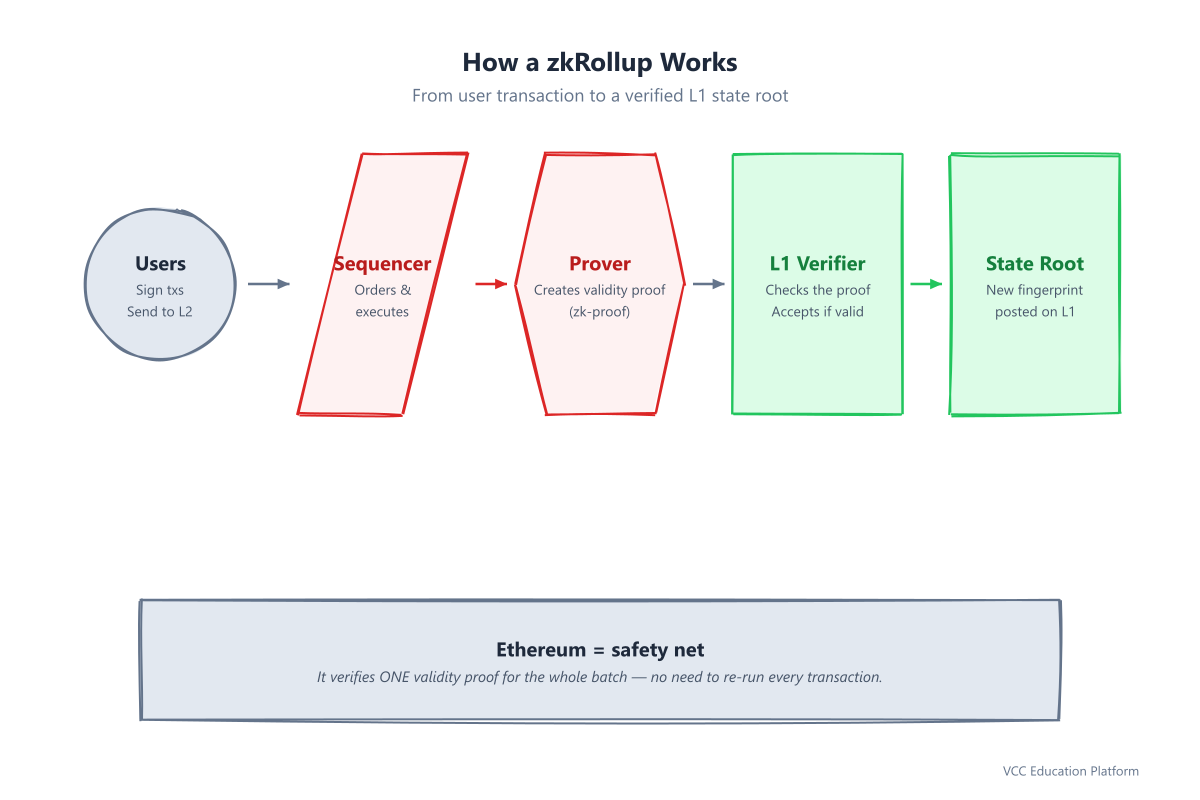
Figure 2: How a zkRollup works — from users to a verified L1 state root
**
Users → Sequencer (gathers batch) → Prover (creates validity proof) → L1 Verifier (checks the ticket) → State root updated. Arrows show the flow left to right.
What Does "zk" in Zero Knowledge Rollup Really Mean?
Many people hear "zero knowledge" and assume zkRollup hides transaction data. In fact, this is wrong for most zkRollups today.
In a standard zkRollup, transaction data is public on L1 as calldata or blobs, so anyone can reconstruct the state themselves. The "zk" here is not about privacy — it is about the way correctness is proven: proving a computation is right without re-running the whole computation.
Picture it this way: you do not need to re-check every step of a student's homework if a teacher's signature (a proof) confirms the grade is correct. "Zero knowledge" means the verifier (L1) knows the result is right without seeing the entire computation.
In short: "zk" in zkRollup = validity proof, not hidden data.
Validity Proof vs Fraud Proof
This is the biggest difference between zkRollup and optimistic rollup. Look at the comparison below:
| Criterion | zkRollup (Validity Proof) | Optimistic Rollup (Fraud Proof) |
|---|---|---|
| How it works | Proactive: proves CORRECT before accepting | Reactive: accepts first, checks later if challenged |
| Withdrawal time | Fast — as soon as the proof is verified (no challenge window) | Slow — must wait ~7 days of challenge period |
| Security | A wrong state can never be accepted | A wrong state may be temporarily accepted until caught |
| Prover cost | Expensive — needs specialized hardware, high overhead | Cheaper — no prover needed every batch |
| Data compression | Better — only a state summary needs posting | Must post enough data for others to reconstruct |
**
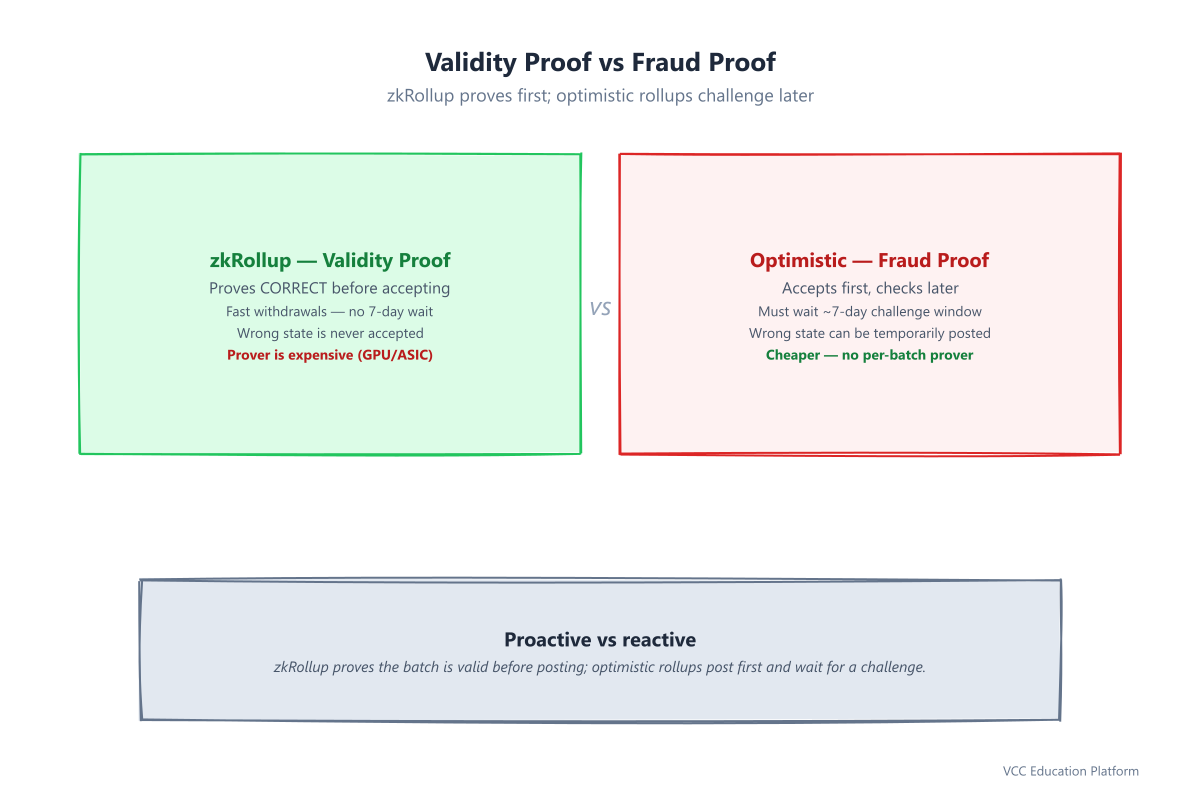
Figure 3: Validity proof vs fraud proof — proactive vs reactive security
**
Two opposing columns — left: zkRollup (proactive, verifies first, fast withdrawals); right: optimistic (reactive, waits ~7-day challenge).
One important note: "Fast withdrawal" does not mean instant. There is still latency from batch time, proof generation, L1 confirmation, and bridge processing. But in principle, zkRollup does not wait for a multi-day fraud window like optimistic rollup does.
Who Rides the Bus? — Notable zkRollup Projects
Several major projects run zkRollups on Ethereum. Each "bus company" has its own approach:
- zkSync Era — a zkRollup by Matter Labs, relatively friendly to EVM (the Solidity ecosystem).
- Starknet — built by StarkWare, uses the Cairo language and STARK proofs; not fully EVM-compatible but very strong on performance.
- Scroll — a zkRollup with a zkEVM, aiming for high EVM compatibility.
- Polygon zkEVM — Polygon's effort to reproduce the EVM inside a proving environment.
- Linea — a zkRollup by ConsenSys, also focused on EVM compatibility.
Each project has its own flavor, but all share the same principle: gather transactions, produce a validity proof, and let Ethereum verify.
**
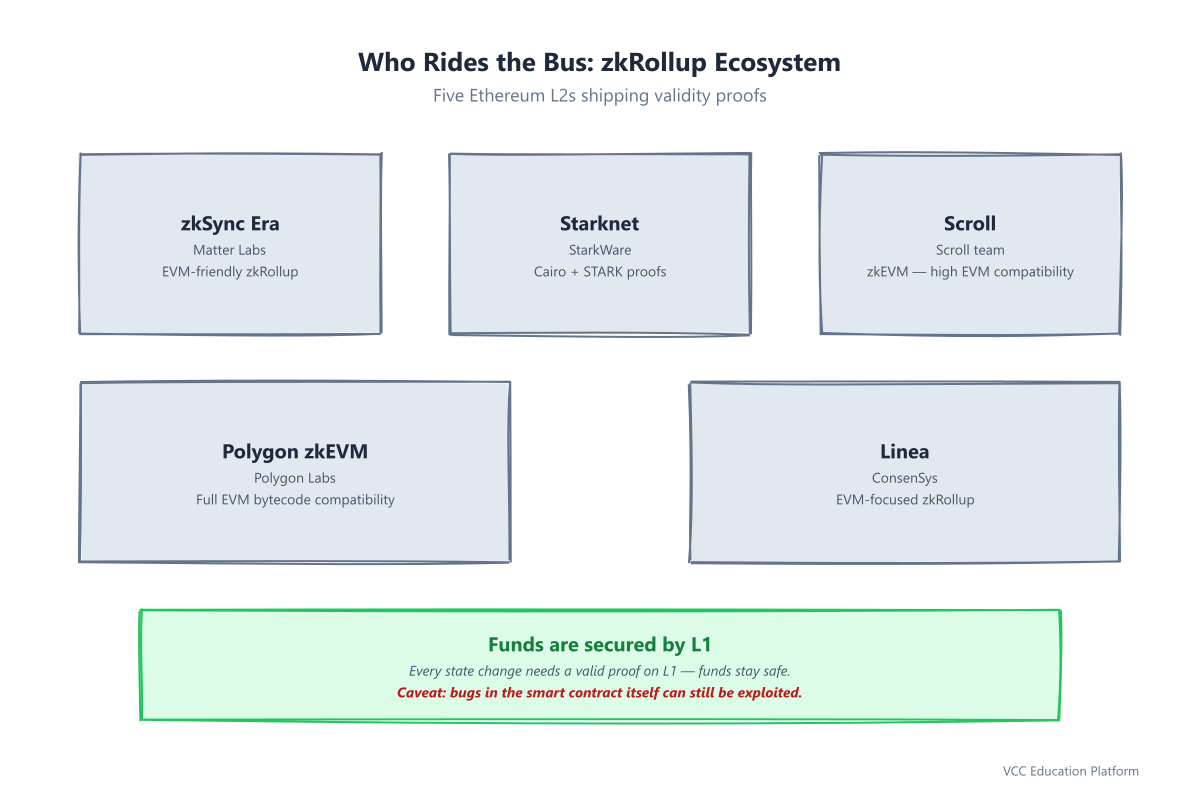
Figure 4: Who rides the bus — the zkRollup ecosystem
**
The zkRollup bus with "passengers" zkSync, Starknet, Scroll, Polygon zkEVM, Linea. Note: funds are secured by L1.
Security: Why Trust the Bus?
This is what makes zkRollup especially trustworthy: your money is backed by Ethereum L1. Because every state change must carry a validity proof verified by L1, a malicious sequencer cannot trick the contract into accepting a wrong state to steal funds. Without a valid proof, the whole trip never docks.
This is fundamentally different from a sidechain, where security is guaranteed by the sidechain itself and not inherited from L1.
But there is a caveat: a validity proof only proves "the program ran according to its rules." If the smart contract itself has a logic bug, the proof will happily confirm that a buggy program ran correctly. So smart-contract exploits can still happen on L2 — the proof is not a magic shield against every bug.
Limitations and Tradeoffs
zkRollup is not without a price:
- High proof-generation cost: Provers need powerful hardware (GPU/FPGA/ASIC) and time. The proving overhead can be very large (estimated 100x–10000x depending on the operation).
- Centralization risk: Because only a few parties own the proof hardware, the "driving" power of the chain can concentrate in a handful of players.
- Imperfect EVM compatibility: Not every Solidity dApp runs perfectly on every zkRollup.
- Harder audits: The cryptography is more complex to audit than optimistic rollups.
In exchange, you get: speed, low cost, fast withdrawals, and strong security guarantees inherited from L1.
FAQ
Q: zk rollup là gì? A: It is a Layer 2 solution that scales Ethereum by gathering many transactions into a batch, executing them offchain, and posting a single validity proof to L1 to verify everything. Like a bus carrying many passengers with one ticket.
Q: How is a zkRollup different from an optimistic rollup? A: zkRollup proves correctness first (validity proof) — faster and safer; optimistic rollup accepts first and checks later if challenged (fraud proof) — usually cheaper but slower to withdraw (~7 days).
Q: Does "zk" mean private transactions? A: Not necessarily. In most zkRollups the data is still public. "zk" refers to the validity proof — proving a computation is correct without re-running all of it.
Q: Is my money safe in a zkRollup? A: At the protocol level, yes — every state change is verified by L1 through a proof, so a sequencer cannot steal funds with a wrong state. But smart-contract bugs can still be exploited.
Q: Which zkRollups are popular today? A: zkSync Era, Starknet, Scroll, Polygon zkEVM, and Linea are the most prominent.
Conclusion
zkRollup — the smart L2 bus — elegantly solves Ethereum's congestion problem: instead of letting thousands of single bikes jam the main road, it gathers everyone onto shared buses, and each trip needs only one ticket (a validity proof) to reach its destination safely. Lower cost, higher speed, and the security guarantee still comes from Ethereum L1 itself.
Whether you are a user who wants fast withdrawals, or a developer deploying a dApp with low fees, understanding zkRollup means understanding the future of blockchain scaling. Next time you hear "gom chuyến," think of the bus — and of one small ticket that can verify an entire journey.
Word count: ~1,820 | Primary keyword: "zk rollup là gì" | Secondary: "zkrollup l2 giải thích", "zero knowledge rollup"