
The village rice field is ready. But the farmer does not want to walk every row, press every stalk, and count every grain to be sure. He wants an honest answer to one question — is the rice ripe? — without anyone exposing the whole field to inspection. This is a zero knowledge proof minh họa: a way to prove something is true while revealing nothing about the evidence behind it. It is one of the most important ideas in modern cryptography, and once you see it through the eyes of a night watchman, it becomes wonderfully simple.
Here's the one-sentence version: A zero-knowledge proof lets one person (the prover) convince another person (the verifier) that a statement is true, without revealing anything except the fact that it is true.
If you have ever wanted a zkp cơ bản explanation that actually sticks, this guide walks through the watchman's story step by step, then shows you where the same trick powers real technology today — from private payments to verifying your age online.
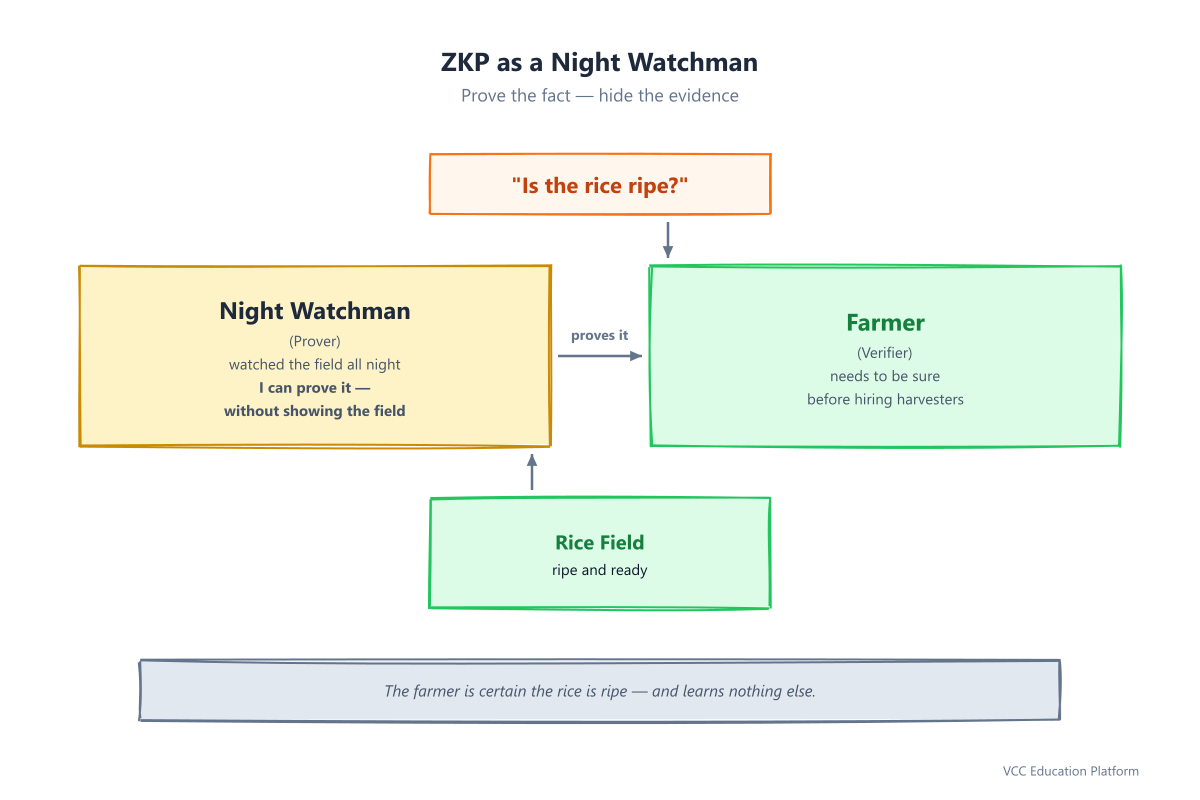
Figure 1: The night watchman proves the rice is ripe — the farmer never sees the field
The Night Watchman and the Farmer
Let's set the scene. It is harvest season in a small Vietnamese village. A farmer hires a night watchman — an người canh đêm — to guard the rice field through the dark weeks when the crop ripens. The watchman walks the field every night, in every weather, watching the rice turn from green to gold. He knows, intimately, when the rice is ripe.
The farmer, meanwhile, must make a big decision: when to hire the harvesters. Call them too early and the rice is under-ripe; call them too late and the crop spoils in the field. The farmer needs a trustworthy answer to a single yes/no question: "Is the rice ripe?"
Here is the trap. The farmer does not want to walk the entire field himself — that costs days, tramples rows, and he still might miss a patch. And he does not want the watchman to dump his whole experience on the table either — the watchman's notes, his patrol routes, which corner ripened first. The farmer wants certainty, not a data dump.
What the farmer truly needs is exactly what a zero-knowledge proof provides: a guarantee the rice is ripe, and nothing more.
Three Ways to Learn the Truth
Before we reveal the watchman's trick, consider the three obvious ways the farmer could find out, and why each one fails.
Way 1: Blind trust
The farmer just takes the watchman at his word. "Trust me, the rice is ripe." This is simple, but it is not a proof. If the watchman is lazy, bribed, or just wrong, the farmer has no way to check. Blind trust is why the field is a risky place to do business.
Way 2: Full inspection
The farmer walks every row, presses every stalk, checks every corner of the field himself. This is a complete proof — but it is also a complete disaster. It reveals the entire field to him (which is fine here, but imagine it is a password or a medical record), it costs days, and it still has no guarantee he checked perfectly.
Way 3: The zero-knowledge game
The watchman proposes a game. "Let me prove the rice is ripe," he says, "without you walking the field and without me showing you anything but the answer."
This is the heart of a zero knowledge proof. The farmer will be certain the rice is ripe, yet will learn nothing else about the field, the watchman's methods, or his notes. It sounds impossible. It is not. Here is how it works.
The Watchman's Game: Challenge and Response
The watchman and the farmer agree on a simple ritual. The field is divided into a grid of patches. Each night, the watchman does this:
- The farmer names any patch number — say, "Patch 12."
- The watchman immediately brings back a single ripe stalk from Patch 12 — no map, no explanation, just the stalk.
- The farmer checks that stalk, confirms it is ripe, and that it truly comes from Patch 12.
Then they repeat. Patch 3. Patch 27. Patch 9. Patch 18. Dozens of times, the farmer names random patches, and every single time the watchman returns with a ripe stalk from exactly that patch.
At the end of the game, the farmer is convinced. Why?
- He chose the patches at random. He did not let the watchman pick easy ones. The watchman had no idea which patch would be demanded next.
- The watchman passed every test. If even a single corner of the field were unripe, the watchman could not fake it — he cannot invent a ripe stalk from a patch that has none.
- Chance shrinks fast. If one patch were secretly unripe, the watchman would only "pass" that round by luck. After one round, his chance of fooling the farmer by luck is tiny. After twenty, it is astronomically small — far smaller than the chance of being struck by lightning.
That is the trick in miniature: the verifier tests the prover on random demands, and enough successful tests make falsehood effectively impossible. The rice is ripe, the farmer knows it — and he still knows nothing about the watchman's notes, his routes, or which corner ripened first.
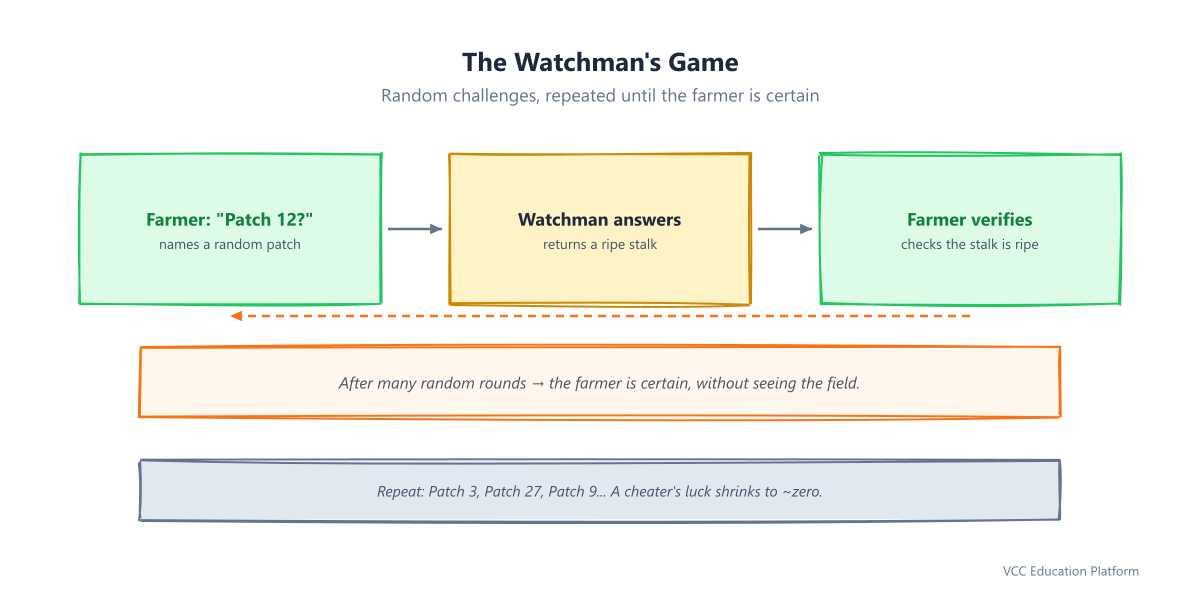
Figure 2: Challenge and response — repeat the game and the farmer becomes certain
The Three Properties That Make It a Proof
Every real zero-knowledge proof rests on three properties, and the watchman's game has all three. These are the exact same properties cryptographers require of ZKP systems used in real life — this is the zkp cơ bản definition in one place:
1. Completeness
If the statement is true, an honest prover can always convince an honest verifier. If the rice really is ripe, the watchman can always fetch a ripe stalk from any patch the farmer names. Honest watchman + honest farmer = success, every time.
2. Soundness
If the statement is false, a cheating prover cannot convince an honest verifier — except with a probability so small it might as well be zero. If the rice is not ripe somewhere, the watchman cannot fake a ripe stalk from that patch. He can only hope the farmer never asks. Repeat the game enough times and the cheating watchman is caught with near-certainty. This is why soundness is probabilistic rather than absolute: no proof can rule out luck, but the luck shrinks to nothing.
3. Zero-Knowledge
The verifier learns nothing beyond the truth of the statement. The farmer learns the rice is ripe. He does not learn the watchman's routes, his notes, the moisture readings, or which patch ripened first. The proof is a black box that outputs one bit — true — and nothing else.
These three properties are the definition. If a system has completeness, soundness, and zero-knowledge, it is a zero-knowledge proof. If it lacks any one of them, it is not. Remember the three properties and you already understand more than most people reading about ZKPs.
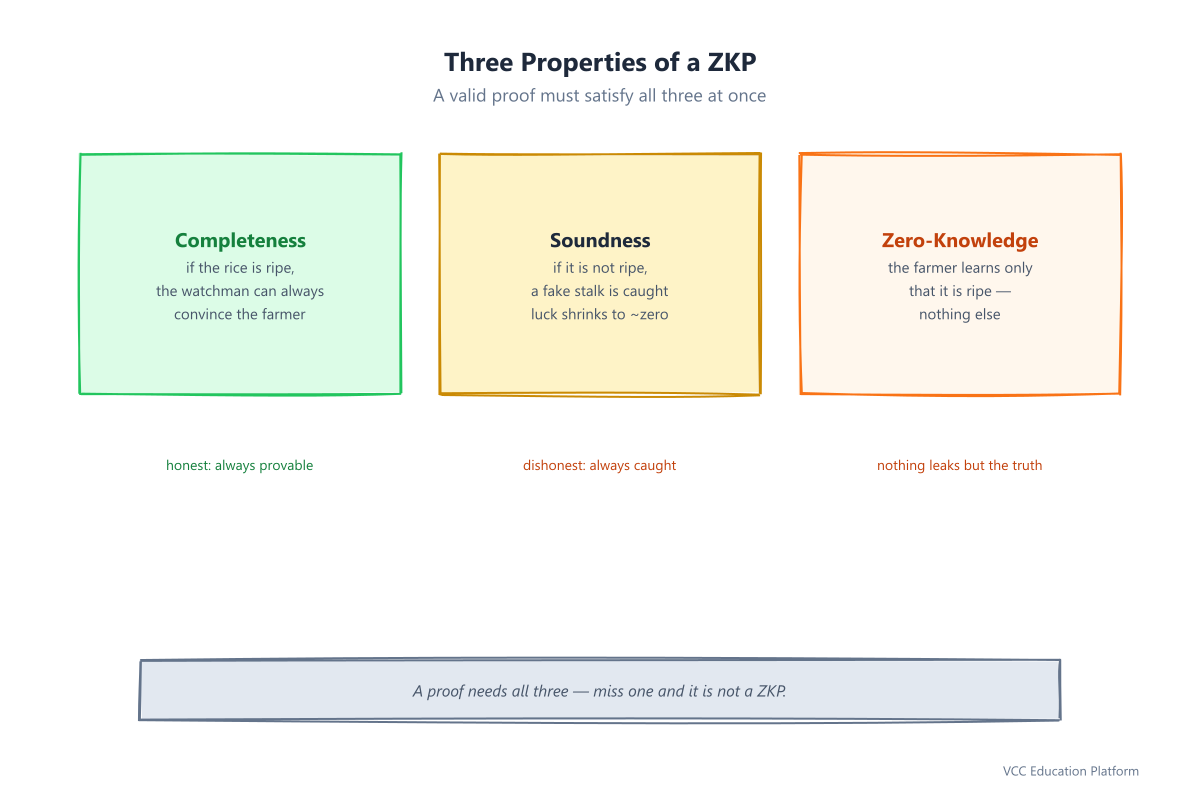
Figure 3: The three properties that make it a proof — miss one and it is not a ZKP
From the Field to the Internet
Now the leap. Replace the rice field with data, the watchman with a prover, the farmer with a verifier, and the ripe stalk with a piece of hidden information called a witness. Everything else stays the same.
In real zero-knowledge cryptography, the "game" is played by a proof system — a set of rules (a protocol) plus some clever mathematics that lets the verifier check the proof without learning the secret. Modern systems, called zk-SNARKs and zk-STARKs, even remove the back-and-forth: the prover sends one compact "stalk" — a single proof message — and the verifier checks it offline. No dialogue needed. The proof is short enough to fit on a postage stamp, and the check takes milliseconds.
The witness is the crucial piece. A proof cannot be forged without the witness, and it cannot leak the witness with it. This is the same logic as the watchman's game: the farmer's random challenges force the watchman to actually possess the truth to keep answering.
So what does the field-to-internet translation look like in practice? Here are three everyday examples — a zero knowledge proof đời thường (a real-life zero-knowledge proof) you have probably already used or will soon.
1. Proving your age without showing your birthdate
A website asks: "Are you over 18?" The old way: you hand over your ID, and the site sees your name, your birthdate, your address, everything. With a ZKP: you present a proof that answers only the question — "over 18: yes" — and nothing else. Your birthdate never leaves your phone. This is the exact "rice is ripe" situation: the verifier needs one yes/no bit, not the whole field.
2. Proving you can pay without showing your balance
An online merchant asks: "Can you afford this?" The old way: you reveal your bank balance or connect your full account. With a ZKP: you prove the statement "my balance is at least the price" without revealing the actual amount. The merchant gets certainty; your finances stay private.
3. Private payments and blockchain scaling
On a public blockchain, every transaction is visible to everyone. Two big families of ZKP technology fix this:
- Privacy coins (like Zcash): a shielded payment hides the sender, the receiver, and the amount, while still proving the transaction is valid — no coins created from thin air. The proof verifies without revealing who paid whom or how much.
- ZK-rollups: instead of posting thousands of transactions to the main network, a rollup computes a single zero-knowledge proof that all of them were valid, and posts just that proof. The main chain verifies one compact proof instead of thousands of records. This is how several blockchains scale today without giving up security.
In all three cases, the shape is identical to the night watchman's game: prove the fact, hide the field.
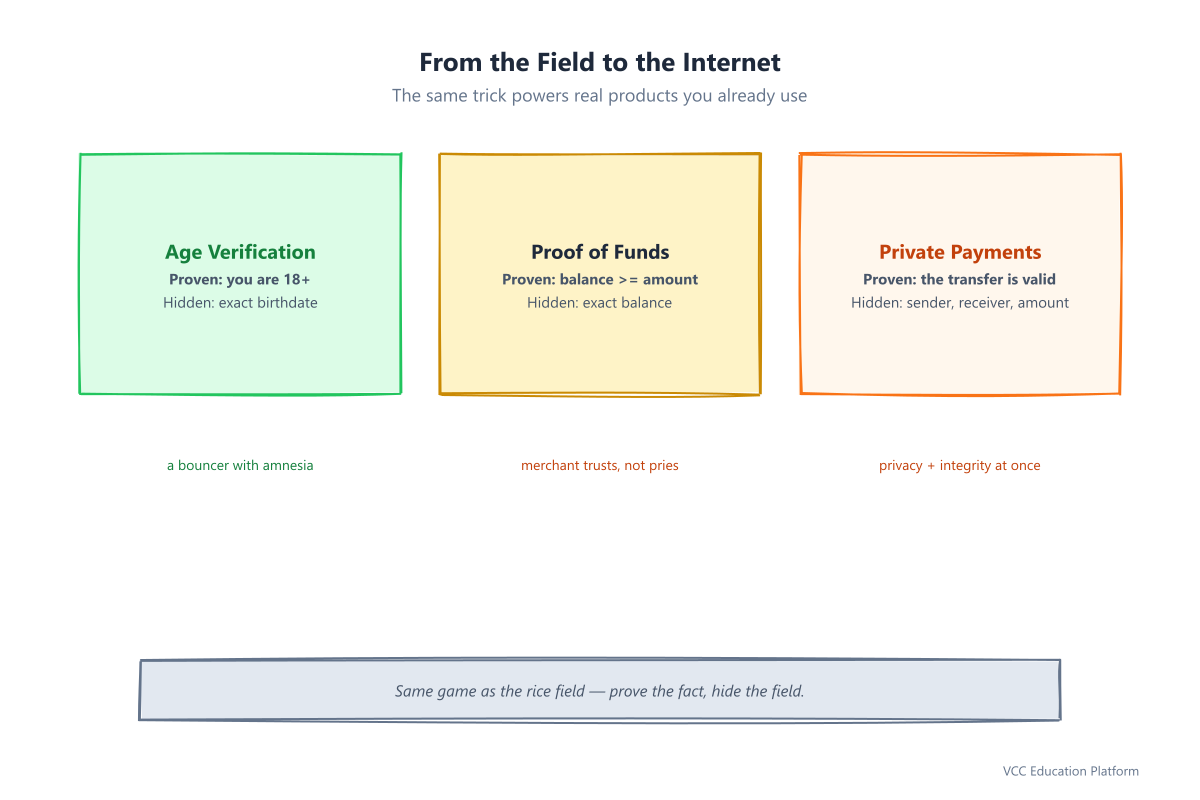
Figure 4: Real-world ZKPs — prove the fact, hide the field
Why This Matters for Vietnamese Readers
ZKP technology matters beyond cryptography classes, and it lands especially well in a country where digital identity, financial privacy, and trust in online systems are everyday concerns.
- Digital identity without surveillance: Vietnamese readers are already familiar with the national ID and e-identification apps. ZKPs let you prove who you are, your age, or your qualification without handing a service your full identity card data. You answer the question; you keep the rest of the data.
- Financial privacy by default: from e-wallets to bank apps, a ZKP means a service can verify your ability to pay without pulling your whole transaction history. Privacy becomes a design feature, not a policy promise.
- Trust without blind trust: Vietnamese society values personal trust highly — like the farmer trusting the watchman. ZKP is the technological version of that trust: you can verify the claim is true without needing to see all the evidence behind it. It is "tin nhưng có kiểm chứng" — trust, but with a proof you can check.
The night watchman analogy is not just a nice story. It is the mental model used by cryptographers, and once you hold it, headlines about zk-rollups, private payments, and anonymous identity suddenly make sense.
Common Questions About Zero-Knowledge Proofs
What is a zero-knowledge proof in simple terms?
A zero-knowledge proof (ZKP) is a method where one person proves to another that a statement is true without revealing anything except the fact that it is true. In the article's analogy: the watchman proves the rice is ripe without showing the field or his notes.
What is a zero knowledge proof minh họa?
A "minh họa" (illustrated) zero-knowledge proof is an example or visual demonstration used to explain the concept. The night watchman and the ripe rice field in this article is a minh họa: it shows how prover, verifier, and the three properties work using a familiar real-world situation.
What are the three properties of a ZKP?
Completeness (true statements are always accepted), soundness (false statements cannot be faked except by vanishingly small luck), and zero-knowledge (the verifier learns nothing beyond the statement's truth).
Is a zero-knowledge proof a proof of knowledge?
Strictly, a ZKP proves a statement is true. A related concept, a zero-knowledge proof of knowledge (ZKPoK), additionally proves that the prover actually possesses the underlying secret (the witness). In the analogy, the watchman proves the rice is ripe and that he genuinely knows which stalks are ripe.
Why are zero-knowledge proofs probabilistic?
Soundness relies on random challenges. Like the farmer naming random patches, the verifier tests random demands; a cheater can only pass by luck, and repeated rounds shrink that luck to essentially zero. That is why ZKPs are described as probabilistically sound rather than deterministic.
Where are zero-knowledge proofs used today?
Private payments (Zcash), blockchain scaling (ZK-rollups such as zkSync and Polygon zkEVM), age and identity verification, proof of funds, and any system that must verify a claim without exposing the underlying data.
Can a zero-knowledge proof be faked?
No, not in any practical sense. Soundness guarantees a dishonest prover's chance of success is negligibly small — after enough challenges, the luck required to fool the verifier becomes far less likely than winning the lottery.
Do I need to understand the math to use ZKPs?
No. The mathematics is handled by software libraries and protocol implementations. Understanding the watchman's game — proving a fact without revealing the evidence — gives you the mental model you need to reason about how and where ZKPs are used.
Quick Reference
| Property | Value |
|---|---|
| What it is | A way to prove a statement is true without revealing the evidence |
| Prover | The party who knows the truth and produces the proof (the watchman) |
| Verifier | The party who checks the proof (the farmer) |
| Witness | The hidden information that makes the proof possible (the ripe stalks) |
| Property 1 | Completeness — true statements always accepted |
| Property 2 | Soundness — false statements cannot be faked (luck → ~zero) |
| Property 3 | Zero-knowledge — verifier learns only that it's true |
| Interactive | Challenge/response rounds (the farmer naming patches) |
| Non-interactive | One compact proof message (zk-SNARK, zk-STARK) |
| Real uses | Private payments, ZK-rollups, age verification, proof of funds |