
Is zk-STARK quantum resistant? Yes — and in the coming quantum summer, that single fact may decide which proof systems survive. A quantum computer running Shor's algorithm can melt the elliptic-curve pairings that hold SNARKs together, but the hash-based locks of STARK stay shut. This article explains why STARK is built to survive the quantum era, how SNARK's reliance on pairings becomes its weakness, and what the post-quantum countdown means for blockchains and zk proof systems.
The summer that melts one lock but not the other
Picture a harsh Vietnamese summer — the kind where the sun is so brutal that a cheap metal padlock left on a warehouse gate warps and seizes in the heat. The metal (elliptic-curve pairings) becomes soft, the lock fails, and the gate swings open. Beside it, a second gate is closed not with a padlock but with a mechanical maze — a labyrinth with so many combinations that no amount of heat can unlock it quickly. The maze is made of pure logic and arithmetic (hash functions), and it does not melt.
That is the whole story of zk-STARK in the quantum era. SNARK's security is a padlock built from elliptic-curve pairings; a powerful quantum computer melts it. STARK's security is a maze built from hash functions, and even a quantum computer cannot shortcut it exponentially.
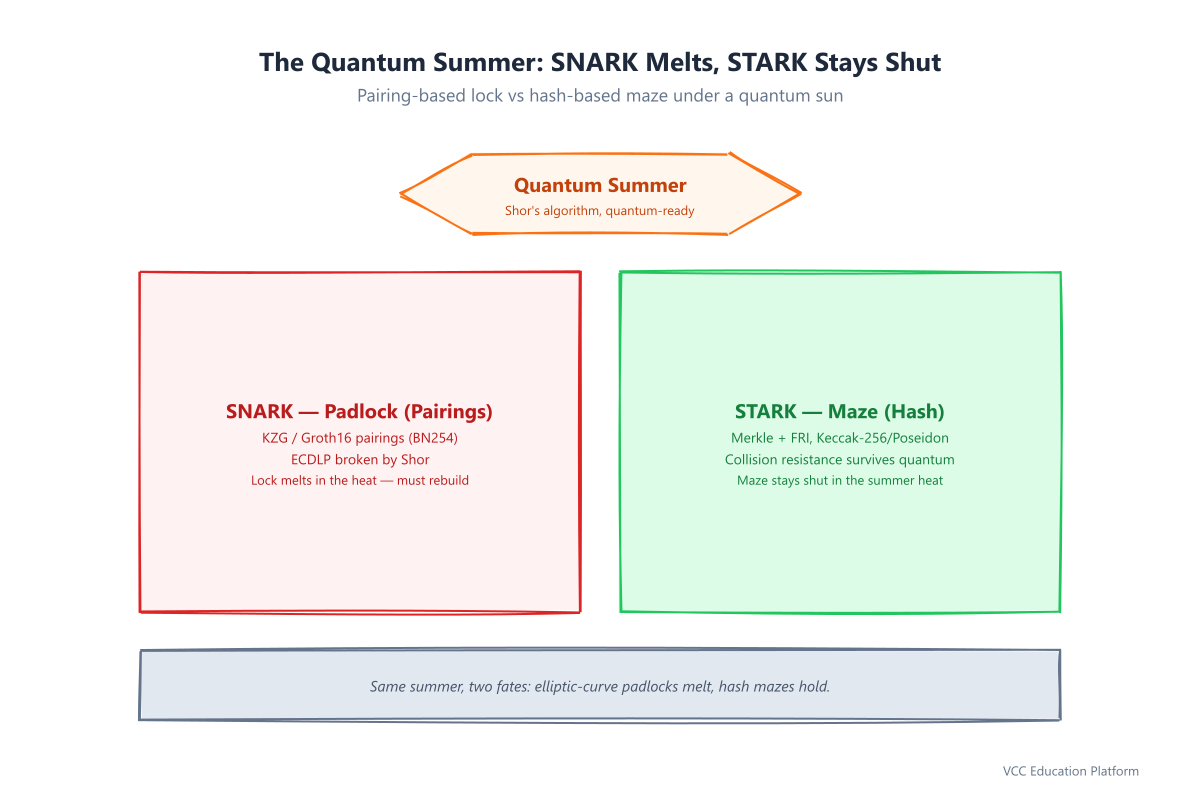
Figure 1: The quantum summer — the SNARK padlock melts, the STARK maze holds
Why SNARK leans on pairings — and why that becomes a weakness
Most modern SNARKs (Groth16, PLONK, and the KZG polynomial commitments inside them) rest on pairing-friendly elliptic curves such as BN254 or BLS12-381. The prover commits to a polynomial, and the verifier checks the proof with a pairing equation e(...) = e(...). Pairings give SNARK two superpowers: tiny proofs (a few hundred bytes) and near-instant verification. That is why SNARK powers most of today's zk rollups.
The problem is the foundation. Pairing-based soundness relies on the hardness of the Elliptic Curve Discrete Logarithm Problem (ECDLP). Shor's algorithm — the same quantum algorithm that breaks RSA factoring — also solves discrete logarithms in polynomial time. In 2026, researchers (including a team at Google) published concrete resource estimates: ECDLP-256 on secp256k1 can be broken with roughly 1,200–1,450 logical qubits and tens of millions of gates, running in minutes on fewer than half a million physical qubits.
This matters for SNARK in two ways. First, the pairings themselves are vulnerable — a quantum adversary could recover secrets from a KZG commitment or forge a proof. Second, the trusted setup that many SNARKs require stores "toxic waste" (article 10 and article 13), and a quantum computer gives an attacker another angle on that ceremony. When the quantum summer arrives, pairing-based proof systems "will need to be restructured from the ground up."
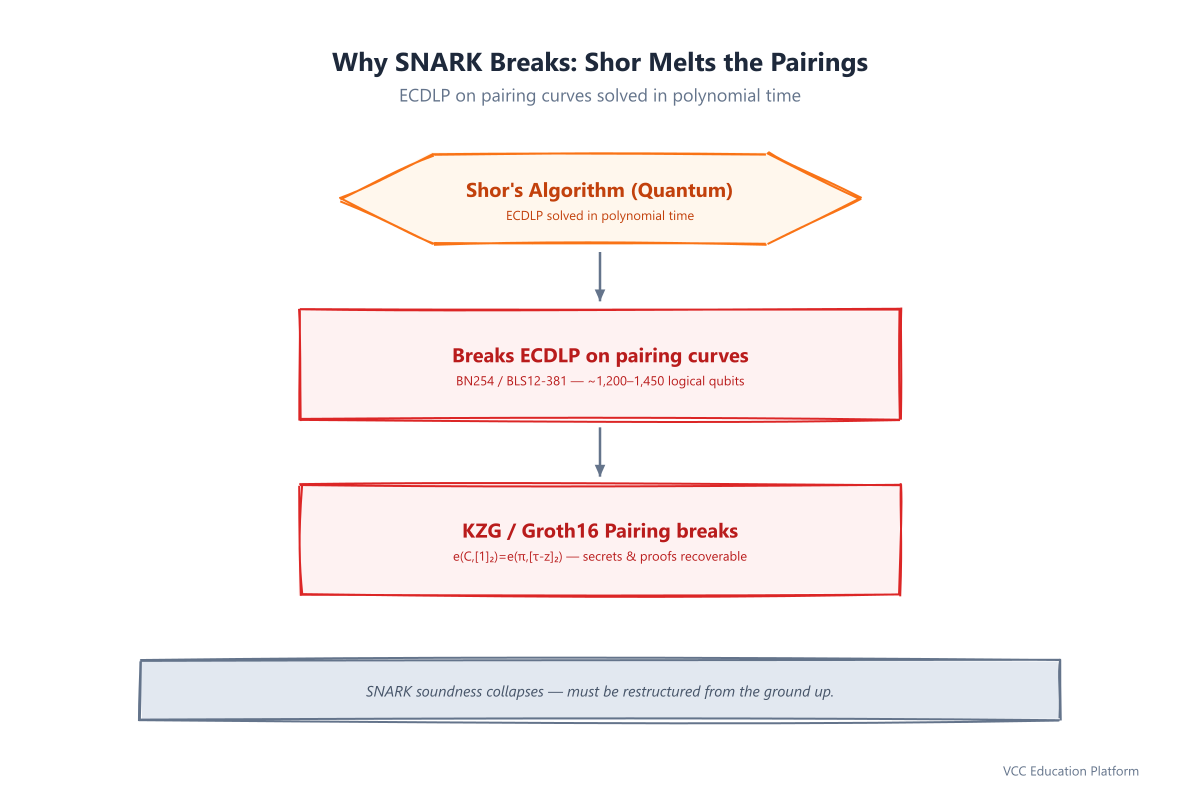
Figure 2: Why SNARK breaks — Shor's algorithm melts the pairings
STARK is a maze of hashes — quantum resistance by construction
zk-STARK (Scalable Transparent ARgument of Knowledge) is different at its core. It commits to polynomials using Merkle trees, and it proves low degree with the FRI protocol (Fast Reed-Solomon Interactive Oracle Proof of Proximity). Everything rests on a collision-resistant hash function — in practice, Keccak-256 or the STARK-friendly Poseidon — not on elliptic-curve arithmetic.
Why does that survive quantum? Grover's algorithm, the best quantum attack on a hash, gives only a quadratic speedup: an O(2ⁿ) preimage search becomes O(2^(n/2)). That is a real speedup, but it is nowhere near the exponential break Shor delivers for elliptic curves. And it is easy to defend against — just double the hash output size (256 → 512 bits) and the quadratic advantage is absorbed. There is no known quantum attack that breaks hash functions outright, which is why STARK is described as post-quantum secure by design.
STARK is also transparent — no trusted setup, no ceremony, no toxic waste. Its assumptions are minimal: you need only a good hash function, which every cryptographer already trusts. In the quantum summer, STARK does not need to be rebuilt; it simply keeps working.
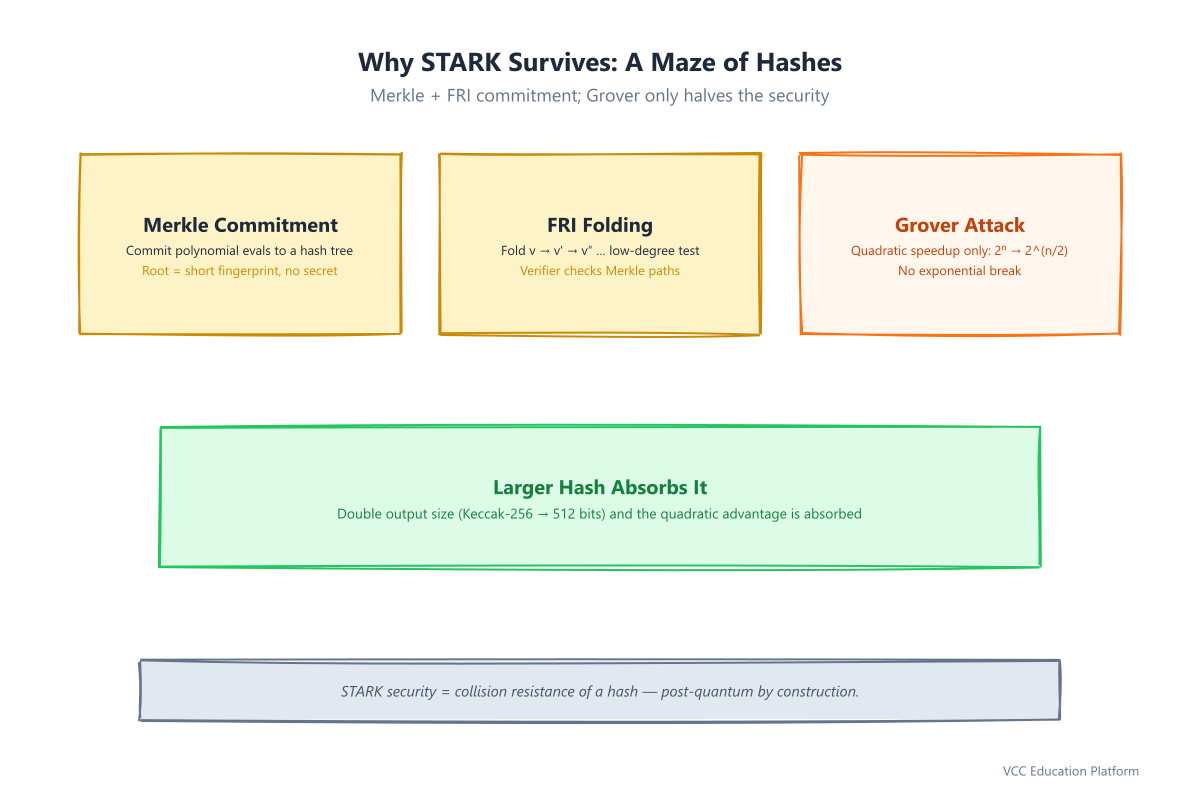
Figure 3: Why STARK survives — a maze of hashes that quantum cannot shortcut
The quantum summer timeline: a countdown, not a maybe
Cryptographers do not wait for a quantum computer to exist before migrating — because of "harvest now, decrypt later." Data encrypted today with a vulnerable algorithm can be captured now and broken years later once a quantum computer is powerful enough. This is Mosca's theorem in action, and it is why the migration is already urgent.
The institutions agree on the shape of the timeline:
- 2024 — NIST published its first post-quantum standards: FIPS 203 (ML-KEM), FIPS 204 (ML-DSA), and FIPS 205 (SLH-DSA).
- 2030 — elliptic-curve algorithms begin to be deprecated; the U.S. prioritizes migration of high-value systems.
- 2035 — elliptic-curve-based signatures and key establishment are scheduled to be disallowed; the full post-quantum migration targets completion.
For blockchains, this is a race. Bitcoin and Ethereum accounts use ECDSA (vulnerable to Shor). Most SNARK-based rollups add elliptic-curve exposure at the verification layer. A chain whose proof system is built on pairings inherits that vulnerability and must be restructured. Starknet — the flagship STARK ecosystem — argues it starts from a post-quantum position: its proof layer is hash-based, and its account abstraction lets users deploy post-quantum wallets without a protocol fork. A quantum-resistant wallet on a quantum-vulnerable proof system, StarkWare notes, "is like a steel lock on a cardboard box."
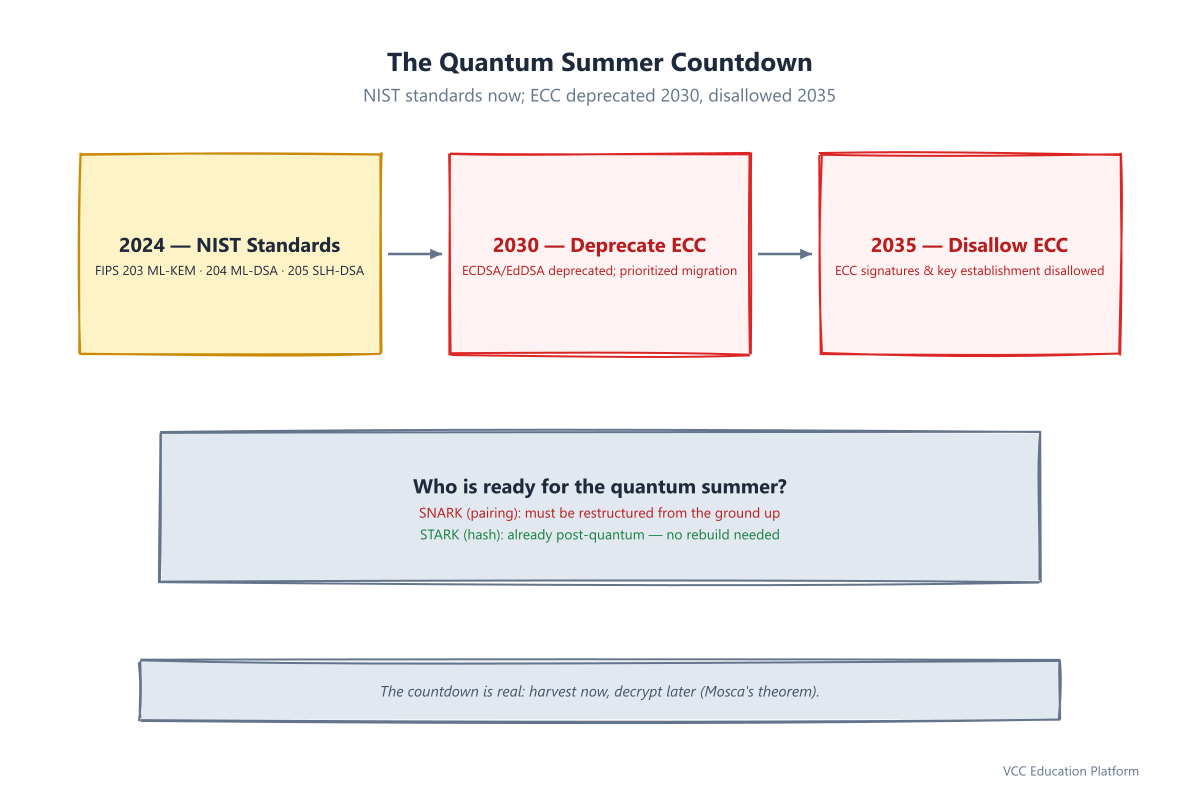
Figure 4: The quantum summer countdown — 2024 to 2035
The price of safety: proof size and verification
Quantum resistance is not free. The classic STARK tradeoff is larger proofs and slower verification than SNARK. Where a SNARK proof is a few hundred bytes, a STARK proof runs to tens of kilobytes (roughly 10–100 KB depending on parameters); where SNARK verifies in ~1–5 ms, STARK verifies in ~10–50 ms. Originally STARK proofs were about 1,000× larger than SNARK proofs.
But this is an active research frontier. Optimized FRI proofs land around 114–211 KB at 128-bit security; STIR compresses them further (~114 KB); WHIR pushes verification down to a few hundred microseconds. Circle STARKs (the S-two proof system) run over the M31 field for fast 32-bit arithmetic and enable recursion, letting proofs verify proofs and aggregate. The size gap is narrowing every year, and the price buys you transparency and a proof system that survives the quantum summer.
Why this matters for a zk rollup builder
If you are choosing a proof system today for a system that must stay secure for decades, the quantum question is not academic. Pairing-based SNARKs give you small, fast proofs today — but a quantum computer turns their pairings into an attack surface, and migrating later means restructuring from the ground up. Hash-based STARKs cost you proof size and verification speed today — but they are built on assumptions that do not age out.
There is a reason the industry calls this the quantum summer rather than a distant winter: the countdown to 2030/2035 is real, and the systems you deploy now are the ones you will have to live with. STARK's hash-based construction means it is already on the right side of the timeline. When the heat arrives, a STARK proof keeps its maze locked tight.