
In Vietnam, a document only becomes trustworthy when it carries the red official seal (con dấu). The seal says nothing about the contents inside — it simply certifies that an authority has verified them. A zero knowledge proof works the same way, but for facts instead of documents: it lets you prove that a statement is true without revealing the evidence behind it. If you've ever asked "what is a zero knowledge proof" and bounced off the math, this guide explains it in plain language through the one analogy every Vietnamese reader already knows.
Here's the one-sentence version: A zero knowledge proof (ZKP) is a cryptographic method that lets one party prove to another that a statement is true — without revealing anything about the information that makes it true.
Think of it as a "con dấu số" (digital official seal): the verifier can check the seal's authenticity and accept the claim, but they never see the underlying records the seal was built from.
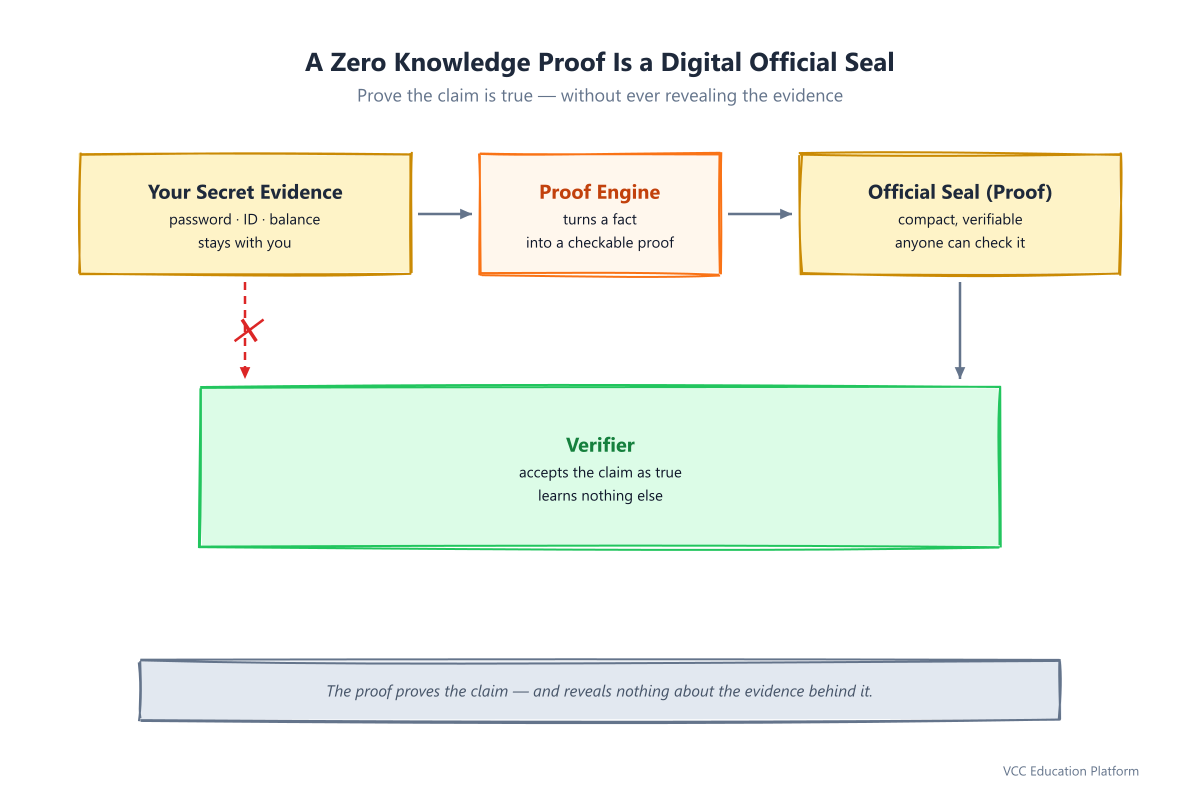
Figure 1: A zero knowledge proof is a digital official seal — the verifier sees the seal, never the evidence
Why the Official Seal Is the Perfect Analogy
Every government office, company, and bank in Vietnam operates on seals. When you present a notarized contract, the other side does not re-read every page of the notary's file. They check the con dấu — the red stamp that says "a qualified authority already verified this." The seal proves the document's validity without exposing the authority's full inspection process.
A zero knowledge proof is the cryptographic version of that seal, with one extra property: it reveals zero information about what was verified. An ordinary seal sits on top of the document, which the other party can still read. A ZKP seal stands alone — it proves the claim without ever showing the underlying evidence.
Three promises make a seal worth trusting, and the same three promises define a genuine ZKP:
- Completeness: if the claim is true, an honest prover can always produce a valid proof.
- Soundness: if the claim is false, a liar cannot forge a proof that passes inspection.
- Zero-Knowledge: the verifier learns the claim is true — and absolutely nothing else.
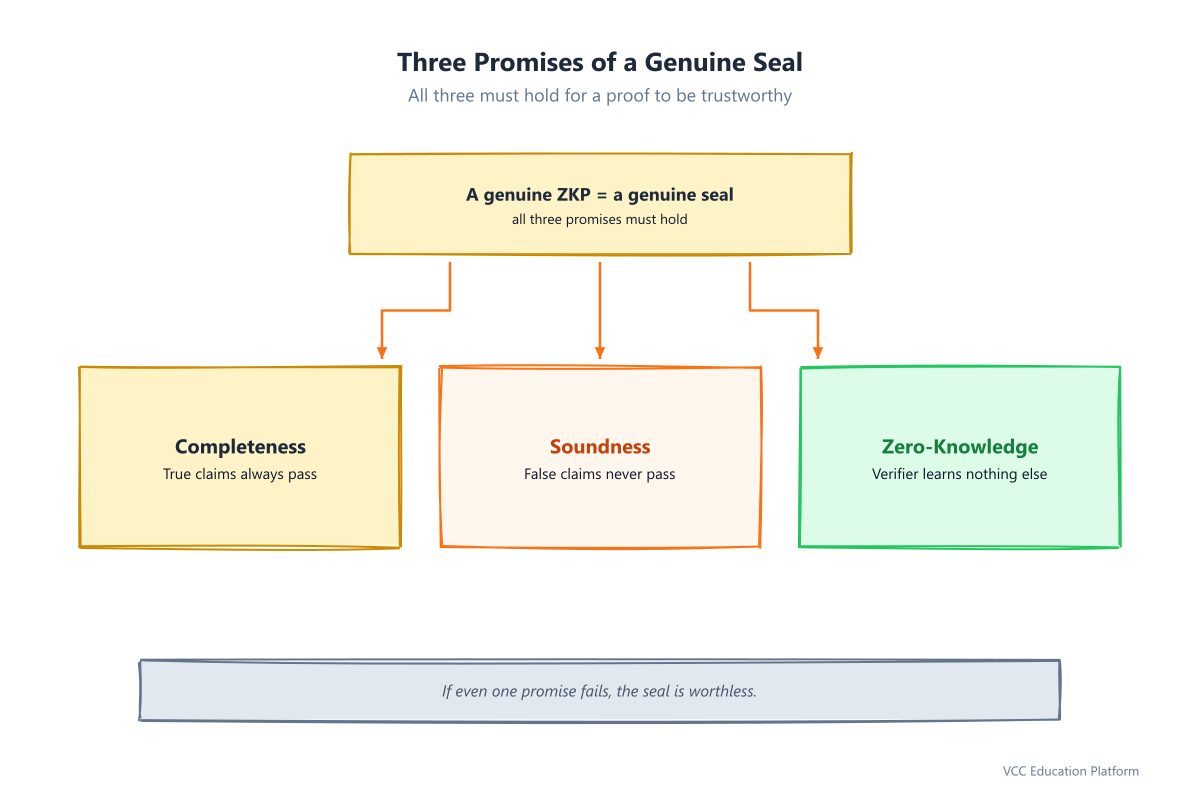
Figure 2: The three promises that make a proof trustworthy
A Worked Example: Proving You Know the Password Without Saying It
The simplest zero knowledge proof is the "safe door" game, and it is easy to picture with a Vietnamese twist: imagine a private club whose membership is verified not by showing an ID card, but by solving a puzzle at the door.
Say you want to prove to a doorman that you know the combination to a safe — without revealing the combination itself. The classic protocol works like this:
- The Setup: the safe has two doors, A and B. Both lead to the same room. The doorman stands outside; he cannot see which door you use.
- Your First Move: you enter from door A and wait inside.
- The Challenge: the doorman shouts "come out through door B."
- Your Response: you exit through door B — which is only possible if you truly know the combination that opened the inner lock.
- The Verdict: the doorman is now certain you know the combination, yet he has learned nothing about what the combination actually is.
Repeat the game many times and the chance of a lucky guess collapses to essentially zero. This is the interactive proof — a conversation in which the verifier challenges and the prover answers, without ever passing the secret itself.
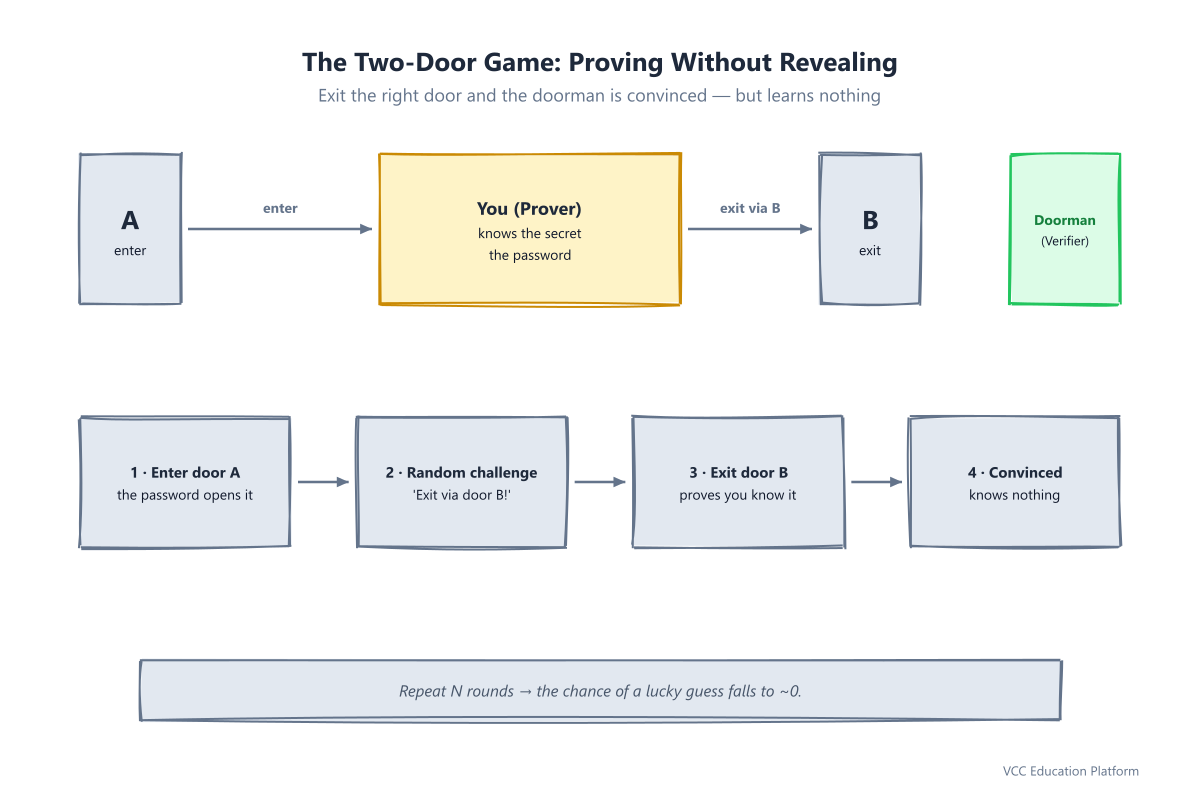
Figure 3: The two-door game — proving you know a secret without saying it
From 1985 to Your Phone: A Quick History
Zero knowledge proofs are not a new trend. They were invented in 1985 by computer scientists Shafi Goldwasser, Silvio Micali, and Charles Rackoff in a landmark paper called "The knowledge complexity of interactive proof-systems," presented at the ACM Symposium on Theory of Computing. The paper's core question was elegant: how much knowledge does a verifier actually gain from a proof? Their answer — that a proof could convey a statement's truth and nothing else — founded an entire field.
For roughly three decades, ZKPs were mostly a theoretical curiosity. The math was elegant but too slow for real use. Then, starting in the late 2010s, engineering caught up:
- zk-SNARKs (zero-knowledge Succinct Non-interactive Arguments of Knowledge) made proofs small, fast, and non-interactive — a single message instead of a conversation.
- zk-STARKs removed the need for a trusted setup and scaled further, at the cost of larger proofs.
- Today, ZKPs power private blockchains, identity verification, scaling systems called zk-rollups, and much more.
The 1985 theorem that seemed purely academic is now shipping in production software worldwide.
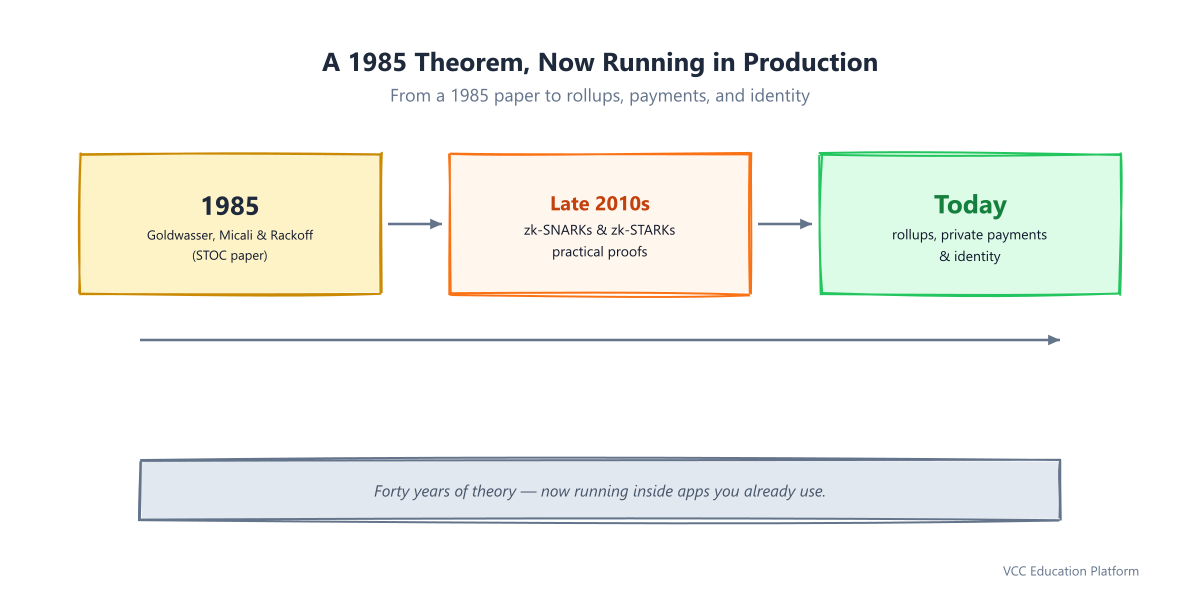
Figure 4: From a 1985 theorem to your phone
Where Zero Knowledge Proofs Are Used Today
Zero knowledge proofs have moved from theory to everyday infrastructure. Three areas matter most for a beginner:
1. Private Payments on Public Blockchains
Public blockchains are transparent by design — everyone can see every transaction. ZKPs let users hide amounts and details while the network still verifies that the transfer is valid. Privacy-focused cryptocurrencies use this daily.
2. Zero-Knowledge Roll-Ups (Scaling)
A zk-rollup processes thousands of transactions off the main chain, bundles them, and submits a single tiny proof that everything was done correctly. The main chain verifies one proof instead of thousands of transactions — dramatically cheaper and faster. In April 2025, EY shipped Nightfall_4, a zero-knowledge roll-up that enables private enterprise transactions directly on the Ethereum blockchain with near-instant finality.
3. Privacy-Preserving Identity Verification
This is the most exciting use for everyday readers. A ZKP can prove "I am over 18" without revealing your birth date, or prove "this account belongs to me" without revealing the full password. It is eKYC that respects privacy: verify the fact, not the person's raw data.
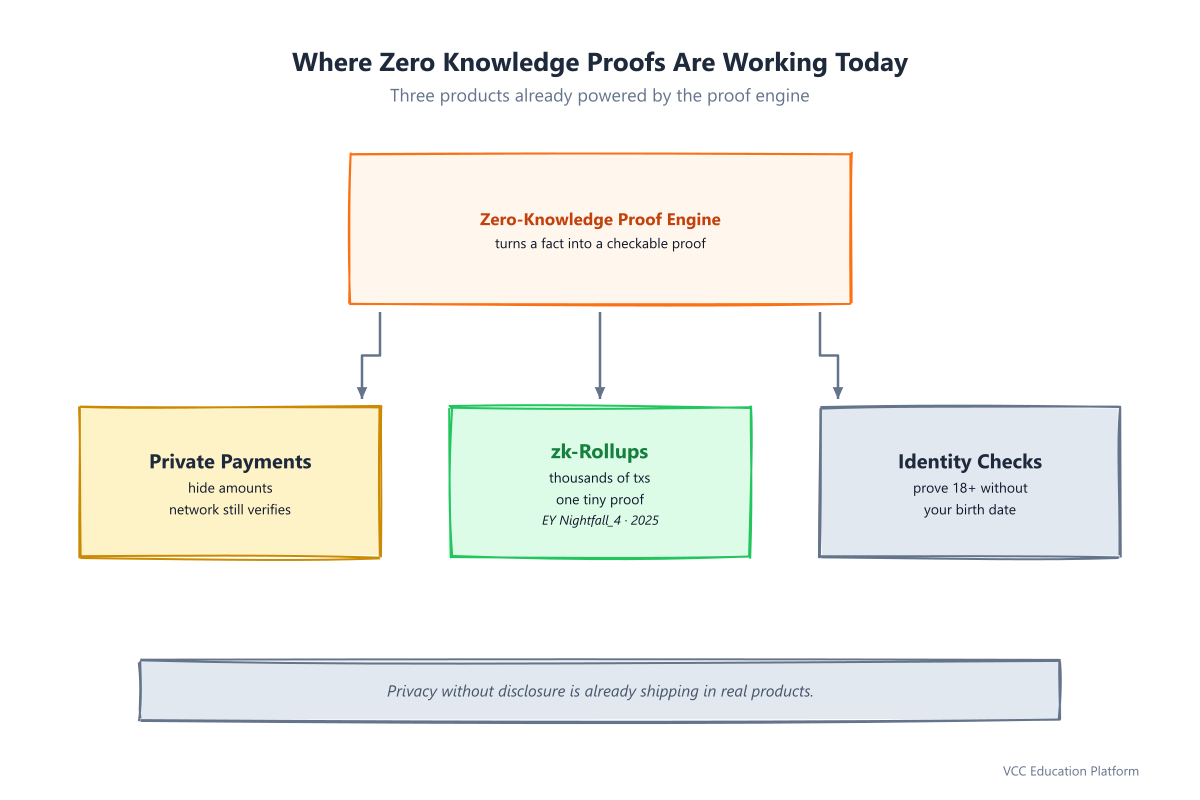
Figure 5: Where zero knowledge proofs are working today
Why This Matters for Vietnamese Readers
Vietnam's new data-protection landscape makes ZKPs especially relevant. Decree 13/2023/ND-CP tightens rules on how personal data is collected and shared. The question every Vietnamese business now faces is: how do we verify a customer without collecting their entire identity dossier?
Zero knowledge proofs answer that question. Instead of copying an ID card, a business can ask for a cryptographic proof that the customer is who they claim to be — and receive only a "yes" or "no." Instead of storing a full phone number or account balance, an app can prove "this user meets the requirement" without the raw value ever leaving the user's device.
For individuals, the benefit is control. Your data stays with you; you reveal only the specific fact a service actually needs. That is the digital equivalent of the con dấu: trust the fact, not the file.
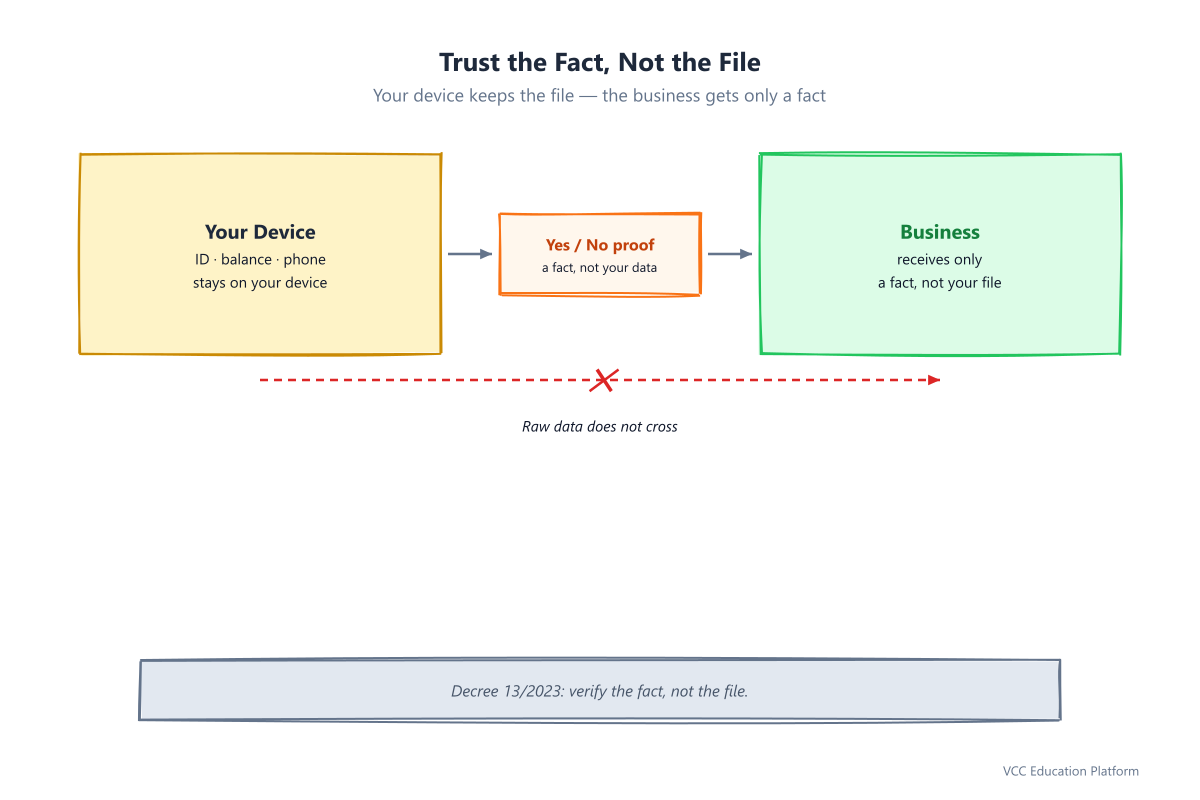
Figure 6: Trust the fact, not the file — zero knowledge under Decree 13/2023
Common Questions About Zero Knowledge Proofs
What is a zero knowledge proof in simple terms?
It is a way to prove a statement is true without revealing the information that proves it. Think of an official seal: the stamp proves the document was checked without showing the check itself.What does "zero knowledge" actually mean?
It means the verifier learns that the claim is true — and gains no extra information whatsoever. Not the secret, not a hint of it, not any data that could help reconstruct it.How is a zero knowledge proof different from encryption?
Encryption protects data by scrambling it; someone with the key can read it. A ZKP does not store or transmit the data at all — it only proves a claim about that data. Encryption answers "how do I hide this?" A ZKP answers "how do I prove this without showing it?"Can a false claim pass a zero knowledge proof?
No — this is the soundness property. Forging a valid proof for a false statement is cryptographically infeasible. The probability of a fake proof passing is so small it is treated as zero.Are zero knowledge proofs used in real products today?
Yes. They power privacy-focused cryptocurrencies, zk-rollups for blockchain scaling (including EY's Nightfall_4 on Ethereum), and identity-verification systems.Does proving take a long time?
Modern proofs are fast. zk-SNARKs verify in milliseconds on ordinary devices, which is why they are practical in mobile apps and high-throughput blockchains.Quick Reference
| Property | Value |
|---|---|
| What it is | Proves a statement is true without revealing the evidence |
| Completeness | True claims always produce a valid proof |
| Soundness | False claims cannot be forged into valid proofs |
| Zero-Knowledge | Verifier learns the claim's truth — nothing else |
| Invented | 1985 — Goldwasser, Micali, Rackoff (STOC) |
| Modern forms | zk-SNARKs, zk-STARKs |
| Major uses | Private payments, zk-rollups, privacy-preserving identity |
| Real example | EY Nightfall_4 — ZK roll-up for private Ethereum transactions (2025) |
| VN relevance | Verify identity under Decree 13/2023 without exposing raw data |