
Virtual real estate has emerged as one of the most fascinating applications of virtual real estate nft technology, transforming how we think about property ownership in digital worlds. From Decentraland's Genesis City to The Sandbox's LAND parcels, investors and creators are spending millions on pixels that exist only on blockchain. But beneath the hype lies a fundamental shift in how digital scarcity, ownership rights, and economic value are constructed in the metaverse.
What Is Virtual Real Estate?
Virtual real estate refers to parcels of land in blockchain-based virtual worlds that are represented as non-fungible tokens (NFTs). Each parcel is a unique, cryptographically secured asset with verifiable ownership, transferable without intermediaries, and governed by the rules of its native platform.
Unlike traditional digital assets (a Fortnite skin, a World of Warcraft plot), metaverse land ownership is decentralized. The platform doesn't control your deed — the blockchain does. If Decentraland shuts down tomorrow, your LAND NFT remains in your wallet. This distinction is the foundation of digital property investment as an emerging asset class.
The concept traces back to early virtual worlds like Second Life (2003), where users bought and sold virtual land for real money. But Second Life's economy depended on Linden Lab's centralized servers. When the company changed policies or shut down regions, users lost everything. Virtual land nft solves this by anchoring ownership to Ethereum, Polygon, or other public blockchains.
Key Characteristics
| Feature | Traditional Virtual Land | Virtual Real Estate NFT |
|---|---|---|
| Ownership | License from platform | Cryptographic deed on blockchain |
| Transferability | Platform-dependent | Permissionless, peer-to-peer |
| Persistence | Tied to server uptime | Permanent (as long as chain lives) |
| Interoperability | None | Potential cross-platform use |
| Scarcity | Artificial, changeable | Cryptographically enforced |
How NFT-Based Land Ownership Works
Every virtual real estate platform implements virtual land nft slightly differently, but the core architecture follows a common pattern:
1. The Smart Contract Layer
Each platform deploys an ERC-721 (or ERC-1155) contract representing land parcels. For Decentraland, the LAND contract at 0xf87e... manages 90,601 parcels (each 16m × 16m). The Sandbox uses ERC-1155 for its LAND token, allowing multiple parcels per token ID — useful for estates.
`solidity // Simplified Decentraland LAND interface interface ILAND is IERC721 { function getCoordinate(uint256 tokenId) external view returns (int16 x, int16 y); function getContentHash(uint256 tokenId) external view returns (bytes32); function updateContentHash(uint256 tokenId, bytes32 hash) external; } `
The getCoordinate() mapping links each tokenId to its (x, y) position on the map. The contentHash points to off-chain content (3D models, scenes, scripts) stored on IPFS or centralized CDNs.
2. Metadata and Content
The NFT itself stores minimal on-chain data: coordinates and a content hash. The actual 3D scene — buildings, vegetation, interactive logic — lives off-chain. When you visit a parcel in the Decentraland client, it:
- Reads the tokenId from your wallet
- Queries
getContentHash(tokenId)on-chain - Fetches the scene from the content server (IPFS + CDN)
- Renders it in your browser via three.js/Unity
This separation keeps gas costs low while enabling rich experiences. But it also means the visual asset isn't fully on-chain — a common misconception.
3. Permissions and Governance
Owning LAND grants specific permissions:
- Build rights: Deploy scenes to your coordinates
- Monetization: Charge entry fees, rent, or sell in-world items
- Governance: Vote on platform proposals (Decentraland DAO, The Sandbox DAO)
In Decentraland, each LAND = 2,000 VP (Voting Power). Estate owners aggregate VP across contiguous parcels.
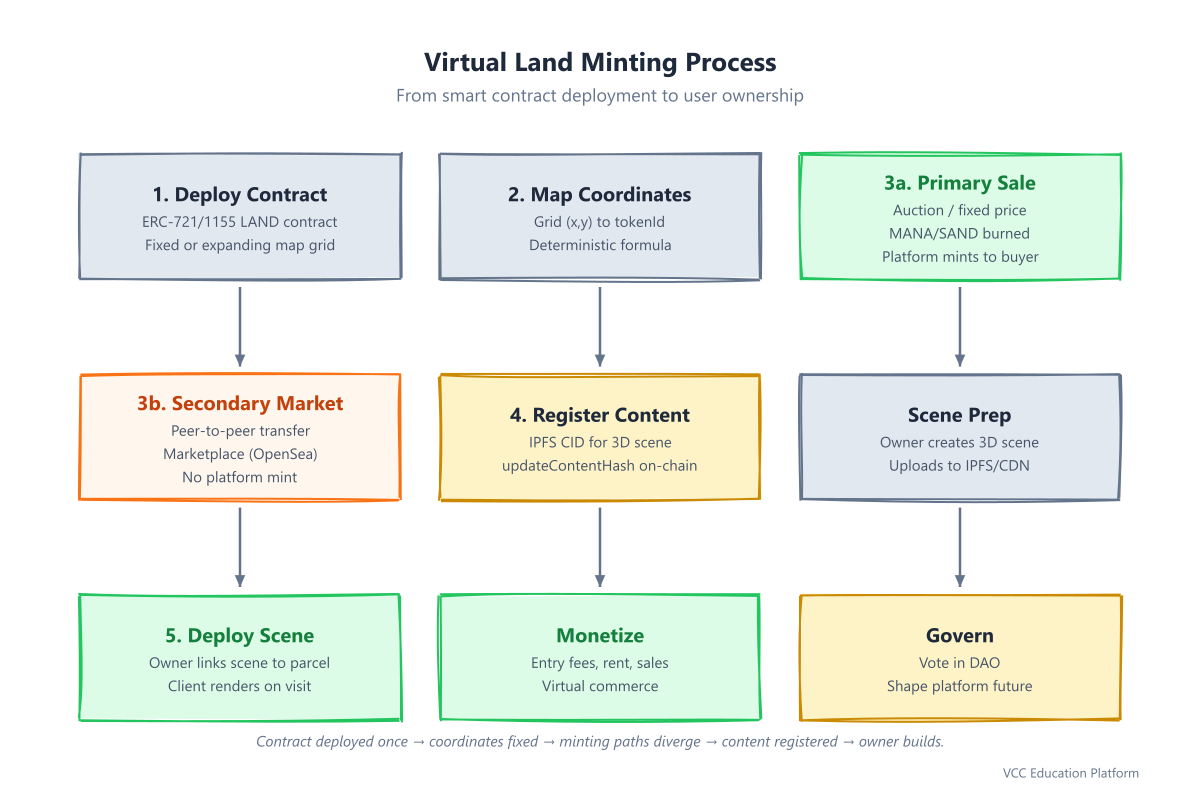
Figure 1: Virtual land minting process — from contract deployment to user ownership
Major Virtual Real Estate Platforms Compared
The nft real estate platforms landscape is dominated by a few major players, each with distinct technical architectures and economic models.
Decentraland (Ethereum + Polygon)
Launch: 2020 (mainnet) Land supply: 90,601 fixed parcels (Genesis City) + unlimited via Polygon L2 Token: MANA (ERC-20, burned for LAND purchases) Governance: DAO with VP-weighted voting
Decentraland pioneered the "finite map" model. Genesis City is a 300×300 grid with districts (Aetherian, Crypto Valley, Dragon City). Scarcity is absolute — no new Genesis parcels can be minted. This drives speculative value but limits growth.
Strengths: First-mover, mature SDK, strong creator economy, MANA utility Weaknesses: Ethereum mainnet gas (mitigated by Polygon), dated graphics, limited mobile support
The Sandbox (Ethereum + Polygon)
Launch: 2021 (alpha), 2022 (public) Land supply: 166,464 LAND (408×408 map) + ESTATE bundles Token: SAND (ERC-20, staking, governance, marketplace currency) Governance: DAO, SAND-weighted
The Sandbox uses a voxel-based engine (like Minecraft) with a more accessible creator tool (Game Maker, no code required). Its map is larger, and LAND can be combined into ESTATEs (3×3, 6×6, 12×12, 24×24). Major brands (Adidas, Gucci, Snoop Dogg) own estates.
Strengths: Better UX, voxel aesthetics attract creators, strong partnerships, Game Maker Weaknesses: More centralized content hosting, SAND tokenomics complex
Others: Otherside, Somnium Space, Voxels
- Otherside (Yuga Labs): 100,000 Otherdeeds (ERC-721), tied to BAYC/MAYC ecosystem, dynamic metadata (resources, artifacts), imminent gamified metaverse
- Somnium Space: VR-first, persistent world, land parcels on Ethereum + Polygon, focuses on immersive social VR
- Voxels (formerly Cryptovoxels): Web-based, voxel art style, smaller parcels, strong artist community, now on Polygon
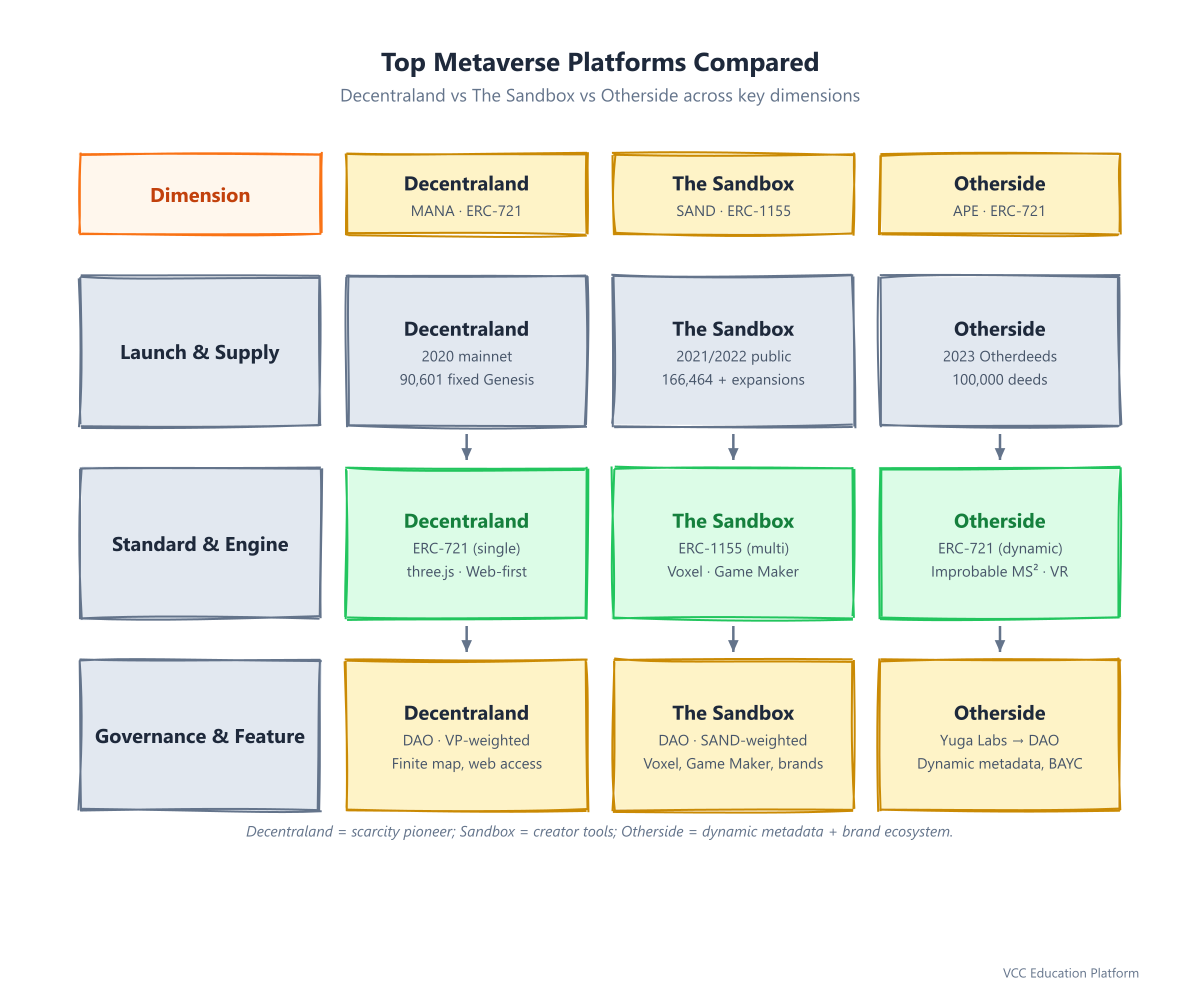
Figure 2: Top metaverse platforms compared — Decentraland vs The Sandbox vs Otherside
Valuation Methods for Digital Land
Valuing virtual land nft is notoriously difficult. Unlike physical real estate (comparable sales, income approach, replacement cost), virtual land lacks centuries of transaction history and standardized metrics. Practitioners use a hybrid framework:
1. Location Premium (The "Times Square" Effect)
In Decentraland, parcels near Genesis Plaza (spawn point) or high-traffic districts (Crypto Valley, Vegas City) command 10-100× the floor price. In The Sandbox, land near major partners (Atari, Smurfs, Snoop Dogg) carries a brand-adjacency premium.
` Location Score = f(distance_to_spawn, neighbor_traffic, partner_proximity, district_status) `
2. Utility and Development Potential
A bare parcel is worth less than one with a revenue-generating experience (casino, gallery, game, store). Builders factor in:
- Build cost: 3D modeling, scripting, deployment (~$500-50,000+)
- Revenue potential: Entry fees, NFT sales, advertising, rent
- Time to market: Weeks to months
3. Scarcity and Supply Dynamics
Fixed supply (Decentraland Genesis) vs. expandable (Polygon expansions, Otherside) creates different price curves. Decentraland's fixed 90K parcels act like Bitcoin's 21M cap — absolute scarcity. The Sandbox's 166K + future expansions act more like Ethereum's issuance — predictable but not fixed.
4. Comparable Sales (Comps)
The most practical method: recent sales of nearby, similar-sized parcels. Tools like MetaCat, NonFungible.com, and DappRadar aggregate this data. But comps age fast — a 30-day-old comp in a bull market may be 50% off.
5. Income Approach (Yield)
For income-producing parcels: ` Value = Annual Net Revenue / Cap Rate ` Cap rates in virtual real estate range 15-40% (vs. 3-8% physical), reflecting extreme risk. A parcel earning 500 MANA/year at 25% cap = 2,000 MANA valuation.
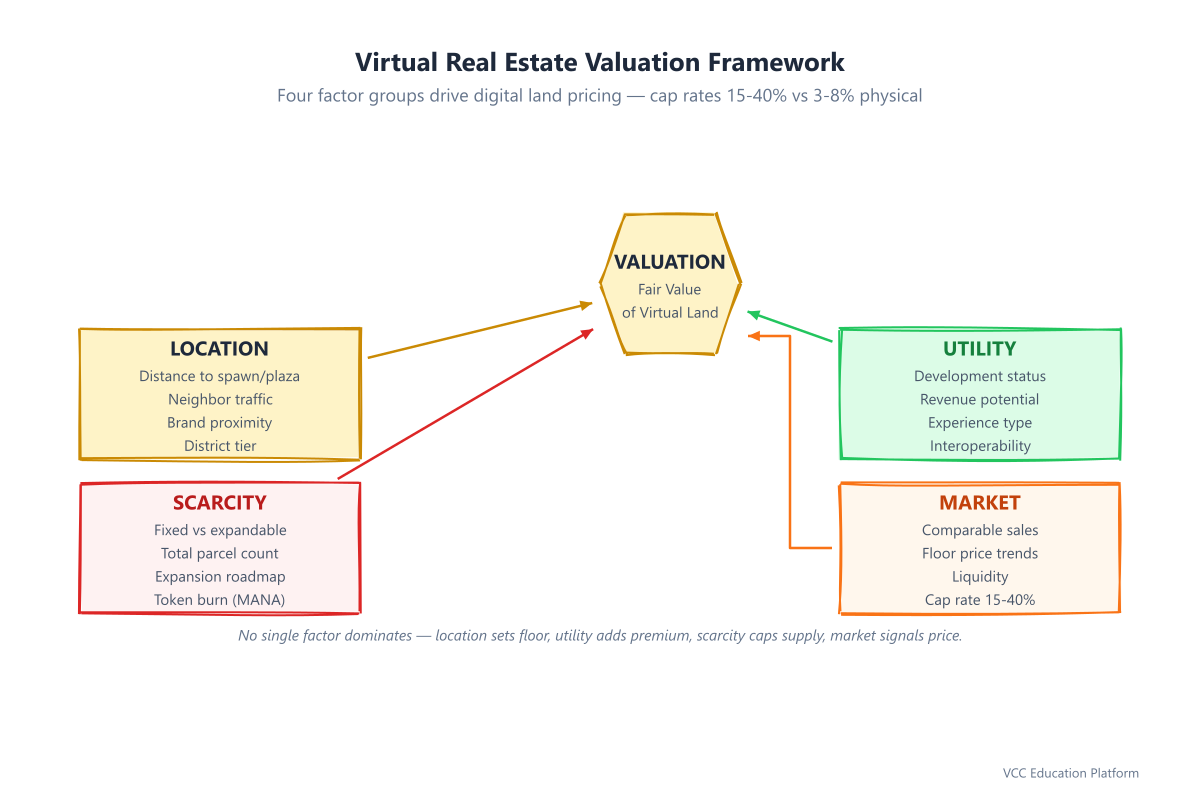
Figure 3: Virtual real estate valuation framework — four factor groups drive digital land pricing
Investment Strategies and Risks
Strategies
1. Land Banking (Buy & Hold) Purchase in emerging districts or near planned developments, hold for appreciation. Requires conviction in platform longevity.
2. Development & Monetization Buy cheap land, build experiences, generate revenue. Highest effort, highest potential return. Creators earn from entry fees, virtual goods, advertising.
3. Flipping Buy undervalued parcels (distressed sellers, mispriced listings), relist quickly. Requires market monitoring and fast execution.
4. Rental/Leasing Lease land to builders who can't afford purchase. Smart contracts like Decentraland's Rental module enable trustless leasing with automatic reversion.
5. Index Exposure Buy platform tokens (MANA, SAND) instead of land. Lower barrier, diversified, but misses land-specific alpha.
Risks
| Risk Category | Examples | Mitigation |
|---|---|---|
| Platform Risk | Shutdown, policy change, hack | Diversify across platforms; prefer battle-tested |
| Liquidity Risk | No buyers at desired price | Size positions for exit; avoid illiquid corners |
| Technical Risk | Smart contract bug, bridge exploit | Audit reports; use reputable platforms only |
| Regulatory Risk | Securities classification, tax uncertainty | Jurisdiction-aware structuring; tax compliance |
| Obsolescence | Better metaverse launches | Bet on interoperability standards (ERC-7208, ERC-6551) |
The 2022-2023 bear market saw Decentraland LAND drop from ~3.5 ETH floor to ~0.5 ETH — an 85% drawdown. Virtual real estate is high beta crypto: it amplifies both bull and bear cycles.
Legal and Regulatory Considerations
Property Rights vs. License
When you buy a virtual land nft, what exactly do you own? Most platforms' Terms of Service state you own the token, not the underlying IP or server access. The platform can:
- Ban your wallet from the client (but not seize the NFT)
- Change rendering rules (your scene may break)
- Shut down servers (your land becomes a non-rendering token)
This is a license, not fee-simple ownership. Courts have not yet ruled on whether NFT deeds create property interests enforceable against platforms.
Securities Law
The SEC has signaled that NFTs with "investment contract" characteristics (Howey test) may be securities. Fractionalized land, rental pools with promised returns, and DAO-governed land funds are high-risk. Pure land purchase for personal use is safer but not immune.
Taxation
In most jurisdictions:
- Purchase: No tax event (crypto-to-crypto may trigger gains)
- Sale: Capital gains on appreciation
- Rental income: Ordinary income
- In-world earnings: Business income
Vietnam specifically: Decree 105/2020/ND-CP prohibits virtual assets as legal tender. Circular 02/2023/TT-NHNN requires VASP licensing. Virtual land trading likely falls under "virtual asset service provider" rules — KYC/AML compliance needed for platforms serving Vietnamese users.
IP and Content
Your builds on virtual land may infringe copyrights (branded items, copyrighted designs). Platforms DMCA-compliant but liability flows to creator. Use original or licensed assets.
Future of Virtual Property
Interoperability Standards
ERC-6551 (Token-Bound Accounts): Every LAND NFT gets a smart contract wallet. It can hold other NFTs (furniture, art), execute transactions, and interact with DeFi. Your parcel becomes a wallet.
ERC-7208 (On-Chain Data Containers): Mutable metadata without contract upgrades. Land attributes (traffic, revenue, development level) update on-chain without new transactions.
Cross-Chain Portals: Wormhole, LayerZero enable LAND bridging. Your Decentraland parcel could appear in Somnium Space via standardized metadata.
AI-Generated Content
Generative AI (NeRF, Gaussian Splatting, LLM-driven NPCs) will slash build costs. A creator describes "cyberpunk nightclub with dancing NPCs" — AI generates the 3D scene, scripts, and dialogue. This democratizes development but floods supply.
Physical-Digital Twins
Real estate companies tokenizing physical properties as NFTs with virtual counterparts. Buy a Miami condo, get its Digital Twin in Decentraland for virtual tours, meetings, rental management. This bridges TradFi and DeFi valuation models.
Regulatory Clarity
MiCA (EU), Lummis-Gillibrand (US), and similar frameworks will define virtual asset categories. Expect "digital property" as a recognized asset class with consumer protections, but also compliance burdens.
FAQ
Q: Can I live in my virtual land? A: Not physically. But you can host events, meetings, galleries, games. Somnium Space supports full VR immersion — the closest to "living" there.
Q: What happens if the platform shuts down? A: Your NFT remains in your wallet. The 3D content (on IPFS) persists if pinned. But the rendering client disappears — you own a deed to a world that no longer renders.
Q: Is virtual land a good investment? A: High risk, high reward. Treat as venture allocation (1-5% of portfolio). Never invest more than you can lose. Diversify across platforms and strategies.
Q: How do I buy virtual land?
- Get a wallet (MetaMask, Coin98)
- Fund with ETH/MANA/SAND (CEX → wallet)
- Visit platform marketplace (Decentraland Marketplace, OpenSea for Sandbox)
- Connect wallet, place bid or buy now
- Confirm transaction, land appears in wallet
Q: Can I rent out my virtual land? A: Yes. Decentraland has native rental module. Third-party protocols (LandVault, Metaverse Group) offer managed leasing. Yields 10-30% APY but with platform risk.
Q: What's the difference between LAND and ESTATE? A: LAND = single parcel (16×16m in Decentraland, 96×96m in Sandbox). ESTATE = multiple contiguous LANDs combined into one NFT (ERC-1155 in Sandbox). Estates enable larger builds and command premium.
This article provides an educational overview of virtual real estate NFTs. It does not constitute financial, legal, or tax advice. Always conduct your own research and consult qualified professionals before investing.