
Effective NFT marketing strategies separate projects that sell out from collections that vanish within 72 hours of mint. The NFT market has matured past the 2021 hype cycle — celebrity endorsements and artificial scarcity no longer sustain value. Today, successful collections require structured marketing that builds genuine community, targets the right collectors, and delivers utility long after mint day. This guide breaks down the complete lifecycle of NFT marketing, from audience research through post-mint brand building, with a practical framework you can apply to any collection.
The NFT Marketing Landscape: Why Traditional Tactics Fail
NFT marketing differs fundamentally from traditional digital marketing. Traditional marketing focuses on customer acquisition and one-time sales. NFT marketing lives or dies on community ownership and ongoing utility. You are not selling a product — you are selling membership in something that must keep delivering value long after mint day.
The market is saturated. Over 10,000 active projects compete for attention at any given time. Without differentiation, even exceptional art gets buried. Trust is broken — too many rug pulls and abandoned projects have eroded buyer confidence. The projects that survive are those that treat a launch the way consumer brands treat a product release: defined audience, paid reach, measured conversion, and deliberate retention.
The NFT market reached $43-48 billion in 2025 with 11.64 million users globally. Yet primary sales dipped 40% in early 2025 while collections with active community marketing retained 2.3x more holders. This gap between artistic merit and market traction stems from one fundamental reality: marketing infrastructure, not art quality, determines whether a collection builds momentum or disappears.
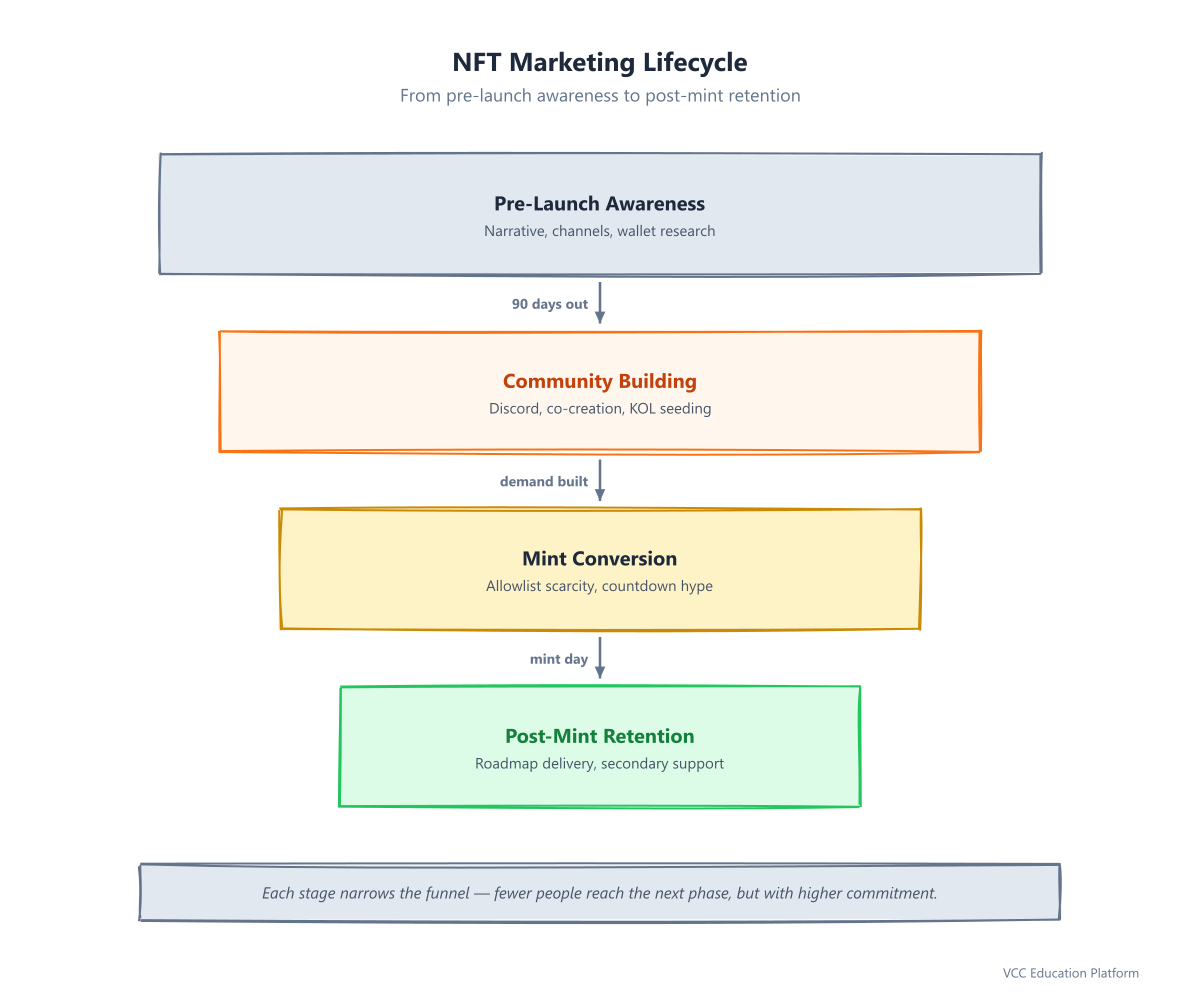
Figure 1: NFT marketing lifecycle — from pre-launch awareness to post-mint retention
NFT Audience Targeting: Finding Your Real Collectors
The most effective NFT audience targeting starts with wallet analysis, not social media metrics. Tools like Nansen and Etherscan let you examine holder wallets for existing projects similar to yours. You are looking for patterns: what else do these collectors hold, how long do they keep NFTs, and what behaviors signal genuine interest versus speculative flipping.
Wallet Behavior Over Follower Counts
Someone who minted 12 projects in the last month and holds 8 of them is a far more valuable target than someone with 50,000 Twitter followers. Wallet behavior — not follower count — predicts buying intent. This is a fundamental departure from traditional digital marketing where reach metrics dominate.
Track these wallet signals to identify your ideal collector:
- Holding duration: collectors who hold NFTs for 30+ days vs. flippers who sell immediately
- Collection overlap: which other projects your target audience holds
- Mint frequency: how often they participate in new mints
- Portfolio diversity: whether they concentrate in specific niches
Platform-Specific Audience Segments
Different platforms attract different collector profiles. Understanding where your audience congregates determines your channel strategy:
- X (Twitter): Where NFT attention starts — hashtags, Spaces, and viral sharing drive discovery
- Discord: Deep engagement and loyalty — structured channels, roles, and voice chat build retention
- Telegram: Quick updates and strong reach in Asian markets
- Instagram: Visual art showcase — Reels and Stories drive visual discovery
The key insight: do not spread thin across all platforms. Identify where your specific collector segment is most active and concentrate your effort there. A thousand engaged Discord members outperform a hundred thousand passive Twitter followers.
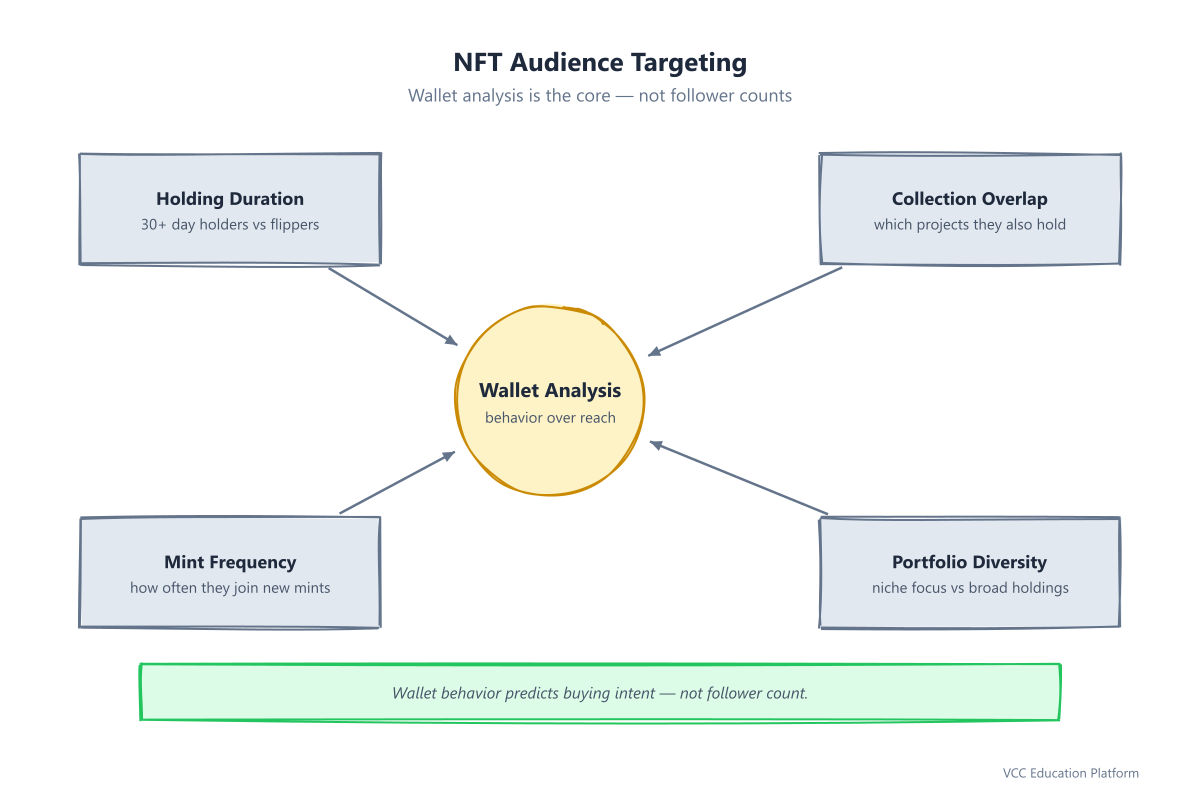
Figure 2: NFT audience targeting — wallet analysis as the core, with four behavioral signals radiating outward
NFT Launch Strategy: The Pre-Mint Timeline
Successful NFT launch strategy begins 90 days before mint — not two weeks before. Three months provides time to build genuine community, test messaging, establish credibility, and create demand. Projects that compress this timeline consistently underperform because they lack the relational density needed to sustain floor prices.
The Four-Phase Launch Framework
A structured launch follows four distinct phases, each with specific objectives:
Phase 1 — Foundation (8-12 weeks before mint): Define your narrative, set up channels, and begin community building. This is where you answer the critical questions collectors will ask: What does this project stand for? Why does the team have credibility? Why does this collection need to exist on-chain? A project that answers these clearly has a structural advantage.
Phase 2 — Seeding (4-8 weeks before mint): Activate content engines, KOL partnerships, and cross-project collaborations. Begin allowlist campaigns that reward early believers. This phase creates the social proof that converts visitors into community members.
Phase 3 — Acceleration (2-4 weeks before mint): Run AMAs, Spaces, and live events. Intensify allowlist scarcity mechanics. This is where demand compounds — each new community member becomes an advocate who recruits others.
Phase 4 — Mint Week: Execute countdown hype, live coverage, and real-time clipping across TikTok, Reels, and X. The work of phases 1-3 pays off here as your community drives organic momentum.
Narrative Before Art
A critical mistake in NFT marketing is leading with art before establishing a narrative. Collectors ask specific questions before committing capital. What does this project stand for? Why does the team have the credibility to execute? Why does this collection need to exist on-chain?
The story should come before the reveal. The art matters, but the narrative gives the art meaning. Projects that launch with stunning visuals but no coherent story vanish because collectors have no reason to stay engaged after the initial aesthetic appeal fades.
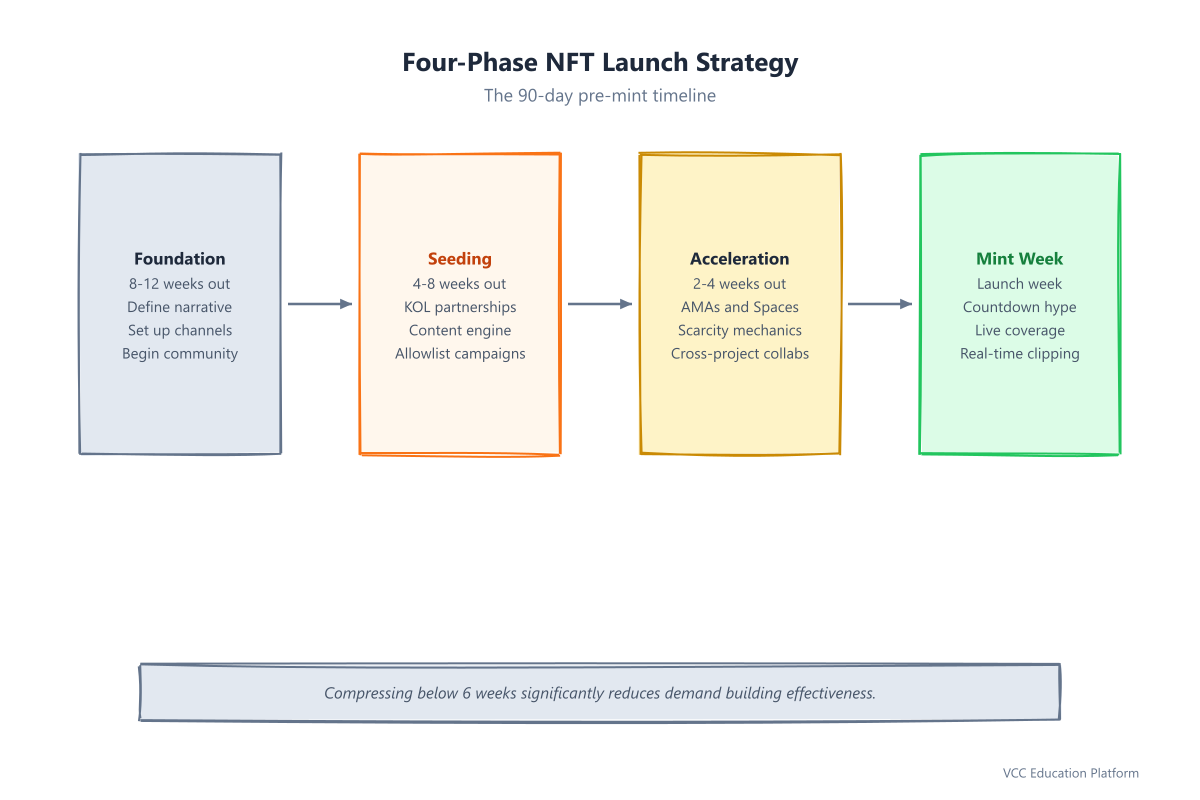
Figure 3: Four-phase NFT launch strategy — the 90-day pre-mint timeline with key activities per phase
Community Building: The Core of NFT Marketing
Community is not a marketing channel — it is the product feature that gives an NFT its floor price, governance legitimacy, and post-mint survival probability. The community should exist before the mint, not after. Projects with no Discord, no X presence, and no community almost never sell out.
Discord as Operational Headquarters
Discord serves as the operational headquarters for serious NFT community building. The goal is not simply growing server membership — it is architecting a community that turns passive followers into active advocates who allowlist, mint, and promote the project organically.
Key Discord architecture principles:
- Structured channels: dedicated spaces for announcements, general chat, FAQs, and roadmap
- Holder verification: tools like Collab.Land gate channels to verified holders
- Role systems: earned roles that create progression and status
- Voice chat: regular voice events build deeper connections than text alone
The Co-Creation Loop
The biggest shift in modern NFT marketing is moving from broadcast mode to genuine co-creation loops. Broadcast mode — posting announcements and expecting engagement — produces passive followers. Co-creation loops — where followers earn roles by contributing lore, art, or ideas — produce invested stakeholders.
Design challenges where community members contribute:
- Lore snippets that expand the project narrative
- Fan art that becomes part of the collection identity
- Visual assets used in marketing materials
- Community events organized by members themselves
This effort converts passive scrollers into invested stakeholders faster than any giveaway or retweet contest. When members feel ownership over the project's direction, they defend it, promote it, and hold through volatility.
Quality Over Quantity
Relational density — not vanity reach — drives sustainable NFT projects. A thousand followers who join voice chats and sub-communities outperform a hundred thousand silent observers. True community members self-organize fan art, defend your project in other servers, and wear your pfps for months.
The metric that matters is not server member count but active participation rate. Track how many members post weekly, attend events, and contribute to discussions. A 20% active participation rate in a 2,000-member server is more valuable than a 2% rate in a 50,000-member server.
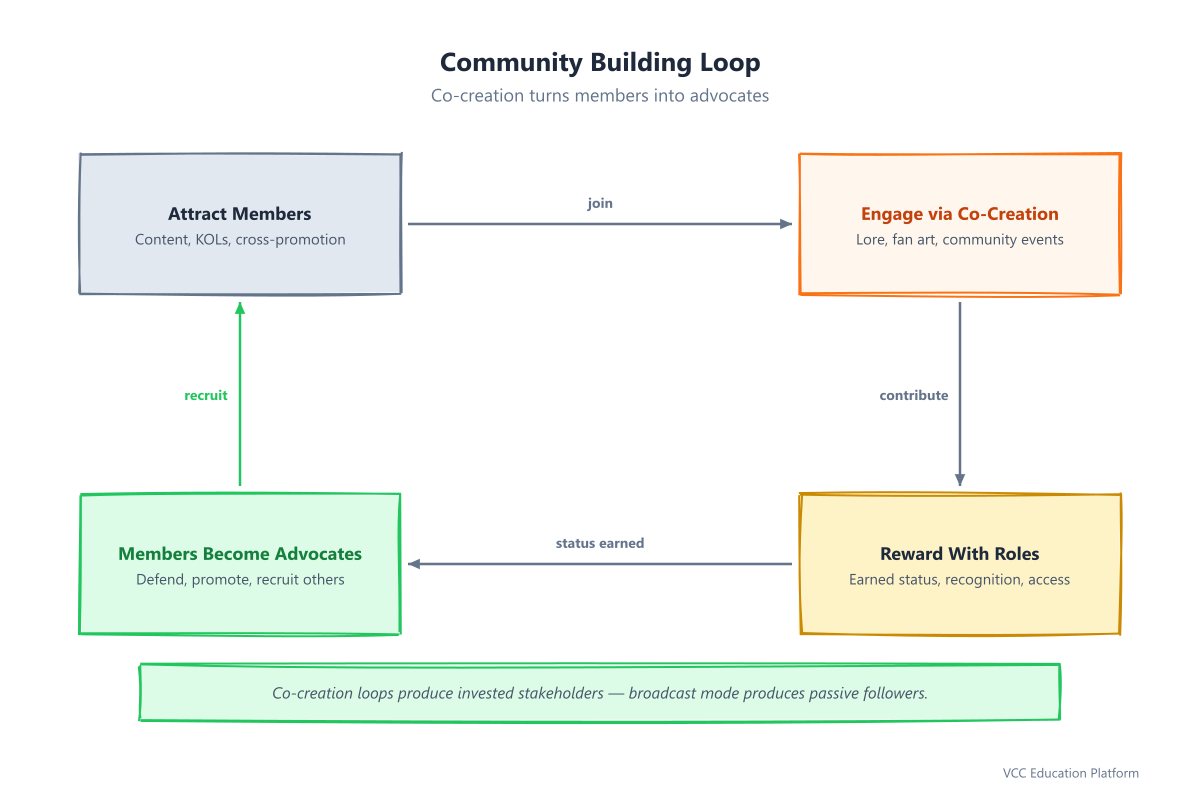
Figure 4: Community building loop — co-creation turns members into advocates who recruit new members
NFT Promotion: Paid Channels and Advertising
NFT promotion through paid channels requires navigating platform restrictions while reaching collectors where they already consume crypto content. Mainstream platforms like Google and Meta have restrictions on NFT advertising, so specialist crypto ad networks handle the bulk of paid reach.
Crypto Ad Networks and Contextual Placement
Specialist crypto ad networks sell inventory across NFT marketplaces, analytics dashboards, crypto media, and Web3 apps. Contextual placement — reaching people while they are already reading about NFTs — is the core play. A banner beside a marketplace listing reaches somebody who has already connected a wallet. The same banner on a general news site reaches somebody who has not.
Three pillars of paid NFT promotion:
- Paid contextual reach on crypto inventory where the audience already reads about NFTs
- Wallet-level targeting that no mainstream platform offers
- Measurement that ties spend to mints, allowlist signups, and secondary volume
Format Selection by Launch Phase
NFTs are visual products, so formats that show the art outperform formats that describe it. Format choice should follow the launch phase, never personal preference:
- Pre-launch: Native placements in crypto publications, display inventory on marketplaces and portfolio trackers
- Mint week: Push formats for countdown alerts and allowlist reminders — the mint-day workhorse
- Post-mint: Retargeting campaigns and secondary-market support to defend floor prices
Free Promotion Channels
Projects using five or more free promotional channels see 3.1x higher mint day conversion than those relying solely on paid advertising. NFT calendar submissions on three or more sites generate 2.4x more organic traffic than single listings. Free channels include:
- NFT calendar sites (NFT Calendar, Rarity Sniper, NFT Drop)
- Cross-project collaborations and shoutouts
- Twitter Spaces and AMAs
- Content marketing (guides, threads, tutorials)
- Community-led fan art campaigns
The combination of paid seeding and free promotion creates a multiplier effect. Paid reach generates initial awareness; free channels convert that awareness into community membership.
NFT Brand Marketing: Post-Mint Retention
The weeks following mint separate successful projects from failed cash grabs. Post-mint NFT brand marketing focuses on delivering promised utility, maintaining community engagement, and building toward long-term roadmap milestones. This phase tests founder commitment and determines whether initial communities evolve into lasting brands.
From Collection to Brand
Successful NFT projects treat their collections as brand foundations rather than endpoints. They launch with clear utility roadmaps, maintain consistent community engagement, create additional value through holder benefits, and expand into complementary products and experiences. Marketing evolves from launch-focused campaigns to ongoing brand building spanning months and years.
The transition from collection to brand requires three shifts:
- From acquisition to retention: stop chasing new buyers, start serving existing holders
- From hype to utility: deliver on roadmap promises, not just generate excitement
- From project to ecosystem: expand into complementary products and experiences
Identity Over Utility
Many NFT projects chase utility like a holy grail — staking rewards, governance tokens, exclusive access. Yet utility without identity creates empty engagement. Discord servers become ghost towns because projects offered features instead of belonging.
The marketing focus should shift from "what you get" to "who you become." Emphasize the collector identity the project confers. Create roles, titles, and rituals that make holders feel special. This psychological ownership matters more than any technical roadmap promise.
When collectors join for identity and connection, they hold through volatility. When they join only for utility, they leave when a better utility offer appears elsewhere.
Secondary Market Support
Primary sales are driven by short-term excitement, but secondary market health depends on community sentiment. A quiet Discord server suggests initial holders are uninterested in the project's future. This lack of perceived activity leads to a downward spiral in floor prices and trading volume.
Post-mint marketing must actively support secondary trading:
- Highlight rare traits and collection milestones to drive collector interest
- Showcase holder achievements and community-created content
- Maintain roadmap transparency with regular progress updates
- Create trading incentives through holder-exclusive events and rewards
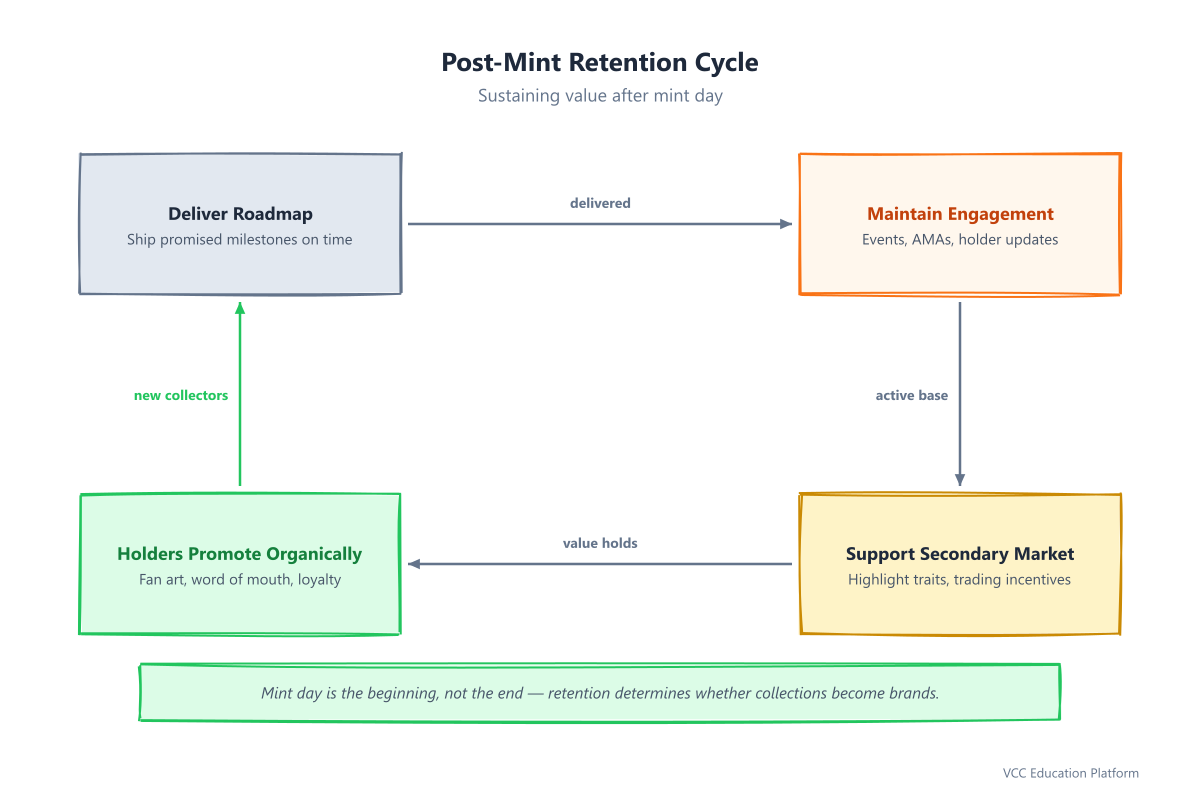
Figure 5: Post-mint retention cycle — delivering roadmap milestones sustains community and secondary market health
Measuring Success: KPIs and Metrics
Vague goals kill NFT projects. "Build community" is not a goal — it is a wish. Define measurable objectives that prove what is working instead of guessing.
Primary KPIs
| Metric | What It Measures | Target |
|---|---|---|
| Mint conversion rate | Percentage of allowlist members who mint | 60%+ |
| Floor price stability | Secondary market health | Stable or rising 30 days post-mint |
| Holder retention | Percentage of minters still holding at 30/60/90 days | 50%+ at 90 days |
| Secondary volume | Trading activity post-mint | Consistent daily volume |
| Discord engagement rate | Active members vs total members | 15-20%+ |
Anti-Patterns to Avoid
- Buying influencer shills the week before mint — this is not a strategy, it is a gamble
- Leading with art before narrative — collectors buy stories, not just images
- Treating community as a billboard — announcement-only servers drive members away
- Compressing the pre-launch timeline — anything under 6 weeks severely limits demand building
- Promising utility without a delivery plan — undelivered roadmaps destroy trust permanently
The Five-Pillar Framework: A Synthesis
Based on cross-referencing strategies from successful collections and industry data, five pillars consistently appear in effective NFT marketing:
- Audience intelligence — wallet-level data over social metrics
- Narrative architecture — story before art, identity before utility
- Community engineering — co-creation loops over broadcast mode
- Sequenced demand — allowlist scarcity as a conversion mechanism
- Post-mint brand building — roadmap delivery and secondary market support
The sequencing matters. Pillars 1-3 must be established before pillar 4 can function effectively. Pillar 5 is where most projects fail — they execute the launch brilliantly but abandon the community once mint revenue is collected. The projects that endure treat mint day as the beginning, not the end.
FAQ
What are the most effective NFT marketing strategies?
The most effective NFT marketing strategies combine wallet-based audience targeting, narrative-first storytelling, community co-creation, sequenced allowlist demand building, and post-mint brand building. No single tactic works in isolation — success comes from executing all five pillars in sequence over a 90-day pre-launch period.
How do you promote an NFT collection before launch?
NFT promotion before launch starts 90 days before mint with community building on Discord and X. Use wallet analysis to identify your target collectors, establish your narrative before revealing art, and run allowlist campaigns across five or more free channels. Paid promotion through crypto ad networks supplements organic reach in the final 4-6 weeks.
What is the best NFT launch strategy timeline?
The best NFT launch strategy follows a four-phase timeline: Foundation (8-12 weeks before mint) for narrative and channel setup, Seeding (4-8 weeks) for KOL partnerships and content, Acceleration (2-4 weeks) for AMAs and allowlist scarcity, and Mint Week for countdown hype and live coverage. Compressing below 6 weeks significantly reduces effectiveness.
How do you build community for an NFT project?
Build NFT community by creating co-creation loops where members contribute lore, art, and ideas to earn roles and status. Focus on relational density over vanity metrics — 2,000 engaged Discord members outperform 50,000 passive followers. Start community building before mint, use Discord as your operational headquarters, and maintain 15-20%+ active participation rates.
How much does NFT marketing cost?
NFT marketing costs vary widely based on collection size and ambition. Free channels (NFT calendars, Twitter Spaces, content marketing) can generate significant organic reach. Paid promotion through crypto ad networks typically ranges from a few hundred to several thousand dollars depending on reach and duration. The largest investment is time — 90 days of consistent community building before mint.